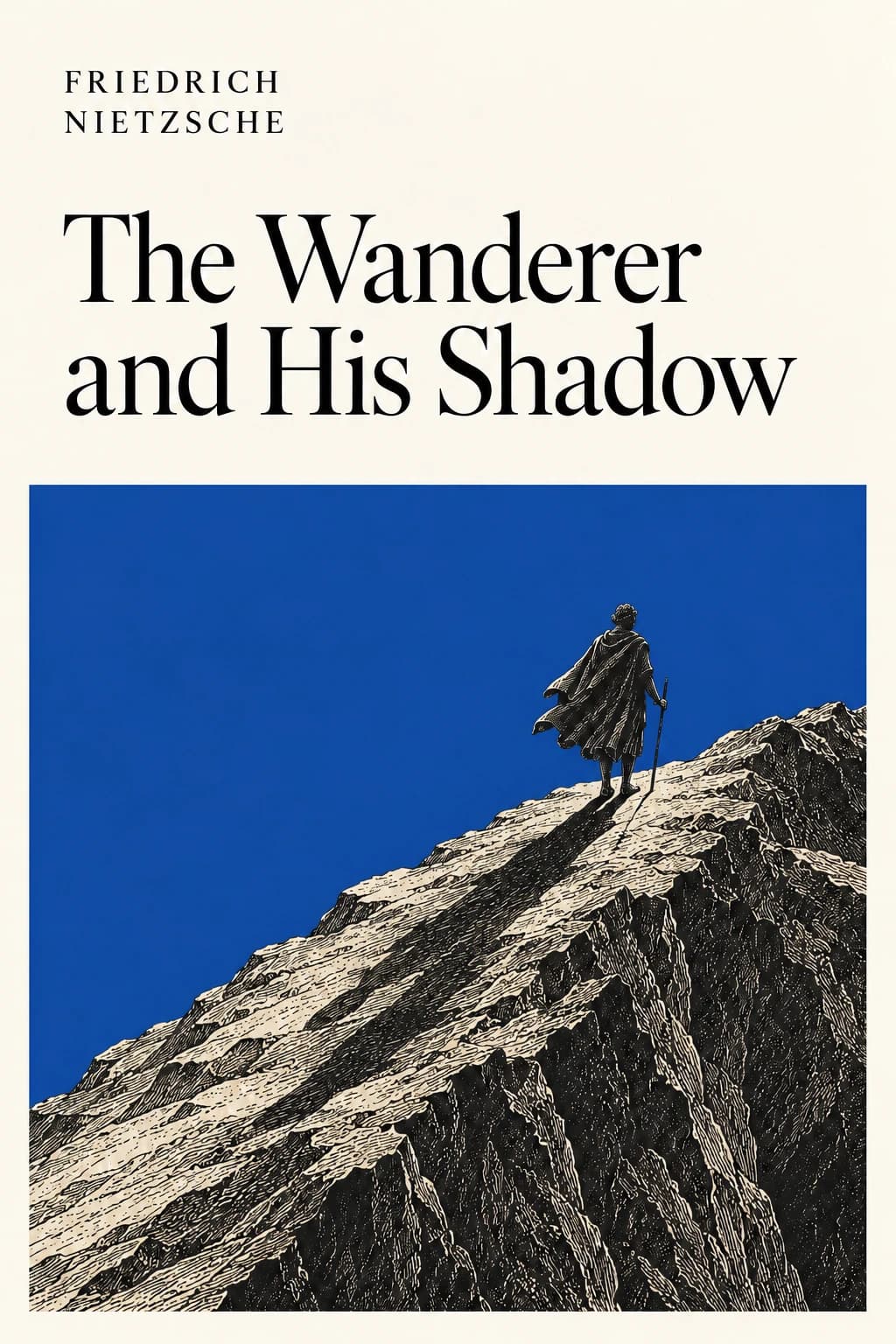
The Wanderer and His Shadow
A wandering conversation about freedom, custom, and the texture of everyday life.
Der Wanderer und sein Schatten
Listen your way
Create audio summary ↗Review your voice and settings in SUN before generating.
In Nietzsche’s life
When it was written
- Written
- 1879
- Publication
- Dated 1880; later part of Human, All Too Human II
Written in the year Nietzsche leaves his Basel professorship, these aphorisms are framed as a conversation with a shadow about freedom, judgment, and everyday life.
“the shadow is as necessary as the light.”
What it’s about
Framed by an encounter between a wanderer and his shadow, these aphorisms continue Nietzsche’s free-spirit investigations. The collection later became the second part of Human, All Too Human II.
Key ideas
- 1
Freedom and habit
Independence involves examining the customs that organize daily life.
- 2
Small things
Diet, place, work, and routine matter to thought.
- 3
Self-conversation
The dialogue with the shadow turns reflection into a dramatic encounter.
Who it’s for
- Readers exploring Nietzsche’s thought
- Anyone interested in philosophy, culture, and the history of values