
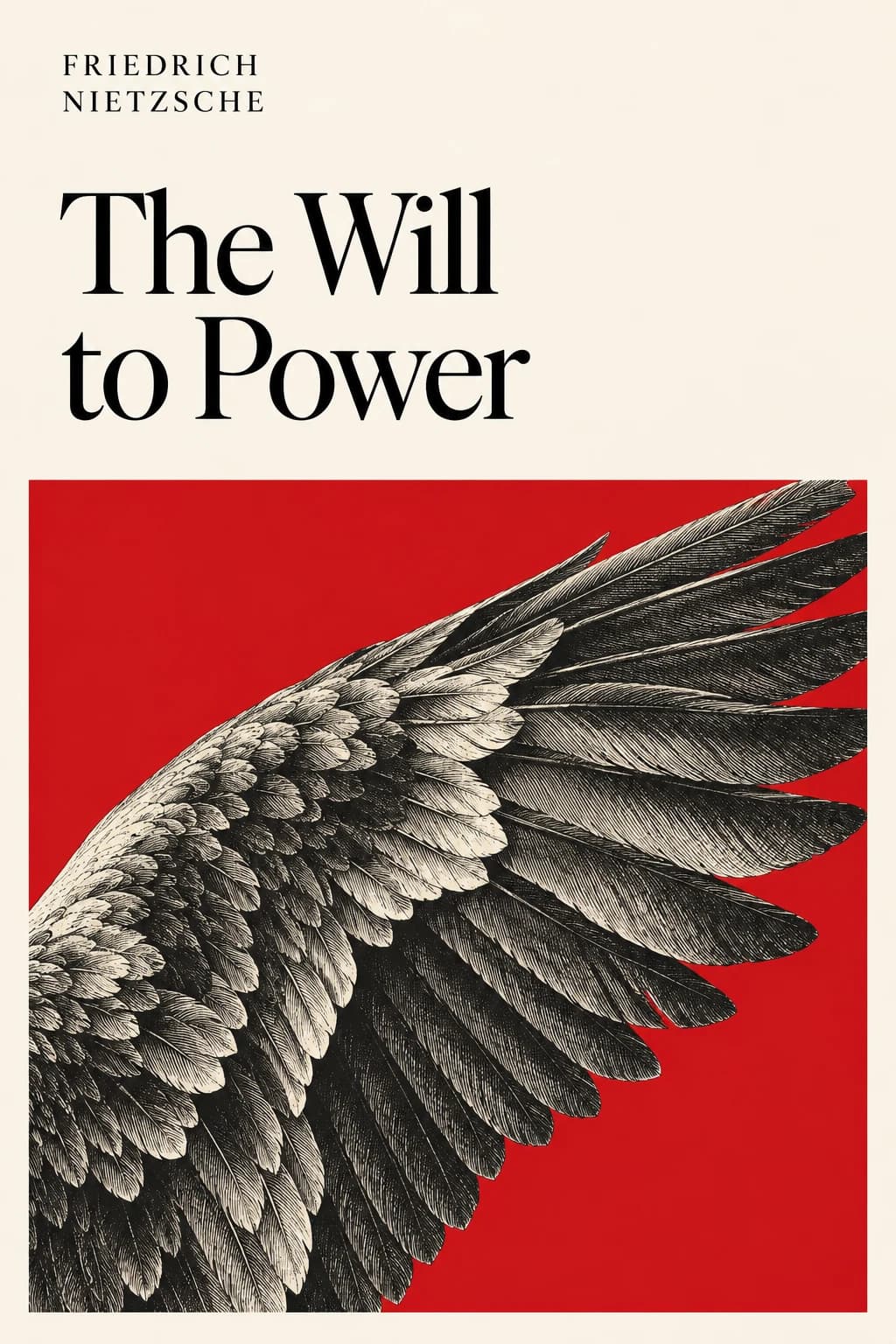
The Will to Power
Editorial compilation, 1901/1906
An influential posthumous arrangement of notebook material.
Der Wille zur Macht
Listen your way
Create audio summary ↗Review your voice and settings in SUN before generating.
In Nietzsche’s life
When it was written
- Written
- Underlying fragments, 1883–1888
- Publication
- Editorial compilation, 1901; expanded 1906
Nietzsche planned a work with this title but did not finish this book. Editors later selected and arranged notebook fragments into the familiar compilation.
“This world is the Will to Power—and nothing else!”
What it’s about
The Will to Power was assembled by editors from Nietzsche’s notes. It is not a finished book authorized by Nietzsche. Read its claims alongside the published works and the chronological notebook record.
Key ideas
- 1
Editorial construction
Selection and arrangement influence the impression of a unified system.
- 2
Nihilism
The notes explore the crisis of inherited values.
- 3
Will to power
A recurring hypothesis takes several forms across the fragments.
Who it’s for
- Readers exploring Nietzsche’s thought
- Anyone interested in philosophy, culture, and the history of values
Other books by Friedrich Nietzsche
View all 26 works →


If you liked this
Wrote a book? List it on SUN and get paid.
Earn from every summary, course and narration made from your book. Non-exclusive — you keep your rights.