A wandering teacher speaks in parables about self-overcoming, creation, and recurrence. The fourth part is initially printed only for a small private circle.
After ten years alone in the mountains, the prophet Zarathustra comes down to teach humanity that God is dead and that man is something to be surpassed. The crowd laughs at him, so he seeks companions instead, and across four parts he delivers speeches, sings songs and recounts dreams about self-overcoming, the will to power and the creation of new values.
Written between 1883 and 1885 in a biblical, poetic style, the book is less a system than a philosophical drama. Its hardest test is the eternal recurrence: could one love life enough to want every moment of it again, forever? The fourth part, printed privately, turns comic as a gathering of “higher men” fails to become Zarathustra’s true companions.
Man is a bridge and not a goal, a rope stretched between the animal and the Superman that he must learn to surpass.
2
The last man
The real danger after the death of God is a comfortable, blinking humanity that wants only warmth, safety and small pleasures.
3
Creating values
Every people’s table of good and evil expresses a will to power, so inherited standards no longer settle how one should live.
4
Redemption from revenge
Morality is poisoned by the will’s resentment of time and its “it was,” and redemption means willing the past as one’s own.
5
Eternal recurrence
Affirmation is tested by the thought that every moment, including the smallest and most painful, will return eternally.
Summary by chapter
Thus Spoke Zarathustra in 16 chapters, in our own words.
Chapter 1
Zarathustra’s Prologue
The book opens like a scripture. At thirty, Zarathustra leaves his home and its lake and spends ten years alone in a mountain cave with his two animals, an eagle and a serpent. One morning he speaks to the rising sun. He is weary of his wisdom, he says, like a bee that has gathered too much honey, and he needs hands stretched out to receive it. So, like the sun setting into the sea, he must “go down” among people. On the way he meets an old saint in the forest who once loved mankind and now loves only God, and who sings hymns alone. They part laughing like schoolboys, and Zarathustra marvels to himself that the old man has not yet heard that God is dead.
“
I tell you: one must still have chaos in one, to give birth to a dancing star.
Friedrich Nietzsche
In the next town a crowd has gathered in the market-place to watch a rope-dancer, and Zarathustra addresses them instead. “I teach you the Superman,” he begins, using the word Thomas Common’s translation gives for Nietzsche’s Übermensch, often rendered “Overman.” Man is something to be surpassed. As the ape is to man, a laughing-stock and a thing of shame, so man should be to the Superman. He urges his listeners to remain true to the earth and to distrust anyone who offers hopes beyond it, and he calls the Superman the meaning of the earth. Man, he says, is a rope stretched over an abyss between the animal and the Superman, and what is great in him is that he is a bridge and not a goal.
The crowd laughs, so Zarathustra tries the opposite approach and describes the most contemptible thing he can imagine: the last man. The last man has no longing and no chaos left in him. He asks “What is love? What is creation? What is a star?” and blinks. He avoids hard places because he needs warmth, takes a little poison now and then for pleasant dreams, wants neither to rule nor to obey, and treats anyone who feels differently as mad. “We have discovered happiness,” say the last men, and blink. The crowd’s answer is the prologue’s bitter joke. Give us this last man, they shout, and you can keep your Superman.
Then the rope-dancer begins. Halfway across, a buffoon bursts out behind him, leaps over him, and the dancer falls to the ground beside Zarathustra. Dying, he fears the devil will drag him to hell. Zarathustra tells him there is no devil and no hell, and honors him for having made danger his calling. He carries the corpse out of town, is mocked by gravediggers and warned off by the buffoon, and finally lays the body in a hollow tree. When he wakes he has a new insight: he needs living companions, not corpses and not a herd. He will seek fellow creators, those who write new values on new tables, and whom the good and just will call destroyers. At noon he sees his eagle circling with the serpent coiled around its neck, the proudest and the wisest animals together, and his going down begins.
Chapter 2
First Part: The Three Metamorphoses to The Pale Criminal
The speeches of the First Part are given in a town called The Pied Cow, and the first is one of the most famous things Nietzsche wrote. The spirit, Zarathustra says, passes through three metamorphoses. First it becomes a camel, kneeling to be loaded with the heaviest burdens: humbling its pride, feeding on the acorns and grass of knowledge, loving those who despise it. Then, in the loneliest desert, the camel becomes a lion that wants freedom and fights a great dragon whose every scale glitters with the words “Thou shalt.” Against it the lion says “I will.” But the lion can only win freedom; it cannot create. For that the spirit must become a child, a new beginning that says a sacred Yes.
“
Innocence is the child, and forgetfulness, a new beginning, a game, a self-rolling wheel, a first movement, a holy Yea.
Friedrich Nietzsche
Two speeches clear away old consolations. In “The Academic Chairs of Virtue” Zarathustra listens to an honored sage who teaches virtue as a recipe for good sleep: overcome yourself ten times a day, find ten truths, laugh ten times, and you will rest soundly. Zarathustra finds this wisdom sleepy and dismisses it. In “Backworldsmen” he confesses that he too once imagined the world as the dream of a suffering God. That God, he now says, was human work and human madness. Suffering and weariness created all the other worlds, the worlds behind this one, and it was the body despairing of the body that invented them.
“The Despisers of the Body” turns this into a positive teaching. A child says “I am body and soul,” but the awakened one says “Body am I entirely, and nothing more; and soul is only the name of something in the body.” The body is a great intelligence, “a plurality with one sense,” and what we call spirit is its small instrument. Behind our thoughts and feelings stands a mighty unknown sage, the Self, which lives in the body and is the body. Those who despise the body, Zarathustra says, are really bodies that want to die. “Joys and Passions” adds that our virtues grow out of our passions. The wild dogs in our cellar can become singing birds, and a virtue that is truly our own is too personal to share a name with the crowd’s.
“The Pale Criminal” addresses judges about a murderer. The judges think he killed in order to rob. Zarathustra says his soul wanted blood, not booty, and that his weak reason, unable to understand this madness, persuaded him to take something so the deed would make sense. Zarathustra separates the thought, the deed and the image of the deed, and he describes a madness that comes after the act, when a person can no longer see himself as anything but the doer of one deed. He asks the judges to say “enemy” rather than “villain,” “invalid” rather than “wretch,” and to let their killing be pity rather than revenge. The speech anticipates the moral psychology of Nietzsche’s later books.
Chapter 3
First Part: Reading and Writing to The Flies in the Market-Place
In “Reading and Writing” Zarathustra says that he loves only writing done in blood and that proverbs should be like mountain peaks, reached by those with long legs. He worries that if everyone may learn to read, thinking itself will spoil. Then the tone lifts. He wants wisdom that is courageous, carefree and mocking, and he declares that he could only believe in a God who knew how to dance. His devil is the spirit of gravity, serious and solemn, through whom all things fall, and he is killed not by anger but by laughter. In “The Tree on the Hill” a young man confesses that the higher he climbs the more alone he feels. Zarathustra tells him that a tree’s roots push down into the dark as its branches rise, and begs him not to throw away the hero in his soul.
“
Of all that is written, I love only what a person hath written with his blood.
Friedrich Nietzsche
“The Preachers of Death” names those who meet an invalid, an old man or a corpse and say “Life is refuted!” If life is only suffering, Zarathustra replies, they are welcome to stop living, but they should not preach it to others. “War and Warriors” uses martial language for the life of the mind. He wants warriors, not uniformed soldiers, and tells his hearers that if they cannot be saints of knowledge they should at least be its warriors. He praises enemies worth having and says that courage has done more great things than charity. The rhetoric is deliberately provocative, and it is aimed at comfortable virtue as much as at anything literal.
“The New Idol” is a celebrated attack on the modern state, which Zarathustra calls the coldest of all cold monsters. Peoples, he says, were created by creators who hung a faith and a love over them. The state lies when it says “I, the state, am the people,” and it speaks every language of good and evil while understanding none. It was invented for the many-too-many, the superfluous, whom it swallows and chews. Only where the state ends, he says, does the human being who is not superfluous begin, and there one may glimpse the rainbow and the bridges of the Superman.
“The Flies in the Market-Place” advises the friend to flee into solitude. The market-place is full of great actors and buzzing poisonous flies. The people do not understand creators of new values, around whom the world turns invisibly, but they love the actors who stage great things and change their convictions daily. The small people sting the solitary person because they feel small beside him; they are unforgiving of his virtues and flatter him to his face. Zarathustra’s advice is not to raise a hand against them. They are countless, and it is not his lot to be a fly-swatter. Better to go where the air is rough and strong.
Chapter 4
First Part: Chastity to The Bestowing Virtue
The middle speeches of Part One concern intimate life. “Chastity” prefers innocence of the instincts to forced self-denial, which often hides lust behind a show of spirit. “The Friend” describes friendship as a struggle as much as a comfort: one should honor the enemy in one’s friend, and one cannot be a friend if one is a slave or have friends if one is a tyrant. “The Thousand and One Goals” records what Zarathustra learned in many lands. No power on earth is greater than good and evil, and every people hangs a table of values over itself, “the voice of their Will to Power,” the phrase’s first appearance in the book. The Greeks prized being always foremost, the Persians speaking truth and handling the bow, another people, usually taken to be the Jews, honoring father and mother. A thousand goals have existed, but humanity still lacks one goal.
“
Now do I bid you lose me and find yourselves; and only when ye have all denied me, will I return unto you.
Friedrich Nietzsche
“Neighbour-Love” argues that love of the neighbor is often flight from oneself, and recommends love of the farthest, of future people and of the friend as a foretaste of the Superman. “The Way of the Creating One” warns the person who seeks solitude that freedom from a yoke means little. Free for what, Zarathustra asks. The lone creator must be ready to burn in his own flame and become ashes before he can be new. Several speeches in this stretch are notorious. In “Old and Young Women” Zarathustra offers generalizations about women, and an old woman gives him a closing piece of advice: “Thou goest to women? Do not forget thy whip!” The line has been read as misogyny, as irony at the speaker’s expense and as both; the text leaves it in the old woman’s mouth.
“The Bite of the Adder” tells how an adder bites the sleeping Zarathustra and, recognizing him, tries to slip away. He tells it to take its poison back, since it is not rich enough to give it to him. The moral, he says, is immoral: do not return good for evil, since that shames the enemy; prove instead that the enemy did you some good. “Child and Marriage” asks whether a young man is entitled to want a child, and defines marriage as the will of two to create one who is more than they. “Voluntary Death” urges people to die at the right time, as a consummation rather than a dragging end, and remarks that the Hebrew Jesus died too early.
The First Part closes with “The Bestowing Virtue.” His disciples give Zarathustra a staff with a golden handle on which a serpent coils around a sun. Gold became the highest value, he says, because it always gives itself away, and the highest virtue is a bestowing, gift-giving one, very different from the sick selfishness that only grasps. He urges his followers once more to remain true to the earth and to lead virtue that has flown away back to the body and to life. Then he turns on his own authority. A teacher is badly repaid if his pupil stays only a pupil; they have found him before they have sought themselves. He leaves them, promising to return when they have denied him, and ends with a slogan for the great noontide: all gods are dead, and now we want the Superman to live.
Chapter 5
Second Part: The Child with the Mirror to The Tarantulas
Years pass in solitude. One morning Zarathustra wakes from a dream in which a child held up a mirror and he saw a devil’s grimace in place of his own face. He understands it at once: his doctrine is in danger, his enemies have distorted it, and he must go back to his friends. He finds them on the Happy Isles. “In the Happy Isles” begins with figs falling ripe from the trees, an image for doctrines dropping into his listeners’ hands. God is a conjecture, he says, and he wants their conjectures to stay within the reach of their creating will. They could not create a God, but they could create the Superman, or at least become its fathers and forefathers. Creating is the great redemption from suffering, and if there were gods, what would there be left to create?
“
Because, FOR MAN TO BE REDEEMED FROM REVENGE—that is for me the bridge to the highest hope, and a rainbow after long storms.
Friedrich Nietzsche
Several speeches then examine virtues that conceal something else. “The Pitiful” suspects people whose bliss lies in their pity, because pity shames the sufferer. Zarathustra prefers to help at a distance and quotes the devil’s saying that God died of his pity for man, a line later used as the epigraph to Part Four. “The Priests” is surprisingly gentle: Zarathustra feels related to them by blood and says they are prisoners of their Saviour, wishing someone would save them from him. “The Virtuous” mocks those who want to be paid for their virtue with heaven, and denies that there is any paymaster in the universe at all.
“The Rabble” is a confession of disgust. Life is a fountain of delight, but where the rabble also drink, every well is poisoned. Zarathustra says he nearly choked on his loathing of them and had to fly to a height where no rabble sit at the well. “The Tarantulas” names a more subtle enemy: the preachers of equality. Their web is spun from revenge, and behind their word “justice” lies the tyrant-craving of the impotent. Zarathustra separates himself sharply from them even when they speak in favor of life. Justice says to him, “Men are not equal,” and should not become so, since his love of the Superman requires struggle and difference among human beings.
Running through this stretch is the theme that will dominate the Second Part: revenge. The pitiful, the virtuous who want reward and punishment, the priests who make others suffer because they suffered, the tarantulas who dress envy as justice, all show the same reactive pattern. Zarathustra’s highest hope, he says, is that man be redeemed from revenge. This idea later becomes central to Nietzsche’s argument about ressentiment in On the Genealogy of Morality, but here it is still expressed through parables, curses and images rather than historical analysis. The tarantula, with revenge in its bite and a black triangle on its back, is the Part’s sharpest single image for it.
Chapter 6
Second Part: The Famous Wise Ones and the Three Songs
“The Famous Wise Ones” accuses the respected thinkers of the day of serving the people and their superstition rather than the truth. The people tolerate their unbelief because it is a harmless pleasantry. The free spirit, by contrast, is hated by the people the way dogs hate a wolf. Zarathustra offers a definition he will return to: “Spirit is life which itself cutteth into life,” growing its knowledge through its own pain. The famous wise ones, he says, know nothing of the spirit’s pride or its icy winds; they are like asses harnessed in front of a powerful man’s carriage.
“
Light am I: ah, that I were night! But it is my lonesomeness to be begirt with light!
Friedrich Nietzsche
Then come three songs, and the book changes register. “The Night-Song” is often counted among the finest lyric passages in German prose. It is night, and all fountains speak louder; Zarathustra’s soul too is a fountain. He is all light and longs to be night so that he could receive light rather than only give it. He has never known the happiness of the receiver. His hand never stops giving, and he envies those who wait to be given. The song is a lament of the bestower, whose abundance cuts him off from others, and it turns the bestowing virtue of Part One into a source of loneliness.
In “The Dance-Song” Zarathustra and his disciples come upon girls dancing in a meadow. He tells them not to stop: he is no enemy of their dancing, only of the spirit of gravity. He then sings a song in which Life is a woman who laughs at him for calling her unfathomable. That is what fish say about whatever they cannot fathom, she replies; she is only changeable and wild. When he praises his Wisdom, which resembles Life, Life is jealous. After the dance he grows sad and wonders why he is still alive.
“The Grave-Song” sails to an island where the graves of his youth lie: the visions, hopes and loves that his enemies killed. Each wound is named. Yet something in him is invulnerable and cannot be buried, something that can break rocks, and it is called his will. It goes its own way on his feet, unchanged through the years. The three songs show that the confident teacher of the speeches is also a lonely and wounded figure, and they prepare the turn of the next section, where Zarathustra names the force that drives all life.
Chapter 7
Second Part: Self-Surpassing to Poets
“Self-Surpassing” is the most important statement of the will to power in Nietzsche’s published work. Zarathustra tells the wisest ones that what they call the will to truth is a will to make all being thinkable, to make the world bend and become the spirit’s mirror. That is their will to power, and it shows even when they speak of good and evil. Their values ride in a boat on the river of becoming, and the river carries the boat along. Wherever he found a living thing, he says, he found will to power. Every living thing obeys, and whatever cannot obey itself is commanded by others. Commanding is harder than obeying, because the commander bears the burden of all who obey and risks himself.
“
Wherever I found a living thing, there found I Will to Power; and even in the will of the servant found I the will to be master.
Friedrich Nietzsche
Then Life herself speaks. “I am that which must ever surpass itself,” she tells him. What people call the will to procreate, or the drive toward a goal, toward the higher and more manifold, is one secret. Whatever she creates and however much she loves it, she must soon oppose it. There is no “will to existence,” she says, because what does not exist cannot will and what exists does not need to will existence; there is only will to power. From this Zarathustra draws a lesson about values: good and evil that would last forever do not exist. Whoever must be a creator in good and evil must first be a destroyer and break values.
The speeches that follow probe different kinds of seriousness. “The Sublime Ones” describes a penitent of the spirit returning from the forest of knowledge hung with ugly truths, a tiger always ready to spring. He has not yet learned laughter and beauty; when power becomes gracious and descends into the visible, Zarathustra says, that is beauty. “The Land of Culture” mocks the men of the present as painted with fifty colors and surrounded by fifty mirrors, made of scraps of every past age and fertile in nothing. Zarathustra can love only his children’s land, still undiscovered in the farthest sea.
“Immaculate Perception” compares the “pure discerners,” who want to gaze at the world without desire, to a moon that slinks over the rooftops with a bad conscience, covetous of the earth it pretends not to want. “Scholars” imagines a sheep eating the ivy wreath off Zarathustra’s head and announcing that he is no longer a scholar. He agrees: he has left their house and slammed the door, because they want only to be spectators and to crack nuts of knowledge. “Poets” turns the knife on himself. He once said that poets lie too much, and Zarathustra is a poet. He is weary of the poets, old and new, with their peacock vanity, and foresees a change: penitents of the spirit will grow out of them.
Chapter 8
Second Part: Great Events to The Stillest Hour
“Great Events” begins with a ghost story. Sailors on a volcanic island see Zarathustra fly past them toward the volcano and conclude that he has gone to hell. When he reappears, he tells of a talk with the fire-dog, the spouting, roaring revolutionary spirit that boasts of overturning things. Zarathustra is unimpressed. The greatest events, he says, are not our noisiest but our stillest hours. The world revolves not around the inventors of new noise but around the inventors of new values, and it revolves without a sound. When the fire-dog hears that the state claims to be the most important creature on earth, it rages with envy, and when Zarathustra tells it of another fire-dog whose heart is gold, it slinks back into its cave.
“
To redeem what is past, and to transform every “It was” into “Thus would I have it!”—that only do I call redemption!
Friedrich Nietzsche
“The Soothsayer” brings the first real threat. A prophet announces a great weariness: “All is empty, all is alike, all hath been!” Zarathustra is shaken and stops eating for three days. He then tells a dream in which he was a night-watchman of the dead in a lonely mountain castle, until a roaring wind burst open the gate and a coffin split apart, spewing laughter from a thousand grimaces. His favorite disciple interprets the dream flatteringly, with Zarathustra himself as the wind. Zarathustra looks at him long and shakes his head, which leaves the reading in doubt.
“Redemption” is the philosophical heart of the Second Part. Cripples and beggars ask Zarathustra to heal them, and he answers that he sees worse cripples, inverse ones, such as a man who is nothing but a giant ear on a thin stalk. Then he states the problem. The will is the liberator, but it cannot will backward. It cannot break time and time’s desire, and “It was” is the will’s loneliest affliction. Out of this frustration comes revenge, which he defines as the will’s ill-will against time and its “It was.” The doctrines of punishment and of existence as guilt grew from it. Redemption would be for the creating will to say of every “It was”: “But thus would I have it.” Zarathustra breaks off in terror, as if he had seen something he cannot yet say, and the hunchback asks why he speaks differently to his disciples than to himself.
“Manly Prudence” explains how Zarathustra lives among people: he lets himself be deceived rather than be on guard, and he prefers the vain to the proud because the vain are good actors. The Second Part ends with “The Stillest Hour.” A voice without sound tells him, “Thou knowest it, Zarathustra, but thou speakest it not!” He answers that he cannot; he is ashamed and not yet ready. The voice tells him he must become a child without shame and that the stillest words bring the storm. Weeping, Zarathustra leaves his friends that night and goes back to his solitude. The unspoken thought is the subject of the Third Part.
Chapter 9
Third Part: The Wanderer to Before Sunrise
Zarathustra crosses the island at midnight to take ship. In “The Wanderer” he reflects that he is a climber who cannot sit still, and that in the end one experiences only oneself. Nothing accidental can happen to him anymore; whatever comes is his own self returning home. He must now climb his hardest path, over himself, until his stars are beneath him. At the summit he sees the sea and realizes that the highest mountains come out of the sea; their stones bear witness to it. The deepest must rise to the highest.
“
Courage, however, is the best slayer, courage which attacketh: it slayeth even death itself; for it saith: “WAS THAT life? Well! Once more!”
Friedrich Nietzsche
On board he tells the sailors “The Vision and the Enigma,” the book’s first dramatized account of eternal recurrence. He was climbing a mountain path at dusk with the spirit of gravity on his shoulders, a half-dwarf, half-mole who dripped lead into his ear and whispered that every stone thrown upward must fall back. Courage made him stop. He challenged the dwarf at a gateway with two faces, named “This Moment.” A lane runs backward from it for an eternity, and another runs forward for an eternity. Must not everything that can happen have happened already? Must not this gateway, this slow spider in the moonlight, and the two of them whispering, have existed before? And must they not return, eternally? The dwarf replies that all truth is crooked and time is a circle, which Zarathustra rejects as too easy.
Then the scene breaks. A dog howls, the dwarf and the gateway vanish, and Zarathustra sees a young shepherd writhing on the ground with a heavy black snake hanging from his mouth. He pulls at it in vain and finally cries, “Bite! Bite! Its head off!” The shepherd bites, spits the snake’s head far away and springs up, no longer a shepherd and no longer a man, but a transfigured being who laughs a laughter that is not human. Zarathustra asks his listeners to read the riddle. Most interpreters connect the snake with the nausea Zarathustra feels at the thought that everything, including everything small and contemptible, returns, a reading the book later supports in “The Convalescent.”
In “Involuntary Bliss” Zarathustra, alone again, finds happiness arriving uninvited while he is still waiting for the courage to summon his abysmal thought. “Before Sunrise” is a hymn to the open sky before dawn. He blesses the heaven above things for being a heaven of chance and innocence, and says he has given back to all things their oldest nobility, “Of Hazard,” freeing them from bondage to purpose. No eternal spider or web of reason stands over the world; it is a dance floor for divine accidents. The image sets up the book’s hope that recurrence can be affirmed with joy rather than endured.
Chapter 10
Third Part: The Bedwarfing Virtue to The Spirit of Gravity
Back on the mainland, Zarathustra wanders to find out whether people have grown greater or smaller. In “The Bedwarfing Virtue” he sees a row of new houses that look like toys and concludes that everything has become smaller. Modern virtue is modesty and tameness, a desire not to be hurt, which turns wolves into dogs and people into domestic animals. He calls himself Zarathustra the godless and says: love your neighbor as yourself, but first be the kind of person who can love himself. “On the Olive-Mount” praises winter, the hard guest who keeps the house free of flies, and the art of keeping silent behind a cheerful face.
“
“This—is now MY way,—where is yours?” Thus did I answer those who asked me “the way.” For THE way—it doth not exist!
Friedrich Nietzsche
“On Passing-By” stages a confrontation outside a great city. A foaming fool, whom people call Zarathustra’s ape because he has copied his style, rants against the city’s rottenness. Zarathustra stops him: the fool’s contempt comes from vanity and revenge, from not having been flattered enough. His lesson is that where one can no longer love, one should pass by. “The Apostates” laments followers who have become pious again and crept back to the cross. It contains a famous joke about the death of the old gods: they did not fade away gloomily but laughed themselves to death when one god declared, “There is but one God! Thou shalt have no other Gods before me!”
“The Return Home” is a tender dialogue with solitude, which welcomes Zarathustra back like a mother. Among the many, solitude tells him, he was more forsaken than he ever was alone, because people want above all to be treated gently. “The Three Evil Things” weighs the world on a scale in a morning dream and then weighs the three things most cursed by moralists: voluptuousness, the passion for power and selfishness. Each is reconsidered. Sensual pleasure is innocent and free to free hearts; the lust to rule can be the gift-giving virtue when the high stoops to the low; and a wholesome selfishness flows from a powerful soul, as opposed to the cringing selflessness of the servile.
“The Spirit of Gravity” returns to the old enemy. We are given the words good and evil almost in the cradle, Zarathustra says, and the spirit of gravity makes life seem a heavy desert. To become light one must learn to love oneself with a wholesome love, which is the finest and most patient of arts. Instead of saying “good for all, evil for all,” he says “this is my good and evil.” He ends with an answer to those who ask him for directions: this is my way, where is yours? The way, for everyone, does not exist.
Chapter 11
Third Part: Old and New Tables
“Old and New Tables” is the longest speech in the book, thirty numbered sections spoken by Zarathustra to himself as he sits among broken tablets and new, half-written ones, waiting for the sign of his hour, a laughing lion with a flock of doves. The tablets recall Moses, and the speech works as a counter-Decalogue. When he first came to men, he says, they all believed they already knew what was good and evil for human beings. He disturbed that sleep by teaching that no one yet knows good and evil except the creator, who gives the earth its meaning and its future.
“
Let it not be your honour henceforth whence ye come, but whither ye go!
Friedrich Nietzsche
Many of the book’s themes return here in compressed form. Man is something that must be surpassed, and there are many ways of doing it, though only a buffoon thinks man can simply be leaped over. The past must be redeemed by creating, so that every “It was” becomes “Thus would I have it.” A new nobility is needed, opposed both to the rule of the mob and to that of despots, and its honor will lie not in where one comes from but in where one is going. Zarathustra wants his brothers to be exiles from all fatherlands and to love their children’s land rather than their fathers’ land.
Some of the most quoted lines attack conventional morality directly. The old tablets said “Thou shalt not rob! Thou shalt not slay!”, yet in the world there has always been robbing and slaying, and the tablets themselves, by contradicting life, robbed and slew. When a thaw wind blows, the bridges over the river of becoming fall into the water, and who would still cling to “good” and “evil”? The greatest danger to the human future lies with the good and just, who must crucify the one who writes new values. “Break up, break up, I pray you, the good and just!” And of what is already falling apart, he says that it should also be pushed.
The speech ends with a parable. The charcoal asks the diamond why it is so hard, since they are close relatives. Zarathustra asks his brothers why they are so soft, and hangs a new tablet over them: “Become hard!” In context, hardness means the ability of creators to write on the will of millennia as on bronze, and to refuse the comfortable pity that would keep them from their task. Readers have long debated how much of this harshness is meant literally and how much is a demand for discipline directed first of all at oneself. The final section turns to prayer, asking his will to keep him from small victories and save him for one great one.
Chapter 12
Third Part: The Convalescent to The Seven Seals
In “The Convalescent” Zarathustra finally summons his abysmal thought. He leaps from his couch shouting for it to come up from the depths, and then falls down as if dead. For seven days he lies unable to eat or drink, while his animals never leave him and his eagle flies out to fetch fruit, herbs and two stolen lambs. When he recovers, his animals coax him outside with a lyrical description of eternal return: everything goes, everything returns, eternally rolls the wheel of existence, and the middle is everywhere. Zarathustra smiles and calls them barrel-organs. They have turned his agony into a ditty.
“
Everything goeth, everything returneth; eternally rolleth the wheel of existence. Everything dieth, everything blossometh forth again; eternally runneth on the year of existence.
Friedrich Nietzsche
He then explains what nearly killed him. The black snake that crawled into his throat was his great disgust with man. “The small man returneth eternally,” whispered his sadness. He had seen the greatest and the smallest man naked and found them all too alike, all too human. If everything recurs, then the petty, the mean and the contemptible recur too, forever. This, the text makes clear, was the weight of the thought. His animals tell him to stop talking and go out and sing like a convalescent, and they name his destiny: he is the teacher of the eternal recurrence. They imagine him saying that he will return to this same life, in its greatest and smallest things, to teach again the return of all things and to announce the Superman.
“The Great Longing” is addressed to Zarathustra’s soul, which he has freed from little shames and taught to say yes and no like a storm and an open sky; now it overflows and must sing. “The Second Dance-Song” returns to Life as a woman, wild and elusive, who teases Zarathustra for wanting to whip her into dancing. She warns him that he is not faithful enough to her and that he thinks of leaving her soon. He whispers something in her ear, and she replies, “Thou knowest that, O Zarathustra? That knoweth no one.” They weep together, and Zarathustra says that Life was then dearer to him than all his wisdom.
A midnight bell sounds through that chapter, counting twelve strokes over a short poem that Nietzsche will expand at the end of Part Four: the world is deep, deeper than the day had thought; deep is its woe, joy deeper still than grief, and woe says “Go!” but all joy wants eternity. The Third Part ends with “The Seven Seals,” a hymn in seven stanzas, each ending with the refrain “For I love thee, O Eternity!” The ring of recurrence is imagined as a wedding ring. What began as a crushing thought ends as a declaration of love.
Chapter 13
Fourth Part: The Honey Sacrifice to The Magician
Nietzsche printed the Fourth Part privately in 1885 for a small circle, and it reads differently from the first three: it is a narrative, often comic, almost a picaresque. Years have passed, and Zarathustra’s hair has turned white. In “The Honey Sacrifice” he climbs a mountain and admits to himself that the sacrifice was a pretext. His happiness is bait, and he casts it like a fisherman into the human sea to see who will bite and be drawn up to his height. He speaks of a coming Zarathustra-kingdom of a thousand years, while saying he can afford to be patient.
“
O Zarathustra, I am weary of it, I am disgusted with mine arts, I am not GREAT, why do I dissemble!
Friedrich Nietzsche
“The Cry of Distress” brings back the soothsayer of the Second Part, who announces that a great cry for help is rising from the depths and that it is the higher man calling for Zarathustra. The soothsayer names Zarathustra’s final temptation: pity for the higher man. Zarathustra goes out to look for him, telling the soothsayer to wait in his cave. On the way he meets a series of figures, each a portrait of a type of modern person who has seen through the old values but cannot live without them.
First come two kings driving a laden ass. They have fled their courts because “good society” has become false and rotten and they are tired of pretending to be the first when they are not; they are searching for the higher man, who should also be the highest lord. Then Zarathustra treads on a man lying in a swamp, letting leeches drink his blood. He is the conscientious one of the spirit, who has given up all other knowledge to master one tiny thing, the brain of the leech, and who prefers knowing nothing to half-knowing much. He admits he was drawn to Zarathustra by the saying that spirit is life cutting into life.
Next Zarathustra finds an old man writhing on the ground and singing a long lament to an unknown god who torments him. Zarathustra strikes him with his staff and calls him a stage-player and a false coiner. The old magician admits that the performance was a test and then, for a moment, drops his mask and confesses that he is weary of his arts and not great, though he sought greatness. Zarathustra honors the confession and sends him to his cave. Many readers have seen Wagner behind the magician, a reading suggested by Nietzsche’s later polemics, though the text itself names no one.
Chapter 14
Fourth Part: Out of Service to Noontide
In “Out of Service” Zarathustra meets a tall man dressed in black: the last pope, now retired because his master is dead. He had been looking for the saint in the forest from the Prologue, only to find that he too has died. The two men talk about how God died, including the rumor that pity choked him when he saw man hanging on the cross. The pope, who served him to the end, describes a hidden god, harsh and vengeful in his youth and soft and pitiful in old age. Zarathustra offers his own blunt view: God was a potter who had not learned his craft and then took revenge on his pots for turning out badly. The pope calls Zarathustra more pious than he believes, since some god must have converted him to his godlessness.
“
Thou couldst not ENDURE him who beheld THEE,—who ever beheld thee through and through, thou ugliest man. Thou tookest revenge on this witness!
Friedrich Nietzsche
“The Ugliest Man” takes place in a dead valley called Serpent-death, where Zarathustra finds a creature hardly human that gurgles out a riddle. Zarathustra recognizes him: he is the murderer of God. God saw everything, including man’s depths and his hidden shame and ugliness, and that witness had to die. The ugliest man asks Zarathustra not to pity him, since pity is the one thing he cannot endure. He praises Zarathustra for having warned against pity, and Zarathustra, deeply moved, sends him to his cave as well.
“The Voluntary Beggar” is a gentle man preaching to a herd of cows on a hill. He gave away his wealth, went to the poor, and was not accepted by them; now he seeks the kingdom of heaven among cows, because they know how to ruminate and are free of the nausea that afflicts people. He has fled the rich, whom he calls the rabble above, and the poor, the rabble below. Then Zarathustra is followed by his own shadow, a wanderer who has gone everywhere with him, broken every taboo, lost his faith in words and values, and now has no home and no goal. Zarathustra warns him that such free spirits end by finding even a narrow faith a comfort, and invites him too to the cave.
“Noontide” is a still point. Zarathustra lies down under a vine-covered tree at the hour of noon and falls into a waking sleep. Has the world not just become perfect? He feels that a little thing, a lizard’s rustle, a breath, a glance, makes the best happiness. The chapter is short and nearly plotless, and it gives a glimpse of the affirmation the book is reaching for: not a doctrine or a victory but a moment so full that nothing seems missing. When he wakes, the sun stands directly overhead, and he heads home to his cave.
Chapter 15
Fourth Part: The Greeting, The Supper and The Higher Man
In “The Greeting” Zarathustra finds all the figures he met during the day sitting together in his cave: the two kings, the magician, the pope, the voluntary beggar, the shadow, the conscientious one, the soothsayer and the ass, while the ugliest man has put on a crown and two purple girdles. The cry of distress he heard was theirs. Zarathustra welcomes them warmly but tells them frankly that they are not the ones he is waiting for. They are bridges, perhaps steps toward something higher, but not his children; for those he still waits.
“
The most careful ask to-day: “How is man to be maintained?” Zarathustra however asketh, as the first and only one: “How is man to be SURPASSED?”
Friedrich Nietzsche
“The Supper” begins with the soothsayer demanding wine and the voluntary beggar insisting on water and grain. Zarathustra serves his guests two lambs and keeps his own law loose: he is a law only for his own kind, not a law for all. After the meal comes “The Higher Man,” a long address in twenty numbered sections that gathers many of the book’s teachings. It begins by recalling the mistake of the Prologue. In the market-place no one believes in higher men, and the crowd blinks and says that everyone is equal before God. But God has died, and so the higher men no longer need to be equal before the crowd.
Zarathustra tells his guests to take heart. The most careful people of the day ask how man can be preserved; he asks how man can be overcome. The small people, with their small virtues and their love of comfort, are the Superman’s greatest danger. He praises the courage of those who have seen the abyss with eagle’s eyes and grasped it with eagle’s claws, and he says that the higher man must not only bear evil but learn to make use of it. Do not will anything beyond your power, he warns, and do not be virtuous beyond your powers. Seek nothing from yourselves that is against probability, and be honest even about your failures.
The address ends in lightness. Higher men fail, Zarathustra says, and that is no reason for despair; how much is still possible! The greatest sin on earth so far, he suggests, was the saying “Woe unto them that laugh now!” He asks his guests to learn to dance beyond themselves and, above all, to laugh. He crowns himself with the laugher’s crown of roses and throws it to them, begging the higher men to learn, above all, to laugh. Laughter here is not frivolity. It is the sign that one has overcome the spirit of gravity and can carry a heavy truth lightly.
Chapter 16
Fourth Part: The Song of Melancholy to The Sign
As soon as Zarathustra steps outside for air, the old magician takes over the cave and sings “The Song of Melancholy,” in which the speaker mocks himself as a mere poet and liar, a fool who longs for truth while only making masks. The guests fall under the spell. The conscientious one breaks it in “Science,” scolding the magician for luring free spirits back into prisons. He seeks security, he says, while the others seem to want more danger. Fear is man’s original feeling, and science grew from it. Zarathustra, returning, corrects him: courage, the courage to adventure and take pleasure in the uncertain, is the true prehistory of man, and the guests laugh and cry out his name.
“
Do I then strive after HAPPINESS? I strive after my WORK!
Friedrich Nietzsche
The shadow then sings “Among Daughters of the Desert,” a strange, playful song about an oasis and two desert girls, set far from cloudy, damp Old Europe. In “The Awakening” Zarathustra hears his guests laughing and sees it as a sign they are recovering, until silence falls and he smells incense. In “The Ass-Festival” he finds them kneeling before the ass, chanting a mock litany to which the ass answers “Ye-a.” Zarathustra rebukes them, and each defends himself in character. The pope says it is better to worship God in this form than in none. Zarathustra eventually forgives the festival as a sign of convalescence and asks them to repeat it in remembrance of him.
“The Drunken Song” takes place at midnight outside the cave. The ugliest man speaks for all of them: one day with Zarathustra has taught him to love the earth. He will say to death, “Was that life? Well, once more!” The others, moved, kiss Zarathustra’s hands. Then the midnight bell tolls, and Zarathustra gives a long commentary on the song from the Third Part. All joy wants eternity; joy wants itself and therefore also wants grief. To say yes to a single joy is to say yes to all woe, because all things are chained and entwined together. The higher men are invited to sing the roundelay with him.
“The Sign” ends the book at dawn. Zarathustra steps out of the cave and greets the sun with the same words he used in the Prologue. The higher men are still asleep; they are not his true companions. Then the promised sign arrives: a laughing lion with a flock of doves, which drives the frightened higher men back into the cave. Zarathustra recognizes that his last temptation, pity for the higher men, has passed. He does not strive for happiness but for his work. The lion has come, his children are near, and he leaves the cave, glowing and strong like the morning sun, to meet his great noontide.
Who it’s for
Readers who like philosophy told through parable, poetry and dream
Anyone wrestling with meaning and value after the death of God
Fans of Strauss’s tone poem or modernist literature curious about the source
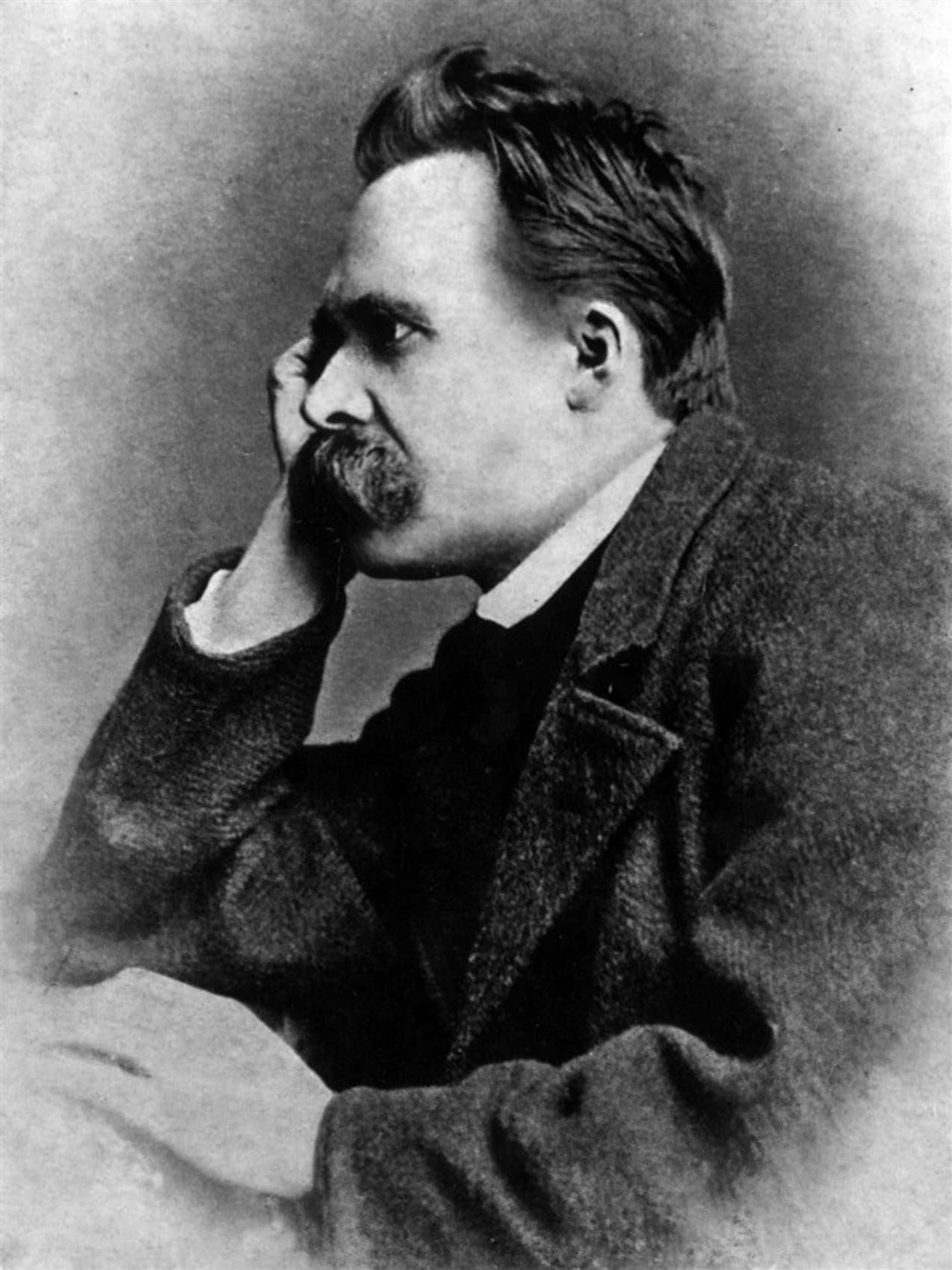
Friedrich Nietzsche was born on 15 October 1844 in Röcken, a village near Leipzig in Prussian Saxony, the son of a Lutheran pastor who died when Friedrich was four. He studied theology and then classical philology at Bonn and Leipzig, and in 1869, at just 24 and before he had formally completed his doctorate, he was appointed professor of classical philology at the University of Basel. There he became a close friend of Richard Wagner, whose music and cultural ambitions shaped his first book, The Birth of Tragedy, in 1872.
Chronic illness forced Nietzsche to give up his professorship in 1879. For the next decade he lived on a small pension, moving between the Swiss Alps, the Italian Riviera and Turin, and wrote the books for which he is best known: Daybreak, The Gay Science, Thus Spoke Zarathustra, Beyond Good and Evil, On the Genealogy of Morality and the works of 1888. In January 1889 he suffered a mental collapse in Turin from which he never recovered, and he died in Weimar on 25 August 1900.
After his collapse his sister, Elisabeth Förster-Nietzsche, took control of his papers and published selections from his notebooks, most famously The Will to Power, shaping his reputation in ways later scholars rejected. The critical edition by Giorgio Colli and Mazzino Montinari restored his texts. His ideas about the death of God, the will to power, eternal recurrence, the Übermensch and the genealogy of values went on to influence existentialism, psychoanalysis, modern literature and much of twentieth-century philosophy.
Thus Spoke Zarathustra follows a fictional prophet named after the ancient Persian sage Zoroaster. After ten years in the mountains he comes down to teach humanity, fails with the crowd, and gathers disciples instead. In four parts he gives speeches, sings songs, tells dreams and meets strange characters. His teachings include the Superman (Übermensch), the will to power, the death of God and, above all, the eternal recurrence of all things, a thought he struggles for most of the book to say aloud. Part Four turns into a comic drama in which a group of “higher men” gathers in his cave, and the book ends with Zarathustra leaving them behind to begin his work.
What is the main idea of Thus Spoke Zarathustra?
The central idea is that once God is dead, human beings must stop looking for meaning beyond this world and instead become creators of value on earth. Zarathustra’s image for this goal is the Superman, a type that would surpass present-day humanity as humanity surpassed the ape. The book’s deepest test is the eternal recurrence: could you affirm your life so fully that you would want every moment, including its pain and smallness, to return forever? Against both the comfortable “last man” and the resentful moralist, Zarathustra teaches self-overcoming, laughter, love of the earth and the courage to say yes to life as it is.
What are the key takeaways from Thus Spoke Zarathustra?
First, the death of God leaves humanity responsible for its own values. Second, man is a bridge and not a goal, something to be surpassed. Third, the greatest danger is the last man, who wants only comfort and safety. Fourth, the spirit grows through stages, the burden-bearing camel, the rebellious lion and the creating child. Fifth, every table of values expresses a will to power, and all life is self-overcoming. Sixth, revenge against time and its “it was” poisons morality, and redemption means willing the past. Seventh, the eternal recurrence is a test of affirmation. Finally, pity, even for higher people, can be a temptation that keeps one from one’s work.
What does Nietzsche mean by the Superman or Übermensch?
Übermensch is translated as “Superman” in Thomas Common’s version and as “Overman” in many recent ones. Zarathustra introduces it in the Prologue as the meaning of the earth: a goal beyond present humanity, which he calls a rope stretched between animal and Superman. The Superman is never described as a person who exists. It works as an ideal that gives direction to self-overcoming and value-creation after the death of God. Zarathustra insists that his listeners cannot simply become it but can become its fathers and forefathers. The idea is not a biological program, and the book’s heroes are creators and laughers rather than conquerors.
What is eternal recurrence in Thus Spoke Zarathustra?
Eternal recurrence is the thought that everything that happens has happened before and will happen again, endlessly, in exactly the same way. Nietzsche first sketched it in The Gay Science. In Zarathustra it appears in “The Vision and the Enigma,” where Zarathustra stands at a gateway called “This Moment” with two eternal lanes running from it, and in “The Convalescent,” where the thought nearly kills him because it means the small, contemptible man also returns forever. The question the book poses is less whether recurrence is true than whether one could love life enough to want it. The Third Part ends with a song of love to eternity.
What is the will to power in Thus Spoke Zarathustra?
The phrase first appears in “The Thousand and One Goals,” where each people’s table of values is called “the voice of their Will to Power.” Its fullest statement is in “Self-Surpassing,” where Zarathustra says that wherever he found a living thing he found will to power, even in the servant’s will to be master. Life tells him that she is “that which must ever surpass itself.” The will to power here is not mainly a desire to dominate others. It is a drive to grow, command, interpret and overcome, which shows itself even in philosophers’ will to truth and in moral values themselves.
What does “God is dead” mean in Thus Spoke Zarathustra?
Zarathustra first thinks it after leaving the old saint in the forest, who has not yet heard that God is dead. The phrase, first used by Nietzsche in The Gay Science, describes a cultural event: belief in the Christian God has stopped being able to ground European values. Zarathustra treats this as both danger and opportunity. Without God, people may sink into the comfortable nihilism of the last man, but they are also free to create. Part Four explores the aftermath through comic portraits, including the retired last pope, who says God choked on his pity, and the ugliest man, who killed God because he could not bear being seen.
Is Thus Spoke Zarathustra worth reading?
Yes, for readers prepared for an unusual book. Nietzsche considered it his most important work, and it contains some of his most famous images: the camel, lion and child, the tightrope walker, the last man, the gateway of the moment, the shepherd and the snake. It is not a treatise, so it rewards slow, imaginative reading rather than a hunt for arguments. Its biblical style can feel strange, and some passages, such as those on women, are troubling. Read alongside Beyond Good and Evil or the Genealogy, which state many of the same ideas in prose, it becomes much clearer, and its literary power is unlike anything else in philosophy.
Who should read Thus Spoke Zarathustra?
It suits readers who enjoy philosophy that works through story, poetry and parable, and who are willing to interpret rather than be told. Those interested in the death of God, the search for meaning without religion, or the psychology of resentment and self-overcoming will find the book’s core images rewarding. Students of literature and music will recognize its influence on writers and on Richard Strauss’s tone poem. First-time readers of Nietzsche may find it easier to start with a summary or with Twilight of the Idols, and then come to Zarathustra knowing the main ideas it dramatizes.
How long does it take to read Thus Spoke Zarathustra?
The Thomas Common translation runs to about 88,000 words, so a reader at an average pace of 250 words per minute needs roughly six hours. In practice most people take longer, because the dense, biblical prose and the symbolism invite rereading. The book divides naturally into short speeches of a few pages each, which makes it easy to read one or two at a sitting. The Prologue, “The Three Metamorphoses,” “Self-Surpassing,” “Redemption,” “The Vision and the Enigma,” “The Convalescent” and “The Drunken Song” are good places to slow down. A summary like this one covers the whole book in well under an hour.
How does Thus Spoke Zarathustra relate to Nietzsche’s other books?
It grows out of The Gay Science, whose 1882 edition introduces the death of God and eternal recurrence and ends by announcing Zarathustra’s going down. After finishing it, Nietzsche returned to argument and aphorism. Beyond Good and Evil (1886) and On the Genealogy of Morality (1887) restate many of Zarathustra’s themes in prose, especially the critique of morality, the will to power and ressentiment. In Ecce Homo, written in 1888, Nietzsche presented Zarathustra as the center of his work. Many readers find that the later books work as commentaries that make Zarathustra’s parables easier to understand.