Four interventions address David Strauss, the uses of history, Schopenhauer as educator, and Wagner. Together they test the cultural ambitions of the Basel years.
“Make of yourselves a mirror where the future may see itself”
Untimely Meditations collects four essays Nietzsche published between 1873 and 1876, each aimed against the self-satisfaction of the new German Empire. He mocks the theologian David Strauss as the model “Culture-Philistine,” argues that too much historical knowledge cripples life, holds up Schopenhauer as an educator who shows how to live philosophically, and celebrates Richard Wagner as the founder of Bayreuth.
The essays share one conviction: culture is a unity of style in a people’s whole life, not a stock of learning, and it is justified by the great human beings it produces. Along the way Nietzsche defends the power of forgetting, distinguishes monumental, antiquarian and critical history, attacks state-run philosophy, and urges each reader to become what they truly are.
Historical knowledge should serve living and acting, and an excess of it weakens personality and paralyzes a culture.
2
The art of forgetting
Like the grazing herd, people need the power to forget and a limited horizon in order to act and be happy.
3
The Culture-Philistine
Learned, complacent people mistake shared conventions for culture and honor great works instead of following their example.
4
Be yourself
Each person is unique, and true educators help by revealing a higher self that lies above us rather than within.
5
Exemplary figures
Schopenhauer and Wagner serve as living examples of independence that can provoke a new generation to create.
Summary by chapter
Untimely Meditations in 15 chapters, in our own words.
Chapter 1
David Strauss I: The Culture-Philistine (§§1–2)
The first meditation, published in 1873, opens in the afterglow of Prussia’s victory over France and the founding of the German Empire. Public opinion, Nietzsche observes, forbids any mention of the dangers of a victorious war. Yet a great victory is a great danger, because human nature bears triumph less easily than defeat. The worst error of the moment is the belief that German culture won the war along with German arms. Discipline, bravery, generalship and obedience won it, he argues, and none of these has anything to do with culture. If the illusion spreads, it threatens the uprooting of the “German Mind” for the benefit of the “German Empire.”
“
Culture is, before all things, the unity of artistic style, in every expression of the life of a people.
Friedrich Nietzsche
To make the point, Nietzsche offers a definition that runs through all four meditations: culture is unity of artistic style in every expression of a people’s life. Abundant knowledge is not culture, and can coexist happily with its opposite, a riotous jumble of styles. That jumble, he says, is exactly where the modern German lives, as any glance at his clothes, his rooms, his houses and his streets would show. In all matters of form Germany still depends on Paris. He recalls Goethe’s remark to Eckermann, “We Germans are of yesterday,” and his warning that centuries might pass before Germans could be said to have long ceased being barbarians.
Why, then, are German scholars so content? Nietzsche’s answer is a new type he names the Culture-Philistine. The ordinary philistine, in student slang, is the opposite of the artist and the son of the Muses. The Culture-Philistine differs by one superstition: he believes he is himself a man of culture. Because he finds people like himself everywhere, sharing the same tacit conventions about religion and art, he mistakes their uniformity for a unified culture. He honors the German classics with monuments, festivals and societies named after them, which Nietzsche calls cash payments that discharge any duty to follow them. The only real way to honor Goethe and Schiller, he insists, is to keep seeking with their spirit and courage.
The Culture-Philistine has a strategy for protecting his comfort. He declares the present an age of epigones, latecomers who can no longer create, so that every disturbing innovator can be dismissed as a mere imitator. He turns philosophy and classical philology into branches of history so they can no longer trouble him. He urges artists to produce either faithful copies of everyday reality or tasteful imitations of famous works. Nietzsche ends with an anecdote: at a gathering honoring Hölderlin, a poet wrecked by philistinism, an aesthetician of the Hegelian school confessed that weakness, not strength of will, is what raises “us” above such tragic souls. That weakness, Nietzsche says, usually goes by the nobler name of the philistine’s “healthiness.”
Chapter 2
David Strauss II: The Heaven and Courage of the New Faith (§§3–7)
Nietzsche’s chosen specimen is David Strauss, the celebrated theologian, and his late book The Old Faith and the New, which had passed through six editions. He reads it as a double confession of the Culture-Philistine, by the confessor in its contents and by the writer in its prose. Strauss presents a modern, scientific creed meant to replace Christianity, and Nietzsche mocks him as a philistine turned religious founder, quoting Faust’s astonished line as the poodle swells into something far larger. He then puts three questions to the new faith: how does its believer picture his heaven, how far does his courage reach, and how does he write his books?
“
A corpse is a pleasant thought for a worm, and a worm is a dreadful thought for every living creature.
Friedrich Nietzsche
The heaven of the new believer turns out to be a heaven on earth, and a very small one. Strauss describes how “we” spend our time: studying history to judge politics, taking part in rebuilding the German state, enlarging our knowledge of nature, and finding stimulation in theatres and concert halls. Nietzsche translates: newspaper reading, the beer garden, a walk in the zoo. Most revealing are Strauss’s pages on the great poets and musicians, where Haydn becomes a “good unpretending soup” and Beethoven “sweetmeats,” and the Pastoral Symphony is called the least remarkable of the nine. The philistine, Nietzsche concludes, lives in the works of the great like a parasitic worm whose admiration is devouring and whose worship is digesting.
On courage, Nietzsche finds daring words and cowardly substance. Strauss calls Jesus an enthusiast who would hardly escape the madhouse today and the Resurrection a world-wide deception, and he explains early Christian asceticism as a hangover after an age of sexual excess. He brushes off Schopenhauer’s pessimism with a clever syllogism: if the thought that the world is bad is itself bad, then the world must be good. Nietzsche is unimpressed. Strauss praises Darwin, yet bases his morality on remembering that all others are human like oneself, which Nietzsche reduces to the empty rule “Live as a man, and not as an ape or a seal.”
The deeper problem, Nietzsche argues, is that Strauss lacks the nerve to draw consequences. If man is a product of nature who rose by forgetting that others share his rights and by suppressing weaker types, then a Darwinian ethics cannot simply end in modern civic decency. Strauss then asks for religious reverence toward the cosmos, the single source of all reason and good, though the same source produces all ruin and evil too. Nietzsche traces this to the Hegelian habit of treating the real as the rational, which amounts to worshipping success. He calls the mixture of impudence and weakness, of bold phrases and timid concessions, the feature of the book he most detests, and he fears for any young people who might take it as their guide.
Chapter 3
David Strauss III: Strauss the Writer (§§8–12)
How could such a book be welcomed in the universities as a pocket oracle for strong intellects? Nietzsche’s answer turns on the modern scholar. The typical specialist, he says, behaves like an idler of independent means for whom life is no serious matter, spending his years on questions that interest only other specialists. Science has time for everything except culture. When scholars finish their day’s work, they are tired and want easy distraction, and a light, agreeable book of faith that confirms their way of life is exactly what they need. Even critics who attacked Strauss’s theology praised his style as almost worthy of Lessing, and that, Nietzsche says, is the real issue for German culture.
“
It was not the dream of our architect to build a temple, nor yet a house, but a sort of summer-pavilion, surrounded by everything that the art of gardening can provide.
Friedrich Nietzsche
He first examines the book’s architecture. Strauss promised to compare the old faith with the new and show that the new could serve the same purpose, but he settles the question in two or three hurried pages. His proofs come from science, so his “religion” is not a belief at all. The book, Nietzsche concludes, is neither temple nor house but a summer pavilion with a pleasant view of the irrational sea from a rational terrace. Its gloomy early chapters on theology serve only as contrast for the bright hall of modern common sense that follows. Strauss calls the book “lightly equipped” on purpose, and Nietzsche suggests the phrase may simply be a euphemism for “naked.”
Behind the style, Nietzsche sees a pose. Strauss wants above all not to be a philistine, and so he keeps arranging his features to resemble Lessing’s brave dialectical temper or Voltaire’s free-spirited wit, wavering between the two. Nietzsche quotes Strauss’s own praise of Voltaire as unoriginal but masterful, and notes that the first half fits Strauss perfectly. The mask keeps slipping. Once there lived a brave, severe and thoroughly equipped scholar named Strauss, Nietzsche writes, and he regrets that this man was replaced by a mummer who parades as an artless genius and classical author.
The last sections attack the prose itself. Writing well in Germany is hard, Nietzsche concedes, because there is no national standard of style, only unwritten rules left over from school exercises and bad French novels. One rule demands fresh metaphors, which the shallow writer finds in railways, telegraphs and the stock exchange. Strauss likens the world to a machine with soothing oil and calls Kant a cold-water cure. Try translating Strauss into Latin, Nietzsche suggests: with Kant it can be done and with Schopenhauer it is a pleasure, but Strauss’s German is too tangled. He closes by calling the philistines’ idol feet of clay and painted flesh, and says his own judgment rests only on the courage of speaking the truth, which is always out of season.
Chapter 4
On the Uses and Disadvantages of History I: The Herd and the Art of Forgetting (Preface, §1)
The second meditation, published in 1874 and translated here as The Use and Abuse of History, begins with Goethe: “I hate everything that merely instructs me without increasing or directly quickening my activity.” Nietzsche says we need history, but for life and action, not as an elegant way to avoid them. His thoughts are untimely, he explains, because he treats the very thing his age is proudest of, its historical culture, as a sickness. Germans, he suggests, suffer from a consuming historical fever. He adds that his insight comes mainly from himself, and from being a pupil of older ages like the Greeks more than a child of his own time.
“
Consider the herds that are feeding yonder: they know not the meaning of yesterday or to-day
Friedrich Nietzsche
The first section opens with one of Nietzsche’s most famous images. Watch a herd grazing, he says. The animals know nothing of yesterday or today; they eat, rest and move, bound to the moment, neither melancholy nor bored. A man might ask the animal why it does not tell him about its happiness, and the animal would like to answer that it always forgets what it was going to say, but it forgets that too. Humans, by contrast, cannot learn to forget. The past runs with us like a chain, and a leaf drops out of the book of time only to flutter back into our lap. The animal lives unhistorically, entering the present without leaving a remainder.
Happiness, Nietzsche argues, depends on the power to forget, to feel unhistorically for a while. A person unable to stand on the threshold of the moment, like a goddess of victory, will never know happiness or make others happy. Someone with no capacity to forget would be like a person forbidden to sleep. So we must measure the “plastic power” of a person, a people or a culture: its ability to grow out of itself, to absorb the past and the foreign, to heal wounds and replace what is lost. Some are lacerated by a single injustice; stronger natures digest even terrible experiences. Every living thing also needs a horizon. The unhistorical and the historical, he concludes, are both necessary for health.
Nietzsche also defines a third stance. The historical man looks back in order to press forward, believing that meaning will become clearer as history unfolds. The super-historical man, by contrast, sees no salvation in process at all; for him past and present are the same eternal types in changing dress, and history can teach nothing new. Nietzsche grants this view a certain wisdom but chooses life over it: better to be joyful in our unwisdom and act. His thesis follows. History treated as pure knowledge would mean closing the account books of life. History is fruitful only when it serves a life-giving power, and never becomes a pure science like mathematics. Too much of it cripples life, and then history itself degenerates.
Chapter 5
On the Uses and Disadvantages of History II: Monumental, Antiquarian and Critical History (§§2–3)
History serves the living in three ways, Nietzsche says, matching three kinds of history: the monumental, the antiquarian and the critical. The first belongs to the person of action who fights a great fight and needs models, teachers and comforters he cannot find among his contemporaries. From monumental history he learns that greatness once existed and was therefore possible, and so may be possible again. If someone believed that a hundred productive people trained in a new spirit could overturn the fashionable education of Germany, he would take heart from the fact that the culture of the Renaissance rested on the shoulders of such a band of a hundred.
“
Every past is worth condemning: this is the rule in mortal affairs, which always contain a large measure of human power and human weakness.
Friedrich Nietzsche
Monumental history has its dangers. To be inspiring, it must smooth away differences, force the past into general formulas and break off its sharp corners. Exact repetition would require the Pythagorean belief that the same constellations bring back the same events. The past is touched up and moves toward fiction, with whole stretches forgotten except for a few brightly colored islands of fact. Worse, people with no creative power use monumental history as a weapon against living artists, dancing around a half-understood monument and asking what use the aspiring little people of today could be. Admiration for dead greatness becomes a way to block present greatness.
Antiquarian history belongs to the reverent, conservative person who looks back with love and loyalty to the origins of his own life. He preserves the old for those who come after, and the history of his town becomes the history of himself: the walls, the gate, the town council, the fair are an illustrated diary of his youth. This gives a rooted people contentment and keeps them from wandering restlessly. But antiquarian history knows only how to preserve life, not to create it. It sees everything old as equally venerable, rejects the new as an enemy, and can end by mummifying life, so that the tree dies from the top down until its roots wither.
So a third kind is needed. Critical history belongs to the person who suffers and needs liberation. To live, one must have the strength to break up a past, drag it before a tribunal and condemn it. The judge here is neither justice nor mercy but life itself, a dark, driving power that desires only itself, and its verdict is always unjust, though justice herself would often deliver the same verdict. The danger is that we are the products of earlier generations, including their errors and crimes, and cannot wholly free ourselves of that chain. At best we can cultivate a new instinct, a second nature, so that the first withers. Each kind of history, Nietzsche concludes, thrives only in its proper soil and becomes a weed elsewhere.
Chapter 6
On the Uses and Disadvantages of History III: The Sickness of Too Much History (§§4–7)
In a healthy relation, Nietzsche says, hunger is the source of historical knowledge, necessity its norm and plastic power its limit. In his own age a bright new star has disrupted that relation: the demand that history be a science. Knowledge now streams into the modern person from every side, and he carries an enormous heap of indigestible knowledge stones that rattle in his belly, as in the fairy tale. The result is a split between inner and outer. Germans pride themselves on inwardness while their outward life has no form of its own. Having fled French convention to become more natural, he now imitates it again, only sloppily, and the foreigner may fairly say that German inwardness is too weak to give itself any outward form.
“
It is as though the heroic symphony had been arranged for two flutes for the use of dreaming opium-smokers.
Friedrich Nietzsche
Nietzsche worries that this is more than a passing weakness. If it were true, he says, there would be despair in the phrase “We Germans feel by theory, we are all spoilt by history,” because every hope for a national culture rests on belief in the genuineness of German feeling and an untarnished inner life. How could a great productive spirit arise among a people unsure of its inner unity, divided between an educated class whose inner life has been led astray from the true path of education and an uneducated class whose inner life cannot be reached? The historical education that was supposed to deepen Germans, he suggests, may instead be hollowing them out, leaving cultivated manners over an absence.
Nietzsche lists five dangers of an excess of history. It weakens personality by sharpening the contrast of inner and outer. It tempts an age to believe it possesses the rarest virtue, justice, more than any other age. It disturbs the instincts of a people and stops individuals from maturing. It spreads the belief that humanity is old and that we are latecomers, epigones. And it leads an age into irony about itself and then into cynicism. On the first point he compares modern spectators to Romans of the Empire who lost themselves amid a cosmopolitan carnival of cults and customs, and he demands of masked contemporaries: “Off with your jackets, or be what you seem!” Philosophy, meanwhile, has become a learned show regulated by governments and universities.
On justice, Nietzsche praises the truly just person as the most venerable of all, but denies that historical “objectivity” is justice. The historical virtuoso to whom nothing human is alien has become a passive instrument echoing the past in thin overtones. Objectivity in the best sense, he argues, is really artistic composition, the dramatist’s power of weaving events into a whole, which serves art rather than truth. Too often it is merely coldness passing as calm. His alternative is bold: “You can only explain the past by what is highest in the present.” History should be written by people of experience and character, and only those building the future have the right to judge the past.
Section 7 adds that unchecked historical sense uproots the future by destroying the illusions in which living things grow. A religion turned entirely into historical knowledge is destroyed in the process, as Nietzsche says has happened to Christianity, and he fears the same dissection for Mozart and Beethoven while their influence is still alive. Every people and every person needs a protective cloud of illusion in order to ripen. Instead, he says, the young are rushed into productive work for the common good before they mature, or rather to keep them from maturing, so that they may take their place in the machine of the labor market.
Chapter 7
On the Uses and Disadvantages of History IV: Latecomers, Hegel and the Cure of Youth (§§8–10)
The feeling of being a latecomer, Nietzsche argues, is an old Christian inheritance: the medieval memento mori, the sense of living in the fifth act of a tragedy, now dressed in historical colors. It need not be crippling, since being heirs of classical greatness could be an honor and a spur. But it becomes devastating when the latecomer declares himself the goal of all past history. That, Nietzsche says, is the effect of Hegel’s philosophy, which made history a divine process culminating in Hegel’s own Berlin existence and taught a generation to bow before the “power of history,” which in practice means idolizing success. History teaches what was; morality says what ought not to have been. Morality is offended that Raphael had to die at thirty-six, and admiring facts for being facts makes one the devil’s advocate.
“
By the word “unhistorical” I mean the power, the art of forgetting, and of drawing a limited horizon round one's self.
Friedrich Nietzsche
Section 9 turns to irony and cynicism, and to Eduard von Hartmann’s Philosophy of the Unconscious, which Nietzsche treats as a deliberate parody of the age. Hartmann presents history as a world process moving toward redemption and asks individuals to surrender their personality to it. Nietzsche reads this as a magnificent unintended joke: the modern person is told to keep living as he has lived, love what he loved and read the newspapers he always read. He declares it high time for satire against the excesses of the historical sense and the comic presumption of humanity, and he defends youth against the false prophets who would turn it prematurely into the egoism of manhood.
The final section cries “Land!” after a long voyage. Nietzsche admits that his own essay shows the marks of the disease it diagnoses, in its intemperate criticism and leaps from irony to cynicism. German education, he says, aims to produce not a cultivated person but a scholar who knows about culture before he knows about life, stuffed with ideas secondhand from past ages. Like Plato’s founders who needed a “mighty lie,” the first generation of a new culture must live by a hard truth: that it lacks culture and must educate itself against its own nature. The cure lies with youth, who still have the instinct of health.
The remedies bear the names of poisons, Nietzsche says: the unhistorical, the art of forgetting and of drawing a limited horizon, and the super-historical, which turns the eyes toward what is eternal and stable in art and religion. Science treats both as enemies, but life must rule over knowledge, because knowledge that destroyed life would destroy itself. He ends with a parable. The early Greeks were once drowning in foreign forms, Semitic, Babylonian, Lydian and Egyptian, yet they obeyed the Delphic “Know thyself,” thought back to their real needs and organized the chaos. Each of us must do the same, rejecting secondhand thought and action, and learn that culture can be a new and finer nature rather than a decoration of life.
Chapter 8
Schopenhauer as Educator I: Be Yourself (§§1–2)
The third meditation, published in 1874, begins with a traveler who, asked what he found common to all peoples, answered that they tend to be lazy. Nietzsche suggests the fuller truth is that they are timid, hiding behind manners and opinions. Each person knows that he is unique and will never be put together again, yet hides this like a bad conscience out of fear of his neighbor and of convention. Whoever does not want to belong to the mass need only stop being comfortable with himself and follow his conscience, which calls out: “Be thyself!” Without this liberation, life becomes a husk, and a man who has broken from his own genius is the most desolate creature in nature.
“
At bottom every man knows well enough that he is a unique being, only once on this earth
Friedrich Nietzsche
How can one find oneself? Digging straight into one’s own depths is dangerous and may wound past healing. Nietzsche proposes a better method: let the young soul look back and ask what it has truly loved, what has drawn it upward, mastered it and made it happy. Set these things in a row, and they may reveal a law, the fundamental law of one’s own self. True educators are liberators; they show us that our real nature lies not hidden deep within but immeasurably high above us. With that, he takes as his theme the “hard teacher” Arthur Schopenhauer.
Nietzsche recalls his youthful wish for a true philosopher who could educate him, someone to obey more readily than himself. He found none in the German universities, where no one even teaches speaking and writing as arts and where the lack of demand for educators betrays national self-satisfaction. He blames part of modern weakness on a life seesawing between Christian and pagan morality without the strength of either. Then he discovered Schopenhauer, and knew from the first page that he would read every word. For nine years, he says, his trust has not wavered, and he felt as if Schopenhauer had written for him.
He identifies three qualities in that influence: honesty, cheerfulness and steadfastness. Schopenhauer writes for himself and never poses, and only Montaigne equals him in honesty. His cheerfulness is that of a thinker who has conquered real difficulties, not the shallow contentment Nietzsche found in David Strauss. And he is steadfast because he cannot help being so; his strength rises like a flame in still air. Schopenhauer, Nietzsche says, is a philosopher who can be followed as one follows nature, simple and true, a rare thing in a world of centaurs and chimeras.
Chapter 9
Schopenhauer as Educator II: Three Dangers and Three Images of Man (§§3–4)
A philosopher teaches, Nietzsche says, only so far as he can be an example, and the example must be lived, as the Greek philosophers taught through their dress and conduct more than their books. German philosophers have produced nothing like this. Kant kept to his university, submitted to its regulations and, as his colleagues believed, to a definite religious faith, and his example produced above all university professors of philosophy. That Schopenhauer became such an example is a marvel, because three great dangers threatened to break him. It was likely, Nietzsche says, that the man would go under and leave at best a residue of “pure reason,” or that neither man nor reason would survive.
“
There are three Images of Man fashioned by our modern time, which for a long while yet will urge mortal men to transfigure their own lives; they are the men of Rousseau, Goethe, and Schopenhauer.
Friedrich Nietzsche
The first was isolation. An English writer had observed that a Shelley could never have lived in England, and Nietzsche adds that Germany’s Hölderlins and Kleists were undone by the climate of German culture, which only iron natures like Beethoven, Goethe, Schopenhauer and Wagner could survive. The second was despair of truth, the corrosive skepticism that Kant’s philosophy produced in sincere minds, as when Kleist wrote that after reading Kant he could no longer believe we can know whether what we call truth is really true. The third was a longing for genius and holiness, a yearning to be born again that can harden, if frustrated, into bitterness or into an icy, isolated self. Schopenhauer bore scars, Nietzsche admits, but his single ideal carried him through.
Nietzsche then surveys his age. Many professors believe the founding of the new German Empire has refuted all pessimism, and the state is preached as the highest end of human beings. He disagrees. He sees the waters of religion ebbing, nations ready to tear each other apart, sciences splitting up without common standards, educated people swept along in the pursuit of money, and learned men no longer refuges amid the worldliness. Beneath it all he senses wild forces gathering, and he predicts an atomistic revolution. Who, he asks, will set up the image of man again?
Modern times, he says, have produced three images of man. Rousseau’s man has the greatest fire and appeals to the people; in every socialist upheaval he is the giant stirring under Etna, calling on holy nature against corrupt society. Goethe’s man is for the few, a contemplative who corrects Rousseau’s dangerous agitation but risks becoming a mere spectator. Schopenhauer’s man voluntarily takes on the pain of truthfulness, which quiets his individual will and prepares a transformation of his whole being. To others he looks malicious, like Mephistopheles rather than Faust, because he destroys their comforts. But his denial, Nietzsche insists, springs from a longing for holiness, and it is in the deepest sense an affirmation.
Chapter 10
Schopenhauer as Educator III: Philosopher, Artist and Saint (§§5–6)
How can such an ideal produce ordinary duties? Nietzsche starts with animals. Thoughtful people have always pitied beasts, which suffer blindly without understanding their suffering. Much of human life, he says, continues this animal condition: our migrations, wars, cities and doctrines, our endless striving, are a continuation of the beast in us. In rare moments the clouds break and we see that all nature presses toward humanity as toward something above it. But we cannot lift ourselves; we must be lifted. Those who lift us are the truly human beings who are no longer animals: the philosophers, artists and saints. In them nature, which never makes leaps, makes its one leap of joy.
“
Mankind must toil unceasingly to bring forth individual great men: this and nothing else is its task.
Friedrich Nietzsche
From this Nietzsche draws a circle of duties. They are not a hermit’s. They bind a community held together by one idea, culture, whose task is to bring forth the philosopher, the artist and the saint within us and outside us, and so to help nature complete itself. Nature needs the artist and the philosopher to understand itself and reach self-consciousness, and it needs the saint, in whom the ego has melted into sympathy with all living things. Ordinary people cannot produce these figures directly, but they can prepare for them.
Nietzsche admits the difficulty of living by such an ideal. In ordinary life we cannot produce a redeemer, and we may feel envious of the great or crushed by our own deafness and feebleness beside a Schopenhauer. The answer, he says, is not to despair but to turn aside and discover a new circle of duties. Even ordinary people know moments, sparks from the fire of love, when the word “I” loses its meaning and something beyond the self comes near. Those moments explain why we long for a bridge between our everyday existence and the higher one, and why serving the production of greatness can give an ordinary life its meaning.
Section 6 states the thesis bluntly: mankind must work continually to produce individual great human beings, and this alone is its task. Nietzsche argues that in nature progress comes through rare, higher individuals, not through the average of the mass, and he insists that the same holds for society. The question each person should ask is how his own life can have the highest value, and his answer is: by living for the benefit of the rarest and most valuable specimens. Accepting this is the “first initiation into culture.” The second initiation turns outward, toward criticism of the world and finally to action, fighting for culture against the institutions that obstruct the production of genius.
Most of those who claim to serve culture, Nietzsche argues, use it for other ends. Businessmen want as much education as possible because it yields as much wealth as possible, aiming to make “current” people in the way one speaks of currency. The state wants culture to the extent that it channels free spirits into useful service, like a mountain stream diverted to turn mill wheels. People who find themselves boring want culture as good form, a pleasant disguise. And science, cold and loveless, turns its servants into dry specialists. Nietzsche analyzes the scholar into a mixture of motives: curiosity, love of the chase, love of contradiction, shortsightedness, dread of boredom, the need to earn a living and fear of colleagues. The scholar, he concludes, is by nature unproductive and hostile to genius.
Chapter 11
Schopenhauer as Educator IV: Philosophy Against the State (§§7–8)
Turning practical, Nietzsche asks what conditions might allow a future philosopher to grow up as Schopenhauer did. Nature, he says, wants to make philosophers useful but bungles the job; she shoots her philosopher like an arrow into humanity without aiming, and most of her arrows miss. The task of those who understand this is to help her by bringing the free spirits and the sufferers of the age to know Schopenhauer, and so to prepare for the rebirth of philosophical genius. Nature, in his image, shoots the philosopher at mankind like an arrow without aiming, hoping it will stick somewhere, and the artist reaches his audience like heavy artillery fired at a flock of sparrows. Those who understand this waste can at least help clear the obstacles.
“
The state has never any concern with truth, but only with the truth useful to it, or rather, with anything that is useful to it, be it truth, half-truth, or error.
Friedrich Nietzsche
Schopenhauer’s own life suggests the conditions. His father, a proud republican merchant, rescued him from a vain mother, gave him a rough, strong manliness and took him traveling, so that he learned people before books and felt at home in England, France and Italy. He was not trained as a professor but worked, unwillingly, as a merchant’s clerk. A scholar can never become a philosopher, Nietzsche declares; even Kant remained in the chrysalis stage. And Schopenhauer could live for his task by his motto, vitam impendere vero, to stake one’s life on truth, without having to earn a living from philosophy. In short, the philosopher needs freedom and more freedom, the same dangerous element in which the Greek philosophers grew.
Here Nietzsche takes up Schopenhauer’s attack on university philosophy. The freedom the state gives some men for the sake of philosophy is really an office that feeds its holder. The state picks its own philosophers, assumes there are enough good ones to fill every chair, ties them to fixed lectures on set subjects, and turns philosophy into the learned history of philosophy, which no true philosopher in India or Greece ever practiced. The worst harm of these appointed philosophers is that they make philosophy ridiculous. The state, Nietzsche argues, cares about truth only when it is useful and wants philosophy to sanctify its own worth.
His proposal is radical: withdraw from philosophy all political and academic standing, stop paying it, even persecute it, and see what happens. The real sciences would gain by freeing themselves from this alliance. In any case, it matters infinitely more that a philosopher should arise on earth than that any state or university should continue. Philosophy’s dignity was highest when liberty was most endangered, under the late Roman Republic and the Empire, and Brutus shows it better than Plato. Its true friends must prove by their deeds that the love of truth has awe and power. Schopenhauer, the essay ends, proved this and will go on proving it.
Chapter 12
Richard Wagner in Bayreuth I: The Drama of Wagner’s Life (§§1–3)
The fourth meditation appeared in 1876, the year Wagner’s festival theatre in Bayreuth first opened. No event is great in itself, Nietzsche begins; greatness needs both a great deed and worthy witnesses. Whether those coming to Bayreuth will be worthy of what happens there is the question. He recalls the rainy day in May 1872 when the foundation stone was laid, and Wagner rode back silently with a few companions, including Nietzsche, with a look turned deeply inward. It was the first day of his sixtieth year, and Nietzsche imagines his whole past rising before him as a long preparation for that moment.
“
For an event to be great, two things must be united—the lofty sentiment of those who accomplish it, and the lofty sentiment of those who witness it.
Friedrich Nietzsche
Those gathering at Bayreuth, Nietzsche says, are themselves a spectacle. A sage returning after a century would feel among them like a swimmer who meets a warm current from a deep spring: they seem out of season, with their reasons for being elsewhere than in the present age. For the disciples of this revived art he asks above all for thoughtfulness and silence. Which of us, he asks, has not soiled hands and heart in the idolatry of modern culture? He hears a voice that cries “Be silent and cleansed,” and he insists that only those who heed it will have the elevated gaze the event requires, and that the future of Bayreuth depends on that gaze.
Nietzsche reads Wagner’s life as a drama. His childhood and youth showed no clear promise, only a restless versatility, a dilettante’s dabbling in many arts. Then his ruling passion became conscious and his nature split into two forces. One was a violent, tyrannical will rushing like a mountain torrent toward light and power, which might have turned evil if it had met only failure. The other was a pure, loving, faithful spirit that never deserted him. The story of his development is the story of how the second came to guide the first. His characters, from Rienzi and the Flying Dutchman through Tannhäuser, Lohengrin, Tristan, Hans Sachs and Wotan, trace a growing current of ennobling morality.
The dangers were real. His instincts strained in every direction, and success and failure alike tempted him toward power and splendor. He also acquired immense learning, which might have paralyzed a weaker artist. Wagner became master of music and theatre and an inventor of the technical means of staging, and he studied history and philosophy deeply. But learning never turned him into a scholar. When he creates, Nietzsche says, history becomes clay in his hands, and he treats it as the Greeks treated their myths, as material to be shaped. From history and philosophy he drew not repose but the inspiring breath that rises from the graves of great fighters, sufferers and thinkers.
Chapter 13
Richard Wagner in Bayreuth II: Art Against a Diseased Age (§§4–6)
Nietzsche places Bayreuth in the long history of culture. The most important event since the Greeks, he suggests, remains Alexander’s double mission of Hellenizing the world and Orientalizing Hellenism, and in his own day the pendulum of history seems to swing back toward Greece, so that Kant recalls the Eleatics, Schopenhauer Empedocles and Wagner Aeschylus. To restore drama in its purest form would require changes everywhere, in customs, the state, education and social life. Bayreuth, he says, is not an escape into art or a narcotic for misery. It is the consecration of the dawn of a struggle, in which the tragic artwork shows individuals ready to sacrifice themselves for love and justice. The aim of tragedy is to consecrate the individual to something beyond himself.
“
The individual must be consecrated to something impersonal—that is the aim of tragedy
Friedrich Nietzsche
Nietzsche explains what he means by a sense of the tragic. The individual must forget the anxiety that time and death create, because at any moment something sacred may cross his path and repay all his struggles. If humanity must one day perish, its highest aim would be to grow into such unity that it could meet its end as a whole, with a common sense of the tragic. Art, he adds, does not exist for those who want only to be healed or numbed. It demands silence while it holds us in view, and it sends us back into life stronger rather than consoled, ready to act.
Wagner’s achievement, in Nietzsche’s account, was to discover the link between music and life. He was the first to see that language has become diseased. It has strained so long to express thought rather than feeling that it can no longer do its original job of letting suffering people share their sorrows. People cannot speak honestly; convention whispers their lines. In this world of “incorrect feeling,” Wagner’s music appears as the rediscovered language of correct feeling, and it longs for a body, for a culture of gestures, deeds, institutions and customs that would match it.
Nietzsche’s picture of modern life is bleak. Financiers, once tolerated as necessary, now rule the modern soul, and the only seriousness left concerns the news of the day. Modern art’s assigned task is to stupefy or intoxicate, to help people forget their bad conscience for a moment rather than lead them back to innocence. The artist who would restore art’s sanctity must first free himself from modern souls. Wagner’s art, Nietzsche imagines, calls out to them: “Ye must go through my mysteries,” promising to lead them into a deeper nature, richer and more terrible than the gloomy corner of life they know. That such an art should arise in so wretched an age seems to him a sign of necessity rather than chance.
Chapter 14
Richard Wagner in Bayreuth III: The Dithyrambic Dramatist (§§7–9)
Anyone confronting a nature like Wagner’s, Nietzsche writes, must ask what he himself is doing there, and the very discomfort of the question reveals Wagner’s demonic power of communicating himself. Section 8 tells his inner history. Wagner’s idea that drama is the art with the greatest power over the world first came to him as a temptation toward fame and influence. He wanted to triumph as no artist ever had, and studied every success and every audience for the means to enthral them. Gradually the two forces in him drew together, the higher self no longer merely restraining the violent will but loving and directing it. He sought the people, found in myth and music their language of distress, and was answered with chatter, misunderstanding and the charge of being a theorist.
“
If the philosopher says it is will that struggles for existence in animate and inanimate nature, the musician adds: And this will wherever it manifests itself, yearns for a melodious existence.
Friedrich Nietzsche
Then came isolation, and with it mastery. Wagner, Nietzsche says, ceased to hope, looked into the depths and saw suffering in the nature of things, and accepted his share of sorrow more calmly. His desire for power now flowed entirely into creation. Nietzsche singles out Tristan and Isolde as the real opus metaphysicum of all art. Wagner also felt he must teach the world how his works should be performed, because they were famous yet constantly mangled. Hence Bayreuth: a tradition of style passed on not in writing but through impressions on living performers.
Section 9 considers Wagner as artist. His power lies in communicating his inner experience in every language at once. As a poet he thinks mythically, in visible events rather than ideas, as the people always have. The Ring of the Nibelung, Nietzsche says, is a vast system of thought without abstraction. His dramas were meant to be sung, not read, and he forced language back toward an earlier stage of imagery and feeling. As musician, he gave a voice to everything in nature that had been mute: dawn, forest, mist, cliffs and moonlight all seem to want their own melody.
Before Wagner, Nietzsche argues, music mostly expressed lasting states of mind, what the Greeks called ethos; only with Beethoven did it begin to speak the language of pathos and passionate will. Wagner freed music from the old music of moods and made it the precise expression of dramatic feeling, an achievement Nietzsche likens to the invention of sculpture in the round. He compares Wagner to Demosthenes: the same terrible seriousness, the same iron grip on his subject, the same way of making the audience forget the art in the force of the matter. His art, Nietzsche says, works like nature recovered and restored.
Chapter 15
Richard Wagner in Bayreuth IV: Art for the Future (§§10–11)
An artist with such command over himself, Nietzsche writes, overpowers others without trying, yet Wagner always avoided heading a party and freed himself from each circle of followers. He does not want a school of composers in his style; he believes the age needs masterly interpreters more than new creators. What he does want is to found a tradition of performance through which his work can pass intact to the future, and like an insect that spends its last energy securing a safe place for its eggs, he struggled to find such a place for his art. Unlike the philosopher, who can entrust his work to written pages, the artist of the future needs living people and public institutions to carry it.
“
not the prophet of the future, as perhaps he would fain appear to us, but the interpreter and clarifier of the past.
Friedrich Nietzsche
Nietzsche reads Wagner’s prose writings in this light. He is a fighter whose right hand has been cut off and who continues the battle with his left; his true canons are in his works, and his books try only to understand the instinct behind them. What distinguishes his art is that it no longer speaks the language of a caste and refuses the division between educated and uneducated. It sets itself against the whole Renaissance culture of the learned, and promises a future in which the highest joys are common property and the word “common” loses its contempt.
Nietzsche asks how such a homeless art can be protected through coming upheavals and revolutions. He explains Wagner’s confidence in German power as a hope that the people of the Reformation could channel the torrent of revolution into a calm stream of humanity, and he reads Wagner’s Imperial March in that sense. But the great artist’s thoughts, like those of every good and great German, are more than German. His language appeals not to a race but to humanity, and above all to the people of the future. This faith in a coming generation, Nietzsche says, is both Wagner’s torment and his distinction: whether his contemporaries praised or reviled him, he did not belong to them.
The final section insists that Wagner is no utopian promising a golden age. Nietzsche recounts the themes of the dramas: the wanderer redeemed by a faithful woman in the Flying Dutchman, love turned to saintly charity in Tannhäuser, the higher being who must not be questioned in Lohengrin, the lovers freed only by death in Tristan, and in the Ring a god who craves power, is cursed by it and longs for the free, fearless hero he cannot create. Then he turns to his contemporaries: who among you would renounce power, knowing it is evil? Where are the Siegfrieds among you? Wagner, he concludes, may be not the prophet of the future he seemed but the interpreter of the past. Readers often note the irony that Nietzsche would break with Wagner soon afterward.
Who it’s for
Readers asking how history and memory should serve life rather than burden it
Students and teachers frustrated with education that produces learning without character
Readers curious about Nietzsche’s early admiration for Schopenhauer and Wagner
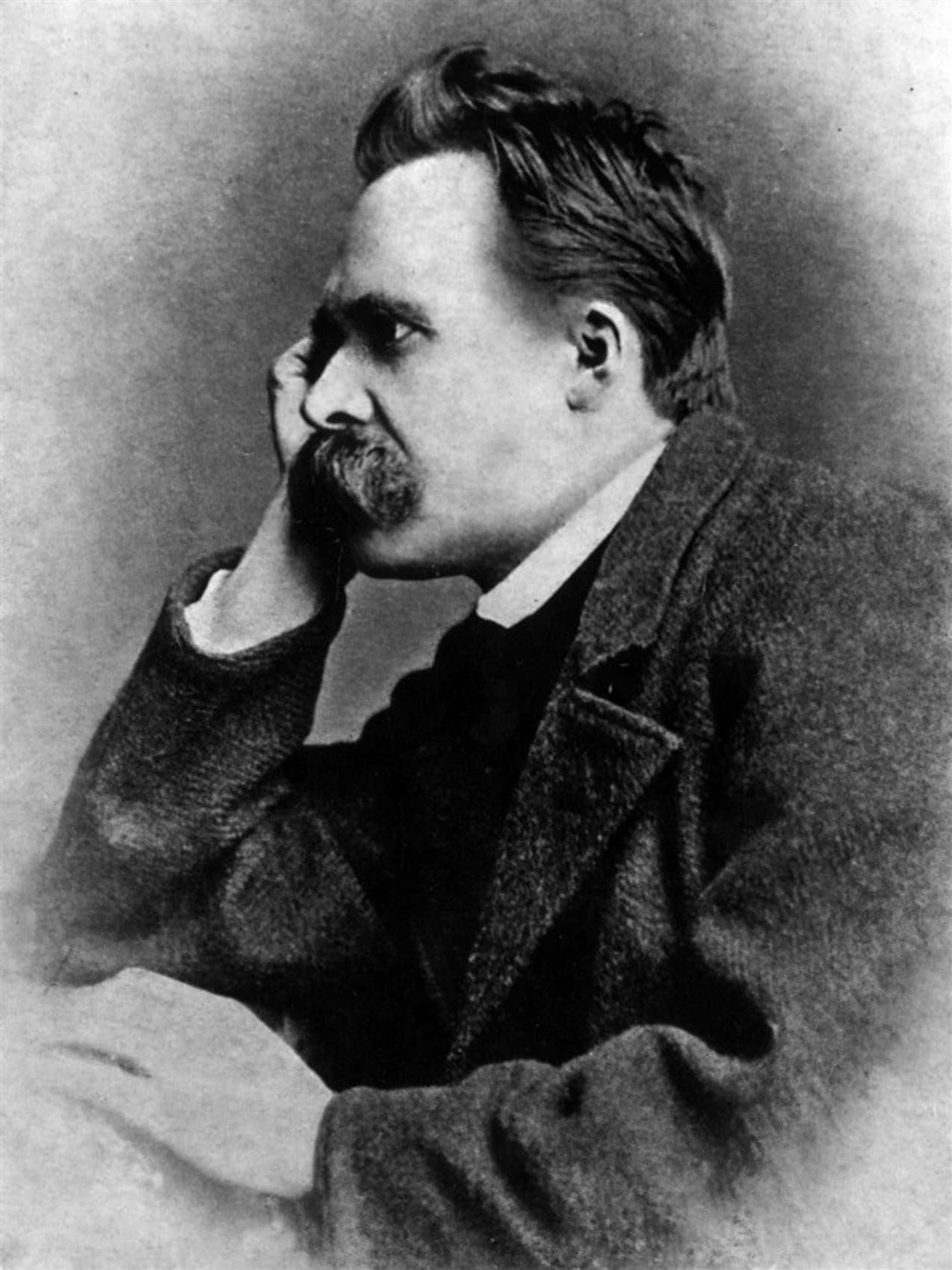
Friedrich Nietzsche was born on 15 October 1844 in Röcken, a village near Leipzig in Prussian Saxony, the son of a Lutheran pastor who died when Friedrich was four. He studied theology and then classical philology at Bonn and Leipzig, and in 1869, at just 24 and before he had formally completed his doctorate, he was appointed professor of classical philology at the University of Basel. There he became a close friend of Richard Wagner, whose music and cultural ambitions shaped his first book, The Birth of Tragedy, in 1872.
Chronic illness forced Nietzsche to give up his professorship in 1879. For the next decade he lived on a small pension, moving between the Swiss Alps, the Italian Riviera and Turin, and wrote the books for which he is best known: Daybreak, The Gay Science, Thus Spoke Zarathustra, Beyond Good and Evil, On the Genealogy of Morality and the works of 1888. In January 1889 he suffered a mental collapse in Turin from which he never recovered, and he died in Weimar on 25 August 1900.
After his collapse his sister, Elisabeth Förster-Nietzsche, took control of his papers and published selections from his notebooks, most famously The Will to Power, shaping his reputation in ways later scholars rejected. The critical edition by Giorgio Colli and Mazzino Montinari restored his texts. His ideas about the death of God, the will to power, eternal recurrence, the Übermensch and the genealogy of values went on to influence existentialism, psychoanalysis, modern literature and much of twentieth-century philosophy.
Untimely Meditations is a set of four long essays Nietzsche published between 1873 and 1876, while he was a professor at Basel. Each attacks the cultural complacency of the newly founded German Empire. The first ridicules the theologian David Strauss as the model “Culture-Philistine.” The second argues that an excess of historical knowledge damages life. The third presents Schopenhauer as a model of the philosophical life and attacks state-run university philosophy. The fourth celebrates Richard Wagner on the eve of the first Bayreuth festival. The title signals that Nietzsche is deliberately writing against his time.
What is the main idea of Untimely Meditations?
The common thread is that real culture is a unity of style in a people’s whole life, and that modern Germany, despite its learning and military success, has none. Nietzsche argues that knowledge, history and scholarship should serve life rather than replace it, and that a culture is justified by the great individuals it produces: philosophers, artists and saints. Strauss represents the comfortable pseudo-culture he rejects, the historical sense its paralysis, and Schopenhauer and Wagner the exemplary figures who might educate a new generation.
What are the key takeaways from Untimely Meditations?
First, military victory is not cultural victory, and success can breed dangerous complacency. Second, learning without unity of style is barbarism, however impressive it looks. Third, forgetting is as necessary to life as remembering, and history must be used monumentally, antiquarianly or critically in the service of life. Fourth, each person should become what they truly are rather than hide behind convention, and educators help by revealing our higher self. Fifth, state-funded philosophy tends to be tame and ridiculous. Sixth, art at its best is not entertainment but a summons to transform life.
What are the three kinds of history in Nietzsche’s second meditation?
Nietzsche distinguishes monumental, antiquarian and critical history. Monumental history serves people of action by showing that greatness once existed and so may exist again, though it tends to distort the past and can be used to belittle living creators. Antiquarian history serves the reverent person who preserves and honors his origins, but it can mummify life and reject everything new. Critical history serves those who need liberation by putting the past on trial and condemning it, though we can never fully escape the past that made us. Each is healthy only in its proper soil.
Who is the Culture-Philistine?
The Culture-Philistine is Nietzsche’s name for the educated German who believes he possesses culture when he only possesses information and comfortable conventions. Unlike the ordinary philistine, who knows he is no artist, the Culture-Philistine thinks he is a man of culture because everyone around him shares his tastes. He honors the classics with monuments instead of following their example, calls his age one of epigones to dismiss innovators, and prefers art that flatters him. Nietzsche takes David Strauss’s The Old Faith and the New as the perfect specimen of the type.
What does Nietzsche mean by “Be thyself” in Schopenhauer as Educator?
Nietzsche argues that every person is unique and knows it, yet hides behind conventions out of laziness and fear of others. Conscience calls on us to become ourselves, but our true self is not buried within; it lies high above us, as an ideal to grow toward. Educators help by revealing it. He suggests asking what one has truly loved and what has lifted one’s soul, and reading these as clues to one’s own law. The idea anticipates his later motto from The Gay Science and Ecce Homo: become who you are.
Is Untimely Meditations worth reading?
Yes, especially the second and third essays, which are among Nietzsche’s most influential early writings. On the Uses and Disadvantages of History for Life remains a classic for anyone thinking about memory, education and tradition, and Schopenhauer as Educator is a stirring essay on self-development and the philosophical life. The essay on Strauss is more topical and polemical, and the Wagner essay is best read knowing that Nietzsche soon broke with Wagner. Taken together, they show Nietzsche finding his voice as a critic of culture.
Who should read Untimely Meditations?
The book suits readers interested in the philosophy of history, education and culture, and anyone curious about how Nietzsche’s ideas developed between The Birth of Tragedy and his aphoristic middle period. Teachers and students will find the critique of education and scholarship sharply relevant. Readers interested in Schopenhauer or Wagner will find a passionate contemporary portrait of each. Those who want only Nietzsche’s core ideas might begin with the history essay and Schopenhauer as Educator, and treat the other two as companions.
How long does it take to read Untimely Meditations?
The English text runs to about 107,000 words, so at an average pace of around 250 words per minute it takes roughly seven hours in total. Each of the four essays stands alone, ranging from about 22,000 to 31,000 words, so most readers can finish one in an hour and a half to two hours. The history essay and Schopenhauer as Educator reward slower reading, while the Strauss essay moves quickly once its satirical method is clear. A summary like this one covers the argument of all four in well under an hour.
How does Untimely Meditations relate to Nietzsche’s later work?
It sits between The Birth of Tragedy, with its hopes for a Wagnerian rebirth of German culture, and Human, All Too Human of 1878, where Nietzsche turns to cooler psychological analysis and away from Wagner and Schopenhauer. Many later themes appear here first: the value of forgetting, the critique of objective scholarship, suspicion of the state, contempt for complacent modern culture and the call to become oneself. In Ecce Homo Nietzsche later suggested that the essays on Schopenhauer and Wagner say more about himself than about their subjects, and his break with Wagner was soon to come.