Seeing Beneath the Surface of Human Behavior
Character, Desire, Perspective, and Persuasion
Attitude, Shadow, Envy, and the Fragile Self
Limits, Inner Polarity, and a Life of Purpose
Groups, Authority, and Hidden Aggression
The Spirit of the Times and the Wisdom of Mortality

Transcript
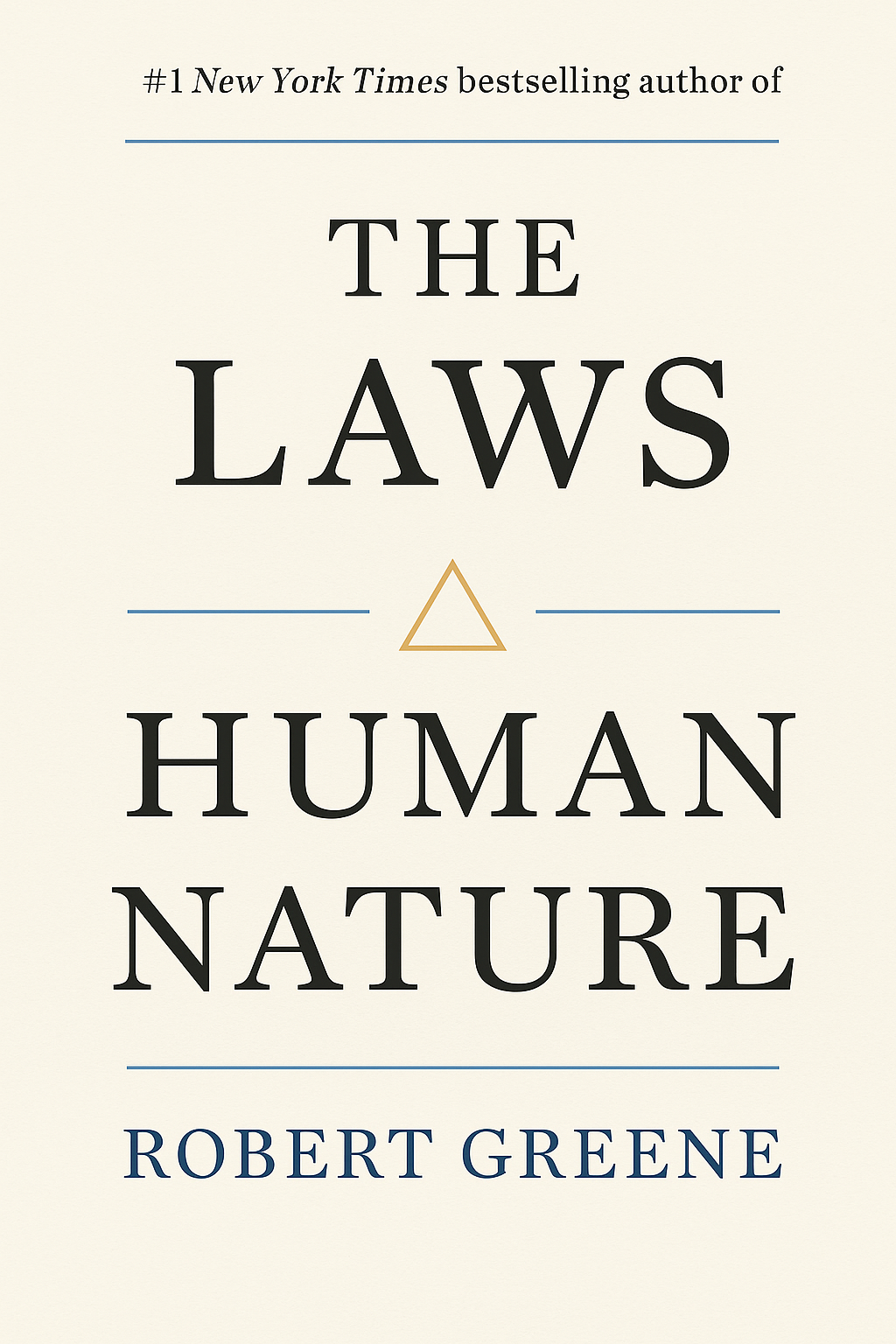
Welcome to The Laws of Human Nature by Robert Greene — a book that will permanently change how you see every person in your life, including yourself. Most people assume they act from reason and logic, but this book reveals that the real forces driving behavior are almost entirely hidden from view. Robert Greene, who reportedly held around 80 different jobs before becoming an author, spent years studying history, philosophy, and psychology to expose those hidden forces. Greene's central argument is blunt: human beings are not rational creatures. Our decisions are driven by unconscious emotions, evolutionary instincts, and psychological patterns we rarely examine honestly. We then construct convincing explanations after the fact — and genuinely believe them. According to the author, we are simultaneously the most social animals on earth and the most self-absorbed. We depend on cooperation to survive, yet we perceive almost everything through the narrow lens of our own needs and fears. This gap between social dependency and self-centeredness, Greene argues, is the root cause of most conflict, misunderstanding, and failure. Greene's proposed remedy is what he calls deep empathy — not sentiment, but a disciplined, strategic ability to enter other people's minds. It requires reading emotional states accurately and anticipating behavior before it unfolds. Crucially, the author insists this outward skill must be matched by rigorous self-knowledge. The first major principle Greene presents is the Law of Irrationality, which catalogs the specific biases that distort thinking at every level of intelligence. These include confirmation bias, superiority bias, blame bias, and the group effect, among others. No level of education or accomplishment, the author contends, makes a person immune to these forces. Greene uses the Athenian statesman Pericles as his primary model of rational mastery — not a man without emotion, but one who refused to be controlled by it. Facing public panic during Athens' darkest hours, Pericles consistently delayed reaction and returned to long-term strategic thinking. The author also cites Abraham Lincoln's habit of writing furious letters he never sent as a practical method for processing emotional energy without acting on it destructively. What Greene describes as the rational self is not cold or detached — it distinguishes productive emotions like curiosity from reactive ones like resentment that corrupt judgment. Developing this capacity demands slowing down reactions, seeking evidence that challenges your existing beliefs, and building an identity strong enough to resist groupthink. The author presents emotional self-mastery as the single most important skill a person can develop, because it underlies every other form of competence — from leadership to creativity to seeing other people clearly. Greene uses the Athenian statesman Pericles as his primary model of rational mastery — not a man without emotion, but one who refused to be controlled by it. Facing public panic during Athens' darkest hours, Pericles consistently delayed reaction and returned to long-term strategic thinking. The author also cites Abraham Lincoln's habit of writing furious letters he never sent as a practical method for processing emotional energy without acting on it destructively. What Greene describes as the rational self is not cold or detached — it distinguishes productive emotions like curiosity from reactive ones like resentment that corrupt judgment. Developing this capacity demands slowing down reactions and seeking evidence that challenges your existing beliefs. The author presents emotional self-mastery as the single most important skill a person can develop, because it underlies every other form of competence — from leadership to creativity to seeing other people clearly.