Why Simplicity Beats Excess: The Quest for a Life That Serves You
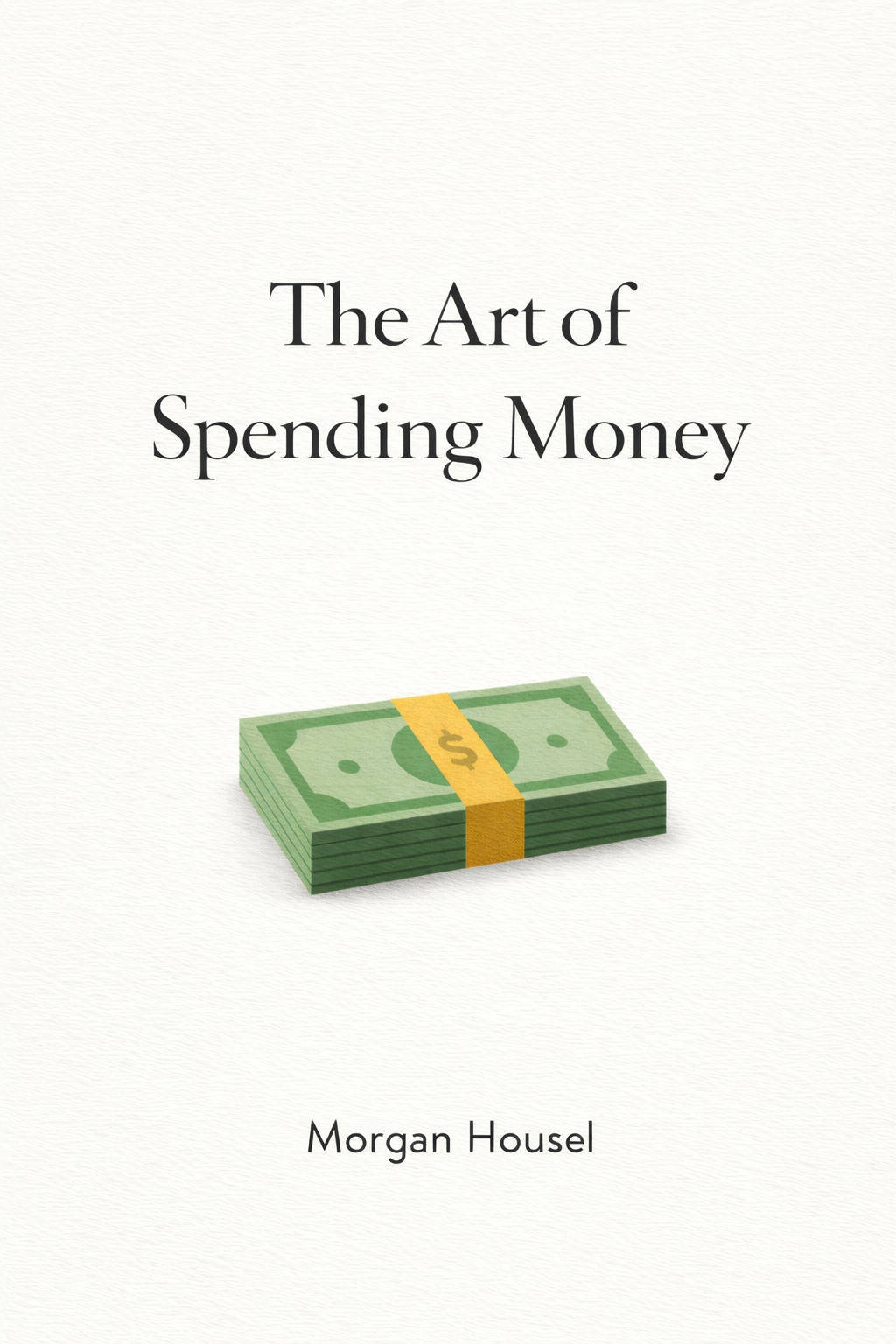
The Art of Spending Money: Simple Choices for a Richer Life by Morgan Housel
Why Simplicity Beats Excess: The Quest for a Life That Serves You
Attention, Status, and the Hidden Drivers of Our Spending
Invisible Costs and the Power of Not Impressing
Finding Real Joy: What Truly Makes Us Happy
Utility vs. Status: Choosing What Matters
Risk, Regret, and the Lens of Comparison
Social Debt, Quiet Compounding, and Identity‑Based Spending
Putting It All Together: Experiments, Family, and the Bigger Picture

Transcript
Welcome to The Art of Spending Money: Simple Choices for a Richer Life by Morgan Housel—a book that will permanently change how you think about why wealth doesn't guarantee financial peace. Most people spend their whole lives assuming more income solves money anxiety, but this book reveals the counterintuitive truth that high earners often feel just as financially stretched as those making far less. Morgan Housel, author of the best-selling The Psychology of Money translated into over fifty languages, spent years building the case—and the answer is nothing like you expect. Despite unprecedented material abundance, people across all income levels report persistent financial anxiety and dissatisfaction; the problem lies not in earnings or investments, but in how we think about spending. Modern consumer culture creates an environment where the gap between what we have and what we believe we should have expands infinitely, regardless of actual income growth. This explains why lifestyle inflation occurs almost automatically as people move up income brackets, driven not by changing needs but by shifting reference groups and relentless social comparison. Housel distinguishes between spending that genuinely improves quality of life and spending that merely signals status or responds to social pressure, noting most people struggle with this distinction because consumer culture deliberately blurs these boundaries. Rather than prescribing rigid budgeting rules, he focuses on psychological and philosophical dimensions of spending, drawing on behavioral economics, psychology, and history to illuminate how financial decisions reflect deeper beliefs about happiness, success, and identity. The quest for simplicity represents a recurring human desire to escape the complexity of keeping up with escalating consumption standards, yet this quest is perpetually undermined by our collective inability to define what enough actually means in practical terms. To understand why people make the financial choices they do, the author introduces a foundational principle: all behavior makes sense with enough information. What appears irrational from an outside perspective becomes perfectly logical when you understand someone's full context—their experiences, incentives, and worldview shaped by the fact that roughly zero-point-zero-zero-zero-zero-zero-zero-zero-one percent of what has occurred in the world has happened to any individual person. Those who grew up during the Great Depression developed radically different relationships with money and risk compared to those who came of age during the prosperous nineteen-eighties and nineteen-nineties, because someone who experienced breadlines and bank failures firsthand will naturally approach cash savings and stock market investing differently. Research shows people develop distinct financial personalities based on what the economy was doing during their formative years, typically ages fifteen to twenty-five. Those who experienced high inflation during this critical period tend to avoid bonds and prefer cash, while those who lived through low inflation are more comfortable with fixed-income investments. Financial choices are not made in a vacuum based purely on spreadsheets and optimal mathematical outcomes, but are deeply influenced by personal narratives, emotional scars, and the specific slice of history each person has witnessed. Someone whose parents lost everything in a market crash will have a visceral, emotional response to equity investing that no amount of historical data about long-term returns can easily override. Housel argues that recognizing this principle makes us more humble about our own certainty and more understanding of why others behave differently, because there is no single correct way to manage money that applies universally. The goal is not extreme frugality or asceticism, but developing more intentional, self-aware approaches to spending that align with actual values rather than external pressures—recognizing that what constitutes wise spending varies dramatically between individuals, yet certain principles about avoiding comparison-driven consumption and understanding diminishing returns apply universally.