Unmasking Irrational Biases: Foundations of the Law of Irrationality
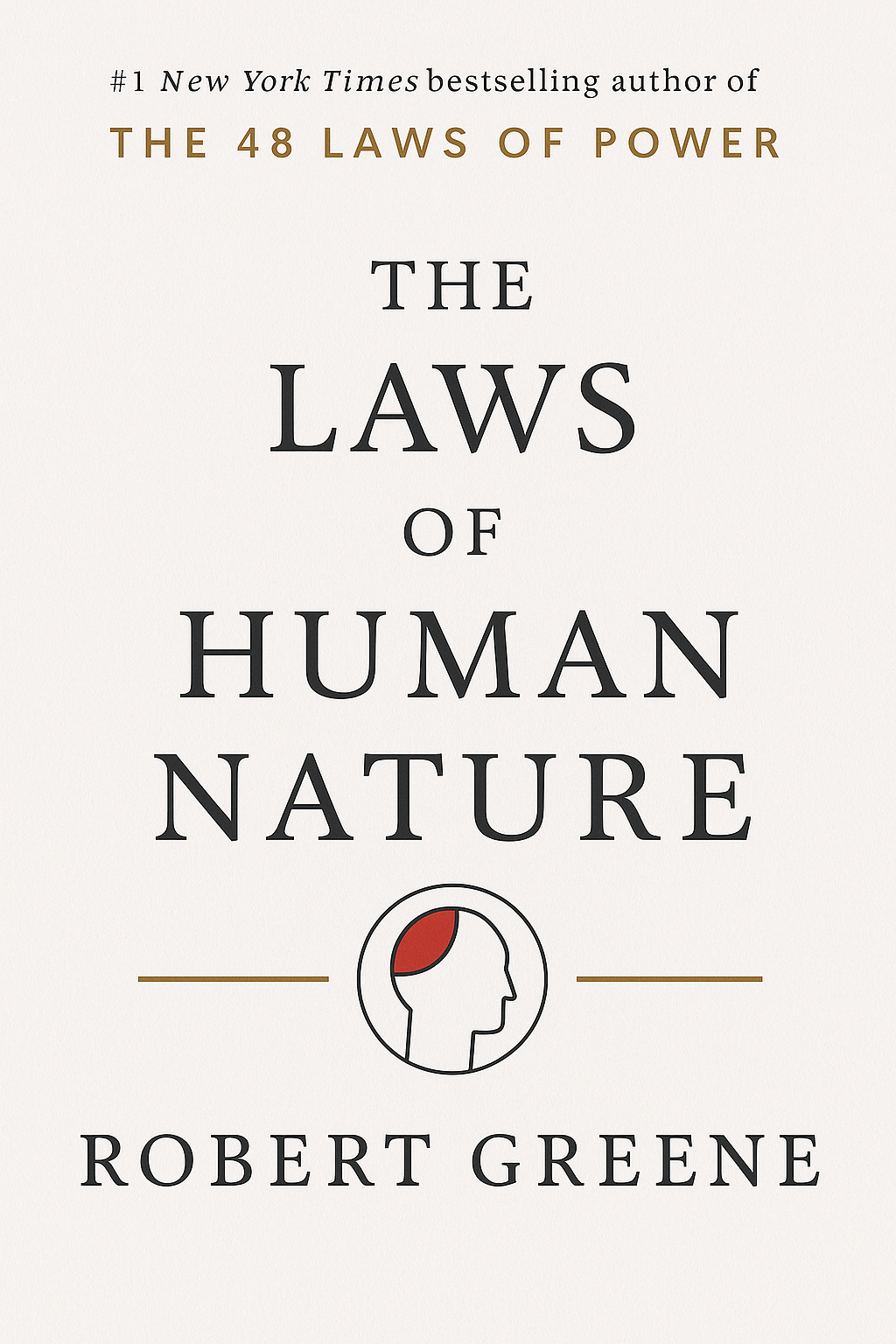
The Laws of Human Nature by Robert Greene
Unmasking Irrational Biases: Foundations of the Law of Irrationality
From Hidden Biases to Self-Love: Introducing the Law of Narcissism
The Inner Athena Awakens: From Narcissism to Empathy
The Second Language of Humanity: Decoding the Law of Role-Playing
Reading the Script: Determining Character Through Compulsive Behavior
Desire as a Weapon: The Law of Covetousness
The Art of Elusiveness and Long-Term Vision
Seeing the Horizon: Overcoming Shortsightedness
Defusing Defensiveness: The Law of Self-Opinion
The Influence Game and Overcoming Self-Sabotage
From Constricted to Expansive: Confronting Repression
The Shadow Within: Integrating the Hidden Self
The Poison of Comparison: Navigating the Law of Envy
Taming the Ego: The Law of Grandiosity
Practical Realism: Turning Grandiosity Into Greatness
The Fluid Self: Breaking Gender Rigidity
The Power of Purpose: The Law of Aimlessness
The Siren Call of the Crowd: Understanding Conformity
Resisting the Hive Mind: Strategic Individuality
Stability in Leadership: The Law of Fickleness
Strategic Channeling: The Law of Aggression
The Perspective of Time: Overcoming Generational Myopia
The Final Frontier: Embracing the Law of Death Denial

Transcript
Welcome to The Laws of Human Nature by Robert Greene, a book that will permanently change how you understand your own mind and the hidden forces controlling your decisions. Most people walk through life convinced they're rational thinkers making logical choices, but this book reveals a shocking truth: your emotions are hijacking nearly every decision before your conscious mind even gets a vote. Your guide is Robert Greene, the most banned author in United States prisons, who spent years dissecting the patterns that separate clear thinkers from those who self-destruct. Greene establishes a foundational premise: humans are fundamentally irrational creatures trapped in a dangerous illusion of rationality. This gap between self-perception and reality stems from evolutionary architecture; our emotional responses are ancient survival mechanisms operating faster than our recently-developed rational faculties, constantly hijacking decision-making before conscious thought intervenes. The author contrasts high-grade rationality, the ability to recognize and counteract emotional biases, with the low-grade and high-grade irrationality governing most human behavior. Low-grade irrationality manifests in everyday impulsive decisions and mood-driven reactions, while high-grade irrationality emerges during major life choices when emotions completely override reason. People choose careers based on parental pressure, remain in destructive relationships from fear, or escalate conflicts from wounded pride. Pericles maintained strategic clarity during Athens' plague crisis through emotional awareness, while Lyndon Johnson's Vietnam War escalation, driven by confirmation bias and the emotional need to appear strong, exemplifies how emotions destroy leadership. Greene identifies specific emotional patterns systematically sabotaging rational thinking: confirmation bias seeks information supporting pre-existing beliefs, conviction bias overestimates judgment accuracy, appearance bias judges by superficial qualities, group bias conforms to tribal thinking, blame bias externalizes responsibility, and superiority bias inflates self-worth. These biases operate unconsciously and compound dangerously under inflaming factors: sudden gains or losses, rising pressure and stress, inflammatory individuals triggering defensive responses, group dynamics amplifying emotional contagion, and time pressure forcing hasty decisions. The Watergate scandal exemplifies how these factors combined to destroy Nixon's presidency; mounting pressure, paranoia about enemies, and toxic advisors created an environment where rational decision-making became impossible. The practical framework for developing rationality consists of three interconnected steps building progressively toward emotional mastery. First, recognize inherent biases by becoming a scientist of your own behavior, systematically observing thought patterns, noting defensive reactions, and identifying when rationalization follows emotionally-driven decisions. Second, identify personal inflaming circumstances in advance, creating mental preparation for rational response when triggers occur. Third, implement concrete strategies for cultivating the Rational Self: forced objectivity deliberately seeks contradictory information and opposing perspectives; increased reaction time creates gaps between stimulus and response through counting, physical removal, or breathing exercises; rationality journals track emotional patterns and recurring triggers; cooling-off periods delay important decisions when emotions run high; rational spaces provide regular reflection strengthening conscious awareness. Abraham Lincoln exemplified these practices by writing angry letters he never sent, using the process for emotional release while maintaining rational control over actual communications, and deliberately seeking diverse cabinet opinions including from rivals. Greene emphasizes rationality is not about suppressing emotions but developing emotional objectivity: the ability to observe emotional states without being controlled by them, creating conscious choice rather than automatic reaction.