The Siren Call of the Crowd: Understanding Conformity
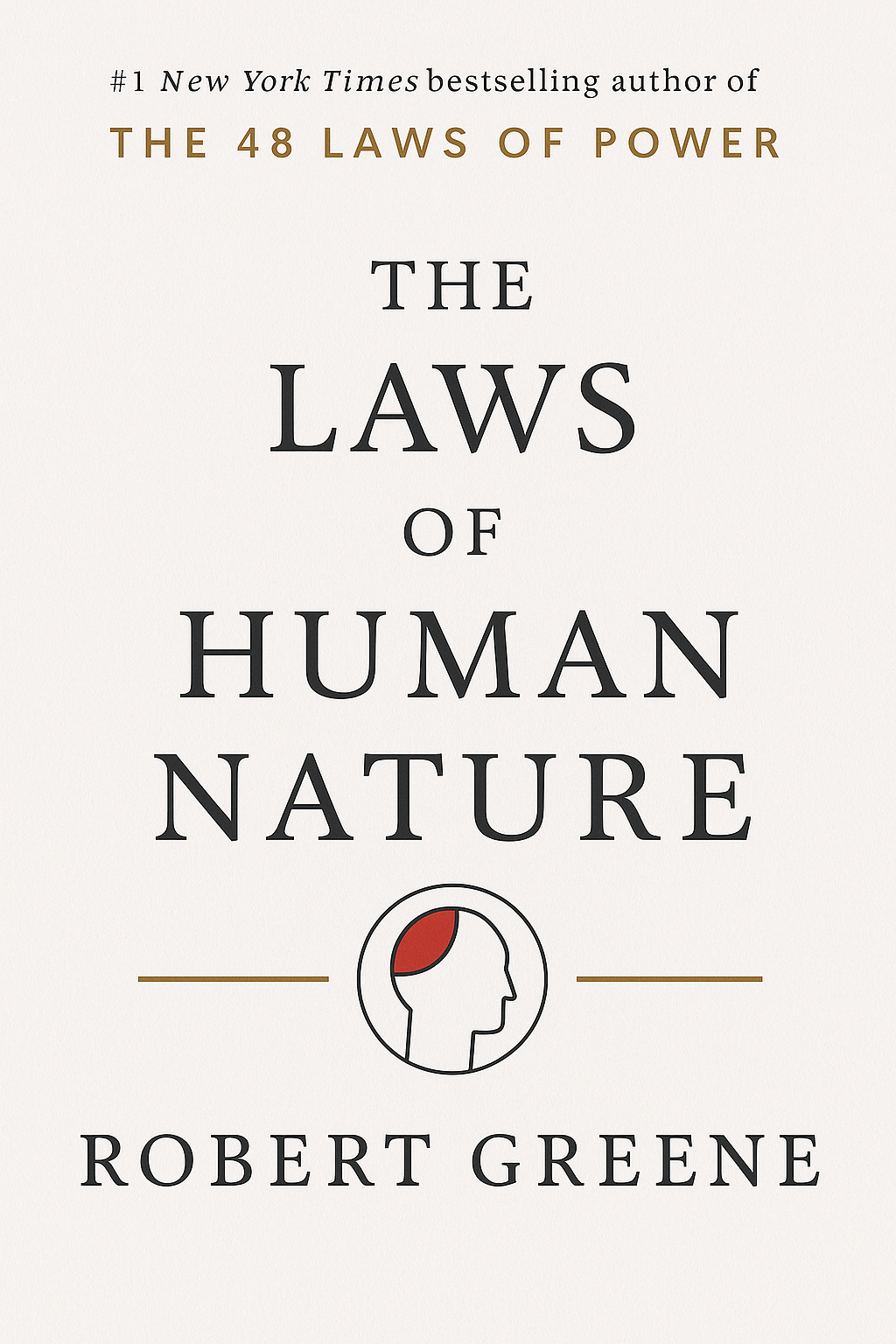
The Laws of Human Nature by Robert Greene
Unmasking Irrational Biases: Foundations of the Law of Irrationality
From Hidden Biases to Self-Love: Introducing the Law of Narcissism
The Inner Athena Awakens: From Narcissism to Empathy
The Second Language of Humanity: Decoding the Law of Role-Playing
Reading the Script: Determining Character Through Compulsive Behavior
Desire as a Weapon: The Law of Covetousness
The Art of Elusiveness and Long-Term Vision
Seeing the Horizon: Overcoming Shortsightedness
Defusing Defensiveness: The Law of Self-Opinion
The Influence Game and Overcoming Self-Sabotage
From Constricted to Expansive: Confronting Repression
The Shadow Within: Integrating the Hidden Self
The Poison of Comparison: Navigating the Law of Envy
Taming the Ego: The Law of Grandiosity
Practical Realism: Turning Grandiosity Into Greatness
The Fluid Self: Breaking Gender Rigidity
The Power of Purpose: The Law of Aimlessness
The Siren Call of the Crowd: Understanding Conformity
Resisting the Hive Mind: Strategic Individuality
Stability in Leadership: The Law of Fickleness
Strategic Channeling: The Law of Aggression
The Perspective of Time: Overcoming Generational Myopia
The Final Frontier: Embracing the Law of Death Denial

Transcript
Last time we examined how aimlessness creates vulnerability to external forces, making purpose construction the fundamental act of self-determination that protects against modern life's fragmenting pressures. Now the author returns to conformity with deeper analysis, revealing how group dynamics operate through unconscious mechanisms that override individual judgment even among those who consider themselves independent thinkers, creating dangerous blind spots that enable everything from workplace groupthink to political extremism. The author identifies what they call the independence illusion, where people genuinely believe they think for themselves while unconsciously absorbing group beliefs, values, and behaviors through emotional contagion and social pressure that operates below conscious awareness. This gap between self-perception and reality makes conformity particularly insidious since those most susceptible often display the strongest conviction in their independence, creating resistance to recognizing how thoroughly group membership shapes their thinking. The mechanism works through several interconnected forces: mirror neurons that automatically sync our emotions with those around us, the fundamental human need for belonging that evolved when group membership meant survival, and unspoken rules enforced through subtle social cues rather than explicit commands. Modern environments intensify conformity pressures through social media echo chambers that algorithmically reinforce existing beliefs, workplace cultures that punish dissent through informal ostracism, and political movements that demand ideological purity as proof of loyalty. The author emphasizes that intelligence provides no protection against these forces; highly educated individuals often conform more completely because they're skilled at rationalizing group positions as products of independent analysis rather than social pressure. Historical examples demonstrate the pattern's universality: the Stanford Prison Experiment showed ordinary college students adopting brutal behaviors within days, Gao Yuan's Cultural Revolution experience revealed how intelligent people lost moral compass when swept into collective fervor, and countless corporate disasters resulted from teams where everyone recognized problems but nobody spoke up. The author provides specific strategies for maintaining independent thought while participating in groups: cultivate awareness of your own susceptibility by tracking moments when group pressure influences decisions, maintain connections outside any single group to prevent total immersion in one worldview, and develop courage to express dissenting views despite social costs. The key practice involves what the author calls the conformity audit, regularly examining your beliefs to identify which emerged from genuine reflection versus unconscious absorption from surrounding groups, asking whether you'd hold the same positions if your social circle changed completely. Purpose serves as the ultimate protection against conformity's downward pull since individuals with clear direction can evaluate group demands against personal values rather than automatically complying to maintain belonging. The author concludes by addressing the paradox that resisting conformity doesn't mean rejecting all group membership or adopting contrarian positions reflexively, which simply substitutes one form of automatic behavior for another. True independence requires conscious choice about when to align with groups and when to dissent, maintaining psychological sovereignty where external pressures inform decisions without determining them. The ultimate goal is what the author calls selective conformity, participating in groups strategically while preserving the capacity for independent judgment, creating the balance between social connection and individual autonomy that enables both belonging and integrity.