The Final Frontier: Embracing the Law of Death Denial
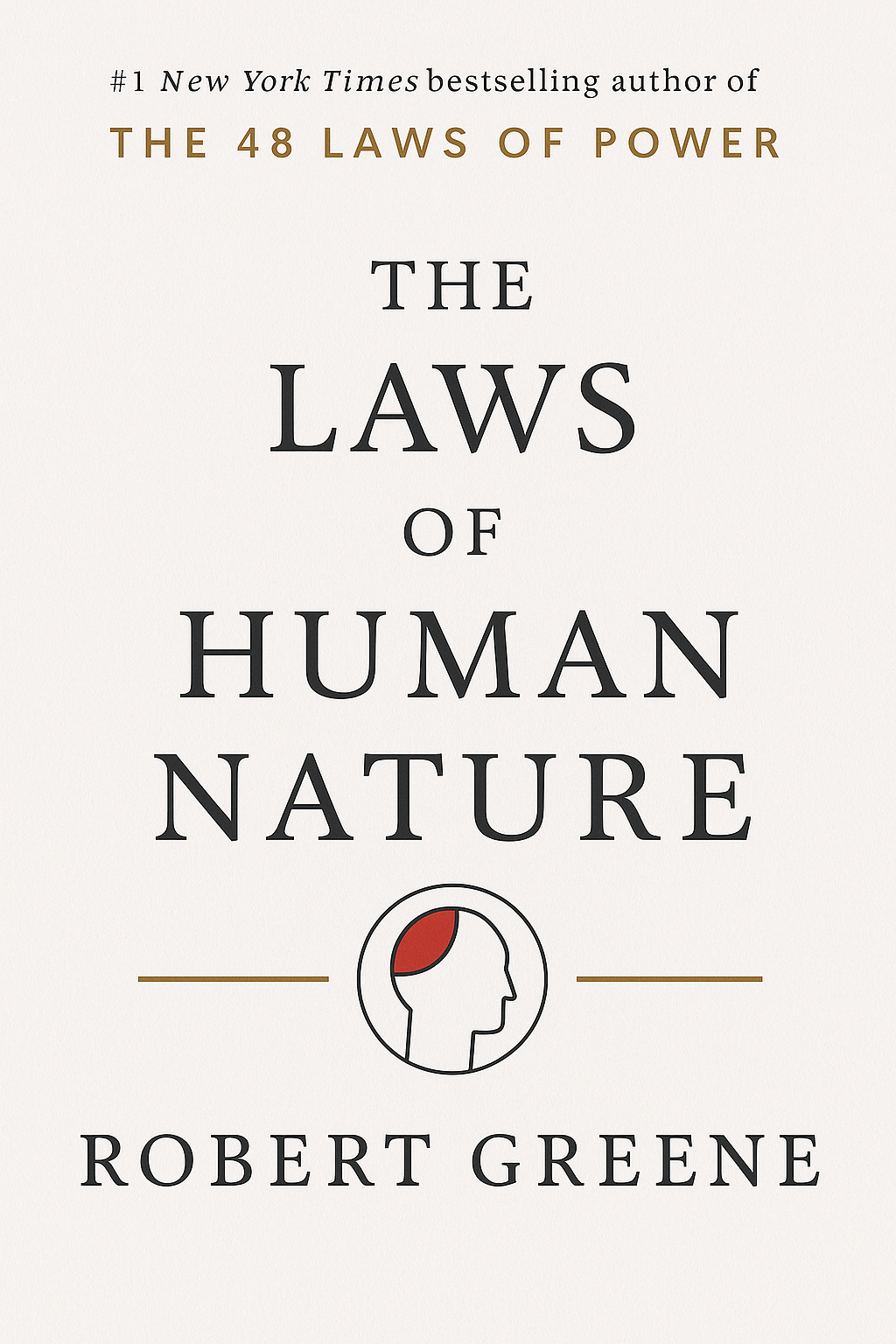
The Laws of Human Nature by Robert Greene
Unmasking Irrational Biases: Foundations of the Law of Irrationality
From Hidden Biases to Self-Love: Introducing the Law of Narcissism
The Inner Athena Awakens: From Narcissism to Empathy
The Second Language of Humanity: Decoding the Law of Role-Playing
Reading the Script: Determining Character Through Compulsive Behavior
Desire as a Weapon: The Law of Covetousness
The Art of Elusiveness and Long-Term Vision
Seeing the Horizon: Overcoming Shortsightedness
Defusing Defensiveness: The Law of Self-Opinion
The Influence Game and Overcoming Self-Sabotage
From Constricted to Expansive: Confronting Repression
The Shadow Within: Integrating the Hidden Self
The Poison of Comparison: Navigating the Law of Envy
Taming the Ego: The Law of Grandiosity
Practical Realism: Turning Grandiosity Into Greatness
The Fluid Self: Breaking Gender Rigidity
The Power of Purpose: The Law of Aimlessness
The Siren Call of the Crowd: Understanding Conformity
Resisting the Hive Mind: Strategic Individuality
Stability in Leadership: The Law of Fickleness
Strategic Channeling: The Law of Aggression
The Perspective of Time: Overcoming Generational Myopia
The Final Frontier: Embracing the Law of Death Denial

Transcript
SPEAKER_1: Alright, last time we talked about how temporal sovereignty means consciously choosing your time horizon rather than defaulting to present-focus. Now the author circles back to death denial. But didn't we already cover this in lecture eleven? SPEAKER_2: We touched on it, but the author goes much deeper here. Previously, we examined how mortality awareness enhances presence and strips away superficial concerns. Now they're exploring the psychological mechanisms that make death denial so pervasive and how to actually practice memento mori as a daily discipline. SPEAKER_1: Okay, but what's new? The book already established that people live as though they'll exist indefinitely, creating complacency and misplaced priorities. SPEAKER_2: The crucial addition is understanding death denial as an active psychological defense mechanism, not just passive ignorance. The author argues modern society has constructed elaborate systems—medical technology, youth culture, endless distraction—specifically to avoid confronting mortality. SPEAKER_1: Wait, but doesn't everyone know they're going to die? For our listener, the sticking point could be that this isn't actually denial if people acknowledge death intellectually. SPEAKER_2: That's exactly the author's point. Intellectual acknowledgment without emotional integration is the most sophisticated form of denial. People can recite the fact of mortality while living as though it's irrelevant to daily decisions, relationships, and priorities. SPEAKER_1: So what's the actual practice? The book can't just say think about death more. SPEAKER_2: The author provides specific memento mori exercises. First, daily mortality meditation—spending five minutes imagining your own death or the death of loved ones. Second, negative visualization borrowed from Stoicism, imagining losing what you currently have. Third, treating each interaction as potentially the last. SPEAKER_1: That sounds morbid. Isn't this just encouraging depression? SPEAKER_2: The author addresses this directly. Practitioners consistently report feeling more alive, grateful, and present after developing mortality meditation practices. The illusion of infinite time creates complacency; accepting finitude creates urgency and appreciation. SPEAKER_1: But doesn't the author also talk about death anxiety? That seems contradictory to embracing mortality. SPEAKER_2: It's the paradox they resolve. Death anxiety comes from denial—the unconscious terror of what we refuse to acknowledge. Conscious acceptance actually reduces anxiety because you're no longer expending energy maintaining the denial. The author calls it the liberation of acceptance. SPEAKER_1: So what about the practical applications? The book must address how this changes behavior. SPEAKER_2: The author identifies several transformations. In relationships, mortality consciousness eliminates trivial conflicts and encourages freer expression of appreciation. In work, it helps distinguish genuinely meaningful activities from ego-serving busywork. In decision-making, it provides ultimate clarity about priorities. SPEAKER_1: Wait, but doesn't this just make people reckless? Someone reading along might think mortality awareness encourages impulsive behavior. SPEAKER_2: The author distinguishes between recklessness and intentionality. Recklessness ignores consequences; intentionality weighs them against finite time. Mortality awareness doesn't make you careless—it makes you selective about what deserves your limited remaining days. SPEAKER_1: Now the author shifts to what they call shared mortality. How is that different from individual death contemplation? SPEAKER_2: Shared mortality recognizes that everyone faces the same fate, fostering compassion and reducing meaningless status competitions. The author argues that recognizing our common human condition dissolves the dehumanization that enables cruelty and the ego battles that consume energy without creating value. SPEAKER_1: That sounds idealistic. What's the evidence this actually works? SPEAKER_2: The author points to research showing that mortality salience—making death conscious—increases prosocial behavior and reduces prejudice when framed properly. It's not automatic, but when people contemplate shared mortality rather than just personal death, empathy increases measurably. SPEAKER_1: So what about the resistance? The book must address why people avoid this practice. SPEAKER_2: The author is unflinching. Death contemplation forces confrontation with how much time we've wasted, relationships we've neglected, and potential we've squandered. That's psychologically painful, so people maintain denial through constant distraction and busyness that prevents reflection. SPEAKER_1: But doesn't modern life make this practice nearly impossible? Our listener might think this worked for ancient Stoics but not for people with demanding jobs and families. SPEAKER_2: The author argues the opposite. Modern life's frenetic pace makes mortality meditation more essential, not less. Five minutes of daily practice provides the perspective that prevents years of misdirected effort. The question isn't whether you have time—it's whether you can afford not to. SPEAKER_1: I'll admit, connecting death denial to wasted life is powerful. For our listener, the takeaway is that mortality awareness isn't morbid—it's the ultimate clarifying lens. SPEAKER_2: Exactly. And for everyone reading along, the author's ultimate point is this: death denial creates the illusion of infinite time, breeding complacency and disconnection from authentic living. Embracing mortality through daily practice transforms every moment into something precious, every relationship into something worth protecting, and every choice into something that actually matters.