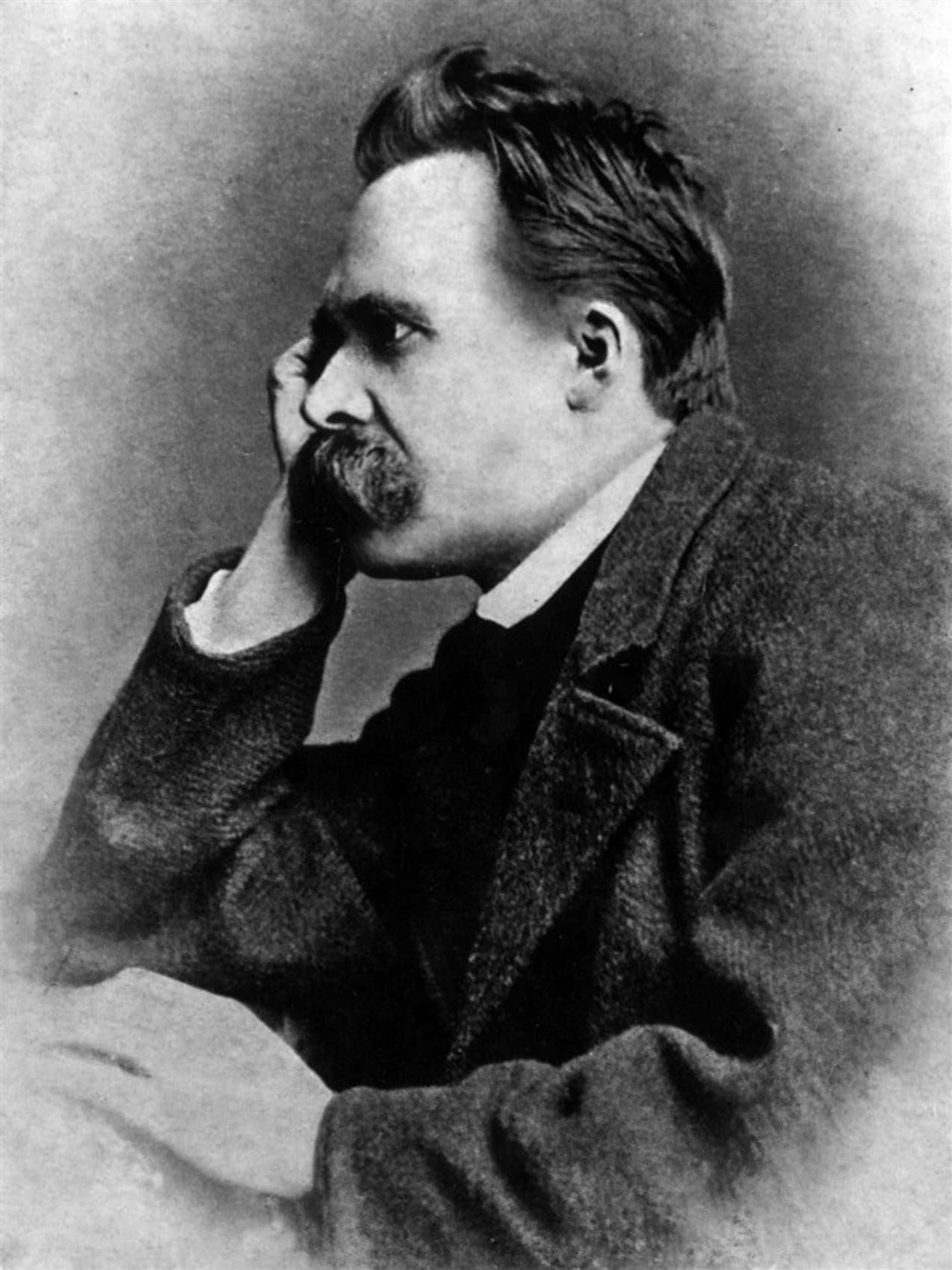
NewMeet Nietzsche, in his own voice.Listen
← All correspondents
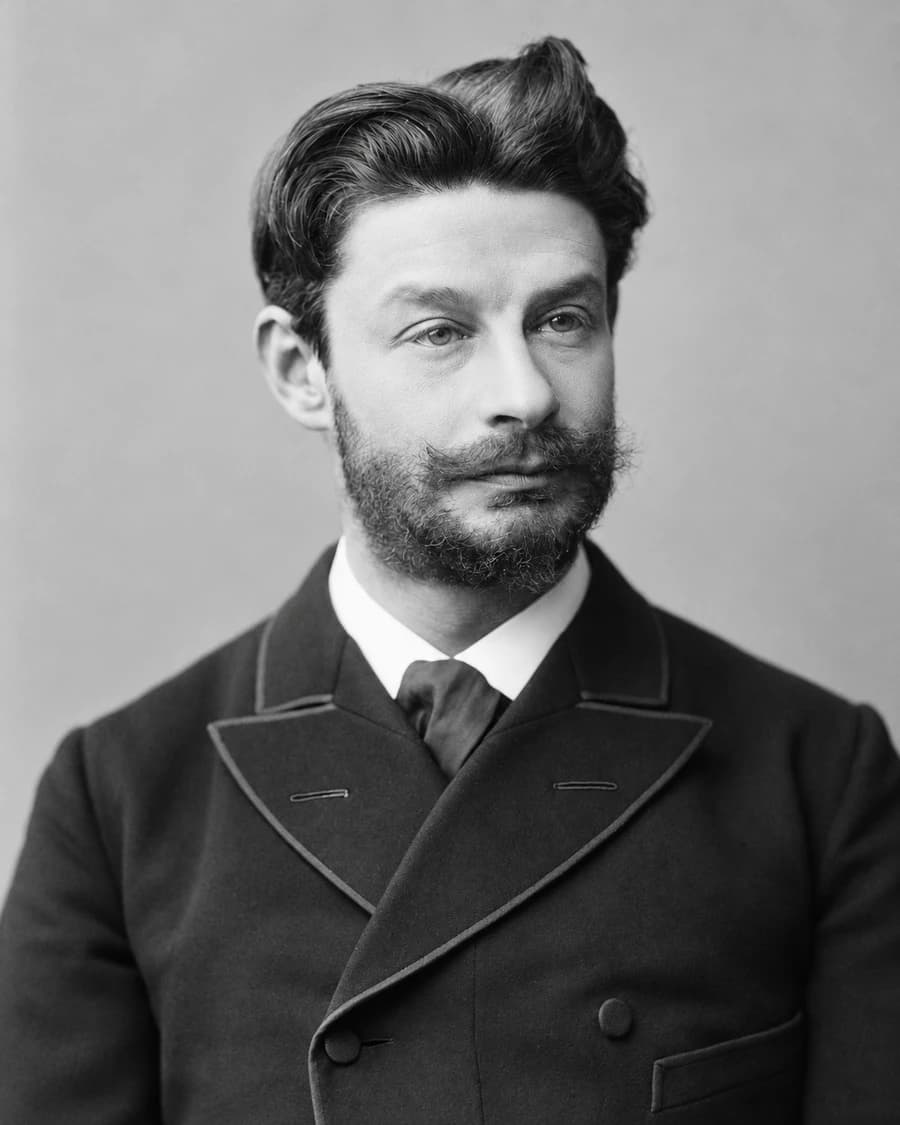
Carl von Gersdorff

Nietzsche letters

Nietzsche & Carl von Gersdorff

1865–1883 · 17 letters · School friend

A friendship reaching from their school years into questions of vocation, culture and philosophy.

In conversation

Chat with Nietzsche

Explore his ideas. Challenge your own.

Start chatting

AI simulation inspired by his writings.

This selection contains Nietzsche’s outgoing letters. The recipient’s replies are not included in this edition. Original letter text in English translation. No imagined replies. Ellipses and omissions in the source editions are preserved.

1865

Friedrich Nietzscheto Carl von Gersdorff

DEAR FRIEND: To begin with, I must own that I have been simply longing for your first letter from Göttingen, not only out of friendship, but also because of its psychological interest. I was hoping that it might reflect the impression just made upon you by the life led in the Students Corps, and I felt certain that you would speak out quite frankly on the subject.

Now, this is precisely what you have done, and I thank you most heartily. At present, therefore, I share your excellent brother's views on this matter; I can only admire the moral strength with which you have plunged into dirty muddy water and even exercised your limbs in it, in order to learn to swim in the stream of life. Pardon the cruelty of the metaphor, but I think it meets the case.

Besides, there is this important point to remember: if a man wishes to understand his age and his contemporaries, he must be something of a colour student. Societies and associations, together with the tendencies they represent, generally reveal with almost perfect exactitude the type of the next generation of men. Moreover, the question of the reorganization of the circumstances of student life is urgent enough to deter the individual from investigating and judging the conditions from his own particular experience. Of course, we must take care that we ourselves do not become too deeply influenced during the process of our research; for habit exercises a prodigious power. A man has already lost a good deal when he can no longer feel any moral indignation at the reprehensible actions daily perpetrated in his circle. This is true, for instance, of drink and drunkenness, and also of the disrespect and scorn with which other men and other opinions are treated.

I readily admit that, up to a point, I had very much the same experiences as yourself, that the spirit of conviviality on drinking evenings often discomfited me exceedingly, that there were fellows whose "beer materialism" made them utterly repulsive to me; whilst the appalling arrogance with which in a twinkling men and opinions were disposed of en masse used to irritate me beyond endurance. Nevertheless I was content to bear with the Association, not only because it taught me a good deal, but also because I was, on the whole, compelled to acknowledge the intellectual life which formed a part of it. On the whole, though, a more intimate relationship with one or two friends is a necessity, and, provided one can enjoy this, the rest can be reckoned as a sort of seasoning included in the fare—some as salt and pepper, others as sugar, and yet others as nothing at all.

Once again let me assure you that all you have told me about your struggles and anxieties only enhances my esteem and love for you.

This term I have to prepare our archaeological work for the college. Then I also have a bigger piece of work to do for the Science evening of our Burschenschaft [Corps] about the political poets of Germany. I hope to learn a good deal from this, but I shall also have to do a tremendous amount of reading and collect plenty of material. Above all, however, I must set about preparing a more important philological work, the subject of which I have not yet decided, in order to qualify for admittance to the college at Leipzig.

Incidentally I am now studying Beethoven's Life in the biography by Marx. I shall also perhaps do a little composing again, a thing which this year I have so far strenuously avoided. I have also stopped versifying. The Rhineland Musical Festival takes place this Whitsun at Cologne. Do come over from Göttingen for it! The principal items on the programme are: Israel in Egypt, by Handel; Faust Music, by Schumann; The Seasons, by Haydn, etc., etc. I am taking part in it. Immediately after it the Cologne International Exhibit will be opened. You will find all further details in the papers.

Well, old man, fare thee well!

I rejoice at the thought of our next meeting. I wish you plenty of good cheer and bright spirits, and, above all, a man who can be something to you. Excuse my execrable writing and my ill humour about it. You know how wild I get over it and how my thoughts then come to a standstill.

Your devoted friend,

FR. NIETZSCHE.

Bonn, Ascension Day, 1865.
1921 edition · Anthony M. Ludovici ↗

1866

Friedrich Nietzscheto Carl von Gersdorff

DEAR FRIEND: Now and again one enjoys hours of peaceful reflection when, with mingled gladness and sorrow, one seems to hover over one's life just as those lovely summer days, so exquisitely described by Emerson, seem to lie stretched out at ease above the hilltops. It is then, as he says, that Nature is perfect, and we feel the same; then we are free from the spell of the ever vigilant will; then we are nothing but a pure, contemplative and dispassionate eye. It is in a mood such as this—a mood desirable above all others—that I take up my pen to reply to your kind and thoughtful letter. The interests we share have become welded together to the smallest particle; once again we have realized that mere strokes of the pen in fact, even the most unexpected whims in the past of a few individuals determine the history of countless numbers of others; and we readily leave it to the pious to thank their God for these accidents. We may perhaps laugh at this thought when we meet again in Leipzig.

I had already made myself familiar with the thought of being a soldier. I often wished that I might be snatched from my monotonous labours; I yearned for the opposite extreme to my excitement, to the tempestuous stress of my life and to the raptures of my enthusiasm. For, despite all my efforts, it has been brought home to me more clearly every day that it is impossible to shuffle such work out of one's coat sleeve. During the holidays I have learnt, relatively speaking, a good deal, and now they are at an end. My Theognis finds itself at least one term further forward. I have, moreover, made many illuminating discoveries which will considerably enrich my quaestiones Theognideae.

For recreation I turn to three things, and a wonderful recreation they provide! my Schopenhauer, Schumann's music, and, finally, solitary walks. Yesterday a heavy storm hung in the sky, and I hastened up a neighbouring hill, called Leusch (perhaps you can explain the word to me?). On the summit I found a hut and a man killing two kids, with his son looking on. The storm broke with a mighty crash, discharging thunder and hail, and I felt inexpressibly well and full of zest, and realized with singular clearness that to understand Nature one must go to her as I had just done, as a refuge from all worries and oppressions. What did man with his restless will matter to me then? What did I care for the eternal "Thou shalt" and "Thou shalt not"? How different are lightning, storm and hail—free powers without ethics! How happy, how strong they are—pure will untrammeled by the muddling influence of the intellect!

For have I not seen examples enough of how muddling a man's intellect frequently is? Not long ago I had occasion to speak to a man who was on the point of going out to India as a missionary. I put a few questions to him and learned that he had not read a single Indian work, knew nothing about the Upanishads—not even their name—and had resolved to have nothing to do with the Brahmans because they had philosophical training. Holy Ganges!

To-day I listened to a profoundly clever sermon of ———s on Christianity—the Faith that has conquered the world. It was intolerably haughty in its attitude towards all nations that were not Christian, and yet it was exceedingly ingenious. For instance, every now and then he would describe as Christian something else, which always gave an appropriate sense even according to our lights. If the sentence, "Christianity has conquered the world," be changed to "the feeling of sin," or briefly "a metaphysical need has conquered the world," we can raise no reasonable objection; but then one ought to be consistent and say, "All true Hindus are Christians," and also "All true Christians are Hindus." As a matter of fact, how ever, the interchange of such words and concepts as these, which have a fixed meaning, is not altogether honest; it lands the poor in spirit in total confusion. If by Christianity is meant "Faith in an historical event, or in an historical personage," I have nothing to do with it. If, however, it is said to signify briefly a craving for salvation or redemption, then I can set a high value upon it, and do not even object to its endeavouring to discipline the philosophers. For how very few these are compared to the vast masses of men who are in need of salvation! How many of them are not actually made of the same stuff as these masses! If only all those who dabble in philosophy were followers of Schopenhauer! But only too often behind the mask of philosopher stands the exalted majesty of the "Will," which is trying to achieve its own self-glorification. If the philosophers ruled ςορμγυ φι would be lost; were the masses to prevail, as they do at present, the philosophers rari in gurgite rasto would still be able, like Aeschylus, δίχα ᾶλλων φρονέειν.

Apart from this, it is certainly extremely irksome to restrain our Schopenhauerian ideas, still so young, vigorous and half expressed; and to have weighing forever upon our hearts this unfortunate disparity between theory and practice. And for this I can think of no consolation; on the contrary, I am in need of it myself.

And now farewell, old man! Remember me to all your family. Mine wish to be remembered to you; let us leave it at that. When we meet again we shall probably smile, and rightly too!

Yours,

FRIEDRICH NIETZSCHE.

1921 edition · Anthony M. Ludovici ↗

1867

Friedrich Nietzscheto Carl von Gersdorff

MY DEAR FRIEND: At the beginning of January at Naumburg I too stood at the deathbed of a near relative. Next to my mother and sister, this dear lady had the greatest claim on my love and veneration. She had always displayed the most devoted interest in my career, and with her I seem to have lost a whole piece of my past and especially of my childhood. And yet, when I received your letter, my poor dear afflicted friend, I was overcome by a much deeper grief. The difference between the two deaths seemed so enormous. There, in Naumburg, a life replete with good deeds had at last been consummated, and despite a weakly constitution had at least lasted well into old age. We all had the feeling that the strength both of her mind and her body was exhausted, and that only for our love had death come too soon. But what have we not lost by the death of your brother, before whom I too stood in such constant admiration and respect!

We have lost one of those rare noble Roman natures about whom Rome at her zenith would have boasted and of whom you, as his brother, have an even greater right to be proud. For how seldom does our wretched age produce such heroic figures! But you know what the ancients thought on the subject: "Those whom the gods love die young."

What wonders such a power might have achieved! As a pattern of self-reliant and glorious endeavour, as an example of a decided character true to himself and indifferent to the world and its opinion, what strength and comfort he might have afforded to thousands caught in life's wild vortex! I am well aware that this vir bonus in the best sense meant even more to you; that, as you often used to tell me in the past, he constituted the ideal to which you aspired, your fixed guiding star amid all the tortuous and difficult highways and byways of life. His death has probably been the severest blow that could possibly have overtaken you.

Now, dear old man, you have realized—so I gather from the tone of your letter—through your own bitter experience, why our Schopenhauer extols suffering and affliction as indispensable to a splendid destiny, as the δεύτερος πλούς;to the denial of the Will. You have also felt and experienced the chastening, inwardly becalming, and bracing power of pain. This has been a time during which you have yourself tested the truth of Schopenhauer's doctrine. If the fourth book of his principal work now makes a disagreeable, gloomy, and tedious impression upon you; if it has not the power to bear you triumphantly beyond all the terrible outward pain into that sweetly melancholy but happy mood which possesses us at the sound of lofty music, into that mood in which one sees one's earthly shell fall from one, then it is possible that even I, too, may have nothing more to do with his philosophy. Only he who is brimful of anguish can pronounce the decisive judgment on such matters. We others, standing in the middle of the stream of life and things, and longing for the Denial of the Will merely as for the island of the blest, cannot judge whether the consolations of such a philosophy are adequate for times of deep sorrow.

I conclude with a hearty farewell and a quotation from Aristotle:

τί γὰρ ἐστιν ᾶνυρωπος; ἀσνενείας ύπόδειγμα χαιρού λάφυνον, τύχης παίγνιον, μεταππώσεως είχών, φυόνου χαί συμφορᾶς πλάστιγε

Your devoted and likewise stricken friend,

FRIEDRICH NIETZSCHE.

1921 edition · Anthony M. Ludovici ↗

Friedrich Nietzscheto Carl von Gersdorff

DEAR FRIEND: If you are not in a mood to listen to a host of weird things, just put this letter aside and reserve it for another occasion.

Pious people believe that all the suffering and mishaps that come their way have been sent to them with the most careful premeditation, in order that this or that thought, such and such a resolution or understanding might be kindled in them. We lack the very first principles on which such a faith is based. It does lie in our power, however, to suck every event, every trivial or serious mishap, dry and to turn it to account for our improvement and discipline. The predestined character of every individual's fate is no myth if we understand it in this sense. What we have to do is intentionally to turn our fate to account, for events are, in themselves, but insignificant accessories to this end. It all turns upon our personal attitude. An event has no more value than we choose to invest it with. Thoughtless and unmoral people know nothing of this purposefulness of fate. Events make no lasting impression upon them. We, however, wish to learn something from them, and the more our knowledge of moral affairs increases and the more complete it becomes, the more surely will the events of our life link themselves up into a fast-bound ring, or will at least seem to do so. You know, old man, what I mean by these remarks.

And now, with the expression of my mother's, my cousin's and my own sincere sympathy, I will take my leave of you for today.

Yours affectionately,

F. N.

1921 edition · Anthony M. Ludovici ↗

Friedrich Nietzscheto Carl von Gersdorff

MY DEAR FRIEND: Heaven alone knows the cause of my long silence, for I am never more thankful or more happy than when your letters arrive to give me news of your doings and your spirits.

During the holidays I intend to make a written record of my work on the sources of Diogenes Laertius, though I am anything but far advanced. For your amusement let me confess what it is that gives me the most pain and trouble my German style (not to mention my Latin). But I have come to an understanding with my mother tongue, so foreign languages cannot fail to follow suit. The scales have fallen from my eyes; too long had I lived in stylistic innocence. The categorical imperative, "Thou shalt and must write," has called me to my senses. Truth to tell, I made an attempt I had never made since my Gymnasium days namely, to write well and suddenly my pen seemed to become paralyzed in my hand. I could do nothing and felt very angry. Meanwhile my ears rang with Lessing's, Lichtenberg's, and Schopenhauer's precepts on style. It was a constant comfort to me to know that these authorities were unanimous in declaring that to write well was a difficult matter, that no man was born with a good style, and that in order to acquire the capacity one had to work hard and keep one's nose to the grindstone. God forbid that I should write again in such a wooden, dry style and with so much logical tightlacing as I did in my Theognis essay, for instance, on the cradle of which none of the Graces ever lighted (on the contrary, it was more like the distant booming of the cannon at Koniggratz). It would be hard indeed not to be able to write better than this when one longs so ardently to do so. The first thing to do is to let a number of bright and lively spirits loose upon one's style; I must play upon it as if it were a keyboard. But I must not play the things I have learnt, but improvise freely, as freely as possible, and yet with logic and beauty.

Secondly, I am disturbed by another wish. One of my oldest Naumburg friends, Wilhelm Finder, is just going in for his first Law examination you and I know the qualms inseparable from such a time. But what attracts me and even tempts me to follow suit is not the examination itself, but the preparation for it. How valuable and uplifting it must be to let all the disciplined elements of one's science march past one in the space of about six months, and thus obtain for once a general view of the whole! Is it not exactly as if an officer, accustomed always to the mere drilling of his company, were suddenly to behold in battle the magnificent fruit his small efforts could bear? For it cannot be denied that the uplifting general view of antiquity is altogether lacking in most philosophers because they stand too close to the picture and examine a spot of oil instead of admiring and, what is more, enjoying the broad and bold outlines of the composition as a whole. When, I ask you, shall we at last realize that pure enjoyment in our studies of antiquity about which, alas! we have so often talked?

Thirdly, the whole of our method of working is horrible. The hundred and one books lying on the table before me are only so many pincers consuming all the vitality out of the nerve of independent thought. I verily believe, old man, that with a bold hand you have selected the best possible lot—that is to say, an active contrast, a reversed standpoint, an absolutely different attitude towards life, mankind, work, and duty. By this I do not mean to praise your present calling, as such, but only in so far as it constitutes the negation of your former life, together with its object and its point of view. Amid such contrasts body and soul keep healthy, and none of those inevitable morbid symptoms appear which in the scholar are caused by a preponderance of intellectual, and, in the clodhopper, by a preponderance of bodily exercise. Of course, the morbidity manifests itself differently in each. The Greeks were no scholars, but neither were they brainless athletes. Are we, therefore, necessarily bound to exercise a choice between the one or the other way of living? Is it not possible that with Christianity a division was made in this realm of man's nature also, which the nation of harmony knew nothing about? Ought not every scholar to blush at the thought of Sophocles, who, distinguished as he was in the domain of the spirit, was yet able to dance with grace and understood the art of playing at ball? But we stand towards these things as we stand towards life in general; we readily recognize an evil condition, but we do not raise a finger to get rid of it. And here I might easily begin a fourth lamentation, but in the presence of my martial friend I will refrain. For a warrior must be much more nauseated by these jeremiads than a home-bird like myself.

Incidentally I have just called to mind a recent experience that offers a very good illustration of the scholar's morbid symptoms. As such it might perhaps be hushed up, but it will amuse you because it is nothing more than the translation of Schopenhauer's essay "On Professors of Philosophy" into real life.

In a certain town a young man endowed with quite extraordinary intellectual gifts, particularly in the direction of philosophical speculation, made up his mind to obtain a Doctor's degree. With this object in view, he gathered together the threads of his system "Concerning the Fundamental Delusion of Representation," which he had laboriously thought out for years, and was very happy and proud at the result. With these feelings surging in his breast, he submitted the work to the Philosophical Faculty of the place, which happened to be a university town. Two professors of philosophy had to give their opinion on his production, and this is how they acquitted themselves of the task: The first said that, though the work showed undoubted intellectual power, it did not advocate the doctrines taught at his institution; and the second declared that not only did the views not correspond with the common understanding of mankind, but they were also paradoxical. The work was consequently rejected, and its author did not receive his Doctor's degree. Fortunately the rejected candidate was not humble enough to recognize the voice of wisdom in this verdict nay, he was sufficiently presumptuous to maintain that this particular Philosophical Faculty was lacking in the philosophical facultas.

In short, old man, one cannot pursue one's path too independently. Truth seldom resides in the temple men have built in her honour, or where priests have been ordained to her service. The good work or the rubbish we produce we alone have to pay for, not those who have given us their good or their foolish advice. Let us at least have the pleasure of scoring our blunders off our own bat. There is no such thing as a general recipe for the assistance of all men. One must be one's own doctor and gather one's medical experience on one's own body. As a matter of fact, we give too little thought to our own welfare; our egoism is not shrewd enough, our reason not selfish enough.

With this, old man, let me now take my leave of you. Unfortunately I have nothing "solid" or "real," or whatever the current phrase among young business men is, to report; but you will certainly not regret that.

Your devoted friend,

FRIEDRICH NIETZSCHE

1921 edition · Anthony M. Ludovici ↗

Friedrich Nietzscheto Carl von Gersdorff

DEAR FRIEND: I am a bombardier in the second mounted division of the Fourth Horse Artillery.

You may well imagine how astonished I was by this revolution in my affairs, and what a violent upheaval it has made in my everyday humdrum existence. Nevertheless I have borne the change with determination and courage, and even derive a certain pleasure from this turn of fortune. Now that I have an opportunity of doing a little ᾶοχησις I am more than ever thankful to our Schopenhauer. For the first five weeks I had to be in the stables. At 5:30 in the morning I had to be among the horses, removing the manure and grooming the animals down with the currycomb and horse brush. For the present my work lasts on an average from 7 a.m. to 10 a.m. and from 11.30 a.m. to 6 p.m., the greater part of which I spend in parade drill. Four times a week we two soldiers who are to serve for a year have to attend a lecture given by a lieutenant, to prepare us for the reserve officers examination. You must know that in the horse artillery there is a tremendous amount to learn. We get most fun out of the riding lessons. My horse is a very fine animal, and I am supposed to have some talent for riding. When I and my steed gallop round the large parade ground, I feel very contented with my lot. On the whole, too, I am very well treated. Above all, we have a very nice captain.

I have now told you all about my life as a soldier. This is the reason why I have kept you waiting so long for news and for an answer to your last letter. Meanwhile, if I am not mistaken, you will probably have been freed from your military fetters; that is why I thought it would be best to address this letter to Spandau.

But my time is already up; a business letter to Volkmann and another to Ritschl have robbed me of much of it. So I must stop in order to get ready for the parade in full kit.

Well, old man, forgive my long neglect, and hold the god of War responsible for most of it.

Your devoted friend,

FRIEDRICH NIETZSCHE, Bombardier.

1921 edition · Anthony M. Ludovici ↗

1868

Friedrich Nietzscheto Carl von Gersdorff

DEAR FRIEND: As I have already told you my military duties take up much of my time, but they are on the whole tolerable. I am still particularly fond of riding, and my zeal for it is kept alive by the praise I receive on all sides. From the officers I hear that I have a good seat and thus make a good display. Believe me, old man, I never thought I should have an opportunity of growing vain about this sort of thing. Suffice it to say that my desire to perfect myself in this fine but difficult art is very strong indeed. If you should happen to come to Naumburg for the Pforta School Festival, you will be able to appreciate my achievements. I am afraid you will have a good laugh when you see me shouting my orders. But I still have a good deal to learn before I can pass the officers exam.

Yours,

FRIEDRICH NIETZSCHE.

1921 edition · Anthony M. Ludovici ↗

Friedrich Nietzscheto Carl von Gersdorff

MY DEAR FRIEND: Today all my comrades in arms have left me. They are on the way to Magdeburg for gun practice. So I am about the only gay-coated creature within the walls of Naumburg—an abandoned broken-winged stork that with envy in its heart has seen all its more powerful fellows fly right away. Yes, old man, the rumour that has already reached you by many a tortuous path is for the best (i.e., the worst) part true: I did not end my military career quite happily.

I had survived the winter and also the most difficult and unpleasant half of my year's service; they had made me a bombardier and were well pleased with my behaviour. When the fine weather came and I was able to ride my horse round the huge parade ground I too was beginning to breathe more freely. Towards the end I was riding the most restive and fiery animal in the battery. One day I failed in attempting a smart spring into the saddle; I gave my chest a blow on the pommel and felt a sharp rend in my left side. But I quietly went on riding, and endured the increasing pain for a day and a half. On the evening of the second day, however, I had two fainting fits, and on the third day I lay as if nailed to my bed, suffering the most terrible agony and with a high temperature. The doctors declared that I had torn two of the muscles of my chest. In consequence of this the whole system of chest muscles and ligaments was inflamed, and severe suppuration had supervened owing to the bleeding of the torn tissues. A week later, when my chest was lanced, several cupfuls of matter were removed. From that time onward, three whole months, the suppuration has never ceased, and when at last I left my bed, I was naturally so exhausted that I had to learn to walk again. My condition was lamentable; I had to be helped in standing, walking and lying down, and could not even write. Gradually my health improved, I enjoyed an invigorating diet, took plenty of exercise and recovered my strength. But the wound still remained open and the suppuration scarcely abated. At last it was discovered that the sternum itself had been grazed and this was the obstacle to recovery. One evening I got an undeniable proof of this, in the form of a little piece of bone which came out of the wound with the matter. This has happened frequently since, and the doctor says it is like to occur frequently again. Should a large piece of bone be detached a slight operation would be imperative. The trouble is by no means dangerous, but it is exceedingly slow. The doctors can do nothing but help nature in her work of elimination and fresh growth. In addition to this I make frequent injections of camomile tea and silver nitrate every day and take a warm bath. Our staff doctor will shortly pronounce me "temporarily disabled," and it is not improbable that I may always suffer from some weakness round about the wound.

As soon as I was able to wield a pen again I plunged once more into my studies, of which I send you a sample in the enclosed little Dance Song.

Yours, F. N.

1921 edition · Anthony M. Ludovici ↗

Friedrich Nietzscheto Carl von Gersdorff

DEAR FRIEND: At last I can give you absolutely reliable news of my health and quite the best you could wish to hear. A few days ago I returned quite recovered from the baths at Wittekind, where I went in order to place myself in the able and experienced hands of Prof. Volkmann, the distinguished Halle surgeon. My regimental doctors were good and candid enough to advise me to consult this specialist, and after three weeks of the Wittekind cure, the somewhat painful healing process developed so favourably that Volkmann congratulated me and said I should now recover very quickly. In the end an operation was not necessary, although for a long while it had threatened to be so. Just think, old man! five months illness, much tedious pain, profound bodily and spiritual depression, and desperate prospects for the future—all this has been overcome! All that remains to remind me of my dangerous condition is a single deep scar over the bone in the middle of my chest. Volkmann told me that if the suppuration had lasted much longer—as it was it lasted three months—my heart or my lungs would probably have been affected.

It is obvious that I cannot resume my military duties. I am pronounced "temporarily disabled," and I hope, as I have been prevented from becoming an officer of the Reserve, I shall contrive slowy and gradually to vanish from the list of those liable to serve.

Your devoted friend,

FRIEDRICH NIETZSCHE.

1921 edition · Anthony M. Ludovici ↗

1869

Friedrich Nietzscheto Carl von Gersdorff

MY DEAR FRIEND: My hour has come and this is the last evening I shall spend at home for some time. Early tomorrow morning I go out into the wide, wide world, to enter a new and untried profession, in an atmosphere heavy and oppressive with duty and work. Once more I must take leave of everything, the golden time of free and unconstrained activity, in which every instant is sovereign, in which the joys of art and the world are spread out before us as a mere spectacle in which we scarcely participate. This time is now for ever in the past for me. Now the inexorable goddess "Daily Duty" rules supreme. "Bemooster Bursche zieh? ich aus!" [As a moss-grown student I go out into the world.] But you know that touching student song of course! "Muss selber nun Philister sein!" [I too must be a Philistine now.] In one way or another this line always comes true. One cannot take up posts and honours with impunity the only question is, are the fetters of iron or of thread? For I have the pluck which will one day perhaps enable me to burst my bonds and venture into this precarious life from a different direction and in a different way. As yet I see no sign of the inevitable humpback of the professor. May Zeus and all the Muses preserve me from ever becoming a Philistine, an ᾶνδφωπος, a man of the herd. But I do not know how I could become one, seeing that I am not one. It is true I stand a little nearer to another kind of Philistine—the Philistine of the "specialist" species; for it is only natural that the daily task, and the unremitting concentration of the mind upon certain specified subjects and problems, should tend to abate the free receptivity of the mind and undermine the philosophic sense. But I flatter myself that I shall be able to meet this danger with more calm and assurance than the majority of philologists. Philosophical seriousness is already too deeply rooted in me; the true and essential problems of life and thought have been too clearly revealed to me by that great mystagogue, Schopenhauer, to allow of my ever being obliged to dread such a disgraceful defection from the "Idea". To infuse this new blood into my science, to communicate to my pupils that Schopenhauerian earnestness which is stamped on the brow of the sublime man—such is my desire, such is my undaunted hope. I should like to be something more than a mere trainer of efficient philologists. The present generation of teachers, the care of the coming generation—all this is in my mind. If we must live our lives out to the bitter end let us at least do so in such wise that others may bless our life as a priceless treasure, once we have been happily released from its tolls.

As for you, old man, with whom I agree on such a number of vital and fundamental questions, I wish you the luck you deserve and myself your old and tried friendship. Fare thee well!

FRIEDRICH NIETZSCHE, DR.

1921 edition · Anthony M. Ludovici ↗

1870

Friedrich Nietzscheto Carl von Gersdorff

MY DEAR FRIEND: This morning I had a most pleasant surprise and release from much anxiety and uneasiness—your letter. Only the day before yesterday I received the most terrible shock on hearing your name pronounced in faltering accents at Pforta. You know what these faltering accents mean just now. I immediately begged the Rector to give me the list of old Pforta boys who had fallen in the war, and this document reached me yesterday evening. In one important respect it reassured me. Otherwise it was a sad record. In addition to the names you have already mentioned, I find at the head of the list Stockert, then Von Oertzen (though his name has a question mark against it), then Von Riedesel, etc., sixteen in all. I was deeply moved by all you told me, above all by the sincerity and gravity with which you speak of the trial by fire to which the philosophy we hold in common has been subjected. I, too, have had a similar experience, and in my case, as well, these months have been a period during which I have been able to prove how deep and firm are the roots our fundamental doctrine has struck in me. One can die with it—this is much more than saying that one can live with it. For I have not been so securely removed from the dangers of the war as you might imagine. As soon as it was declared I applied to my Governing Board for leave to discharge my duty as a German soldier. They granted me leave but stipulated that in view of Switzerland's neutrality I was on no account to bear arms. (Since 1869 I have ceased to be a Prussian citizen.) With out delay, therefore, I set out with an excellent friend with the object of offering myself as a volunteer ambulance attendant. This friend, who shared all my experiences for seven weeks, is the painter Mosengel of Hamburg, a man whom I must introduce to you as soon as peace is restored. Without his hearty assistance I should probably not have survived the events of this period. At Erlangen I attended the University lectures in order to be trained in medicine and surgery; we had 200 wounded there. In a very few days I was given charge of two Prussians and two Turcos. Two of these very soon contracted hospital gangrene, and I had to do a lot of painting. At the end of a fortnight Mosengel and I were sent out by a Red Cross Society there. We were intrusted with a host of personal messages and also with large sums of money to be handed to about eighty field chaplains already dispatched to the seat of war. Our plan was to join my colleague Ziemssen at Pont-à-Mousson, and to throw in our lot with his band of fifteen young men. As a matter of fact, however, this plan was not realized. We met with great difficulties in discharging our various commissions, for, as we had no addresses, we were obliged, at considerable pains and with only the most inadequate directions to guide us, to go from battlefield to battlefield and scour the hospitals of Weissenburg and the field hospitals of Worth, Hagenau, Luneville, and Nancy, all the way to Metz. At Ars-sur-Moselle a number of wounded soldiers were placed in our care, and as they had to be conveyed to Carlsruhe, we returned with them. I had charge of six very seriously wounded men singlehanded for three days and three nights; Mosengel had five. The weather was atrocious and the goods trucks we were in had to be almost closed up to prevent the poor invalids from getting soaked through. The air in these trucks was simply unspeakable and to make matters worse two of my patients had dysentery and two others diphtheria. In short I had an incredible amount to do and spent three hours in the morning and three at night dressing wounds alone. In addition to that, I could get no rest at night owing to my patients continual need of me. After I had delivered up my charges to a stationary hospital I fell very ill myself and quickly developed a severe attack of dysentery and diphtheria. I reached Erlangen with great difficulty and there I laid up. Mosengel was self-sacrificing enough to nurse me there—a no small under taking considering the nature of my malady. After I had been dosed with opium and injections of tannin and silver nitrate for several days, the worst danger was over. In a week I was able to travel to Naumburg, but I am not right yet. Besides, the atmosphere of my experiences had spread like a gloomy mist all about me, and for some time I never ceased to hear the plaintive cries of the wounded. It was therefore quite impossible to pursue my plan of returning to the seat of war, and now I must be content with watching and pitying from a distance.

Oh, my dear friend, what good wishes can I send you! We both know what we have to expect from life. But we must not live for ourselves alone. So live on! live on! dearest friend, and fare you well! I know your heroic nature. Oh, if only you could be spared to me!

Your devoted friend, FRIEDRICH NIETZSCHE (now in Bâle for good).

1921 edition · Anthony M. Ludovici ↗

Friedrich Nietzscheto Carl von Gersdorff

MY DEAR FRIEND: Yesterday I had a treat which I should have liked you of all people to share. Jacob Burckhardt gave a free lecture on "Historical Greatness," which was quite in keeping with our thought and feeling. This exceedingly original old man, although not given to distortion, is yet inclined to hush up the truth. But on our confidential walks he calls Schopenhauer "our philosopher." Every week I attend one of his lectures on the Study of History, and I believe I am the only one of his sixty listeners who grasps the profundity of his line of thought with its curious breaks and twists at any point where the subject threatens to be come dangerous. For the first time in my life I have enjoyed a lecture, but then it was the sort of one I myself might give when I am older.

This summer I wrote an essay on the "Dionysian Weltanschauung" dealing with an aspect of Greek antiquity of which, thanks to our philosopher, we are now able to get a much closer view. But these are studies which, for the time being only, concern me. I have no greater wish than to be allowed sufficient time to mature properly and then out of my plenitude produce something.

As regards the conditions of culture in the immediate future, I feel the deepest misgivings. If only we are not forced to pay too dearly for this huge national success in a quarter where I at least refuse to suffer any loss. Between ourselves, I regard the Prussia of today as a power full of the greatest dangers for culture. One day I shall myself publicly expose our scholastic organization; as to the religious intrigues which are once more spreading from Berlin to the advantage of the Catholic Church I leave that to others! At times it is very hard, but we must be philosophical enough to keep our presence of mind in the midst of all this intoxication, so that no thief may come to rob or steal from us—what the greatest military feats or the highest national exaltation would in my opinion never replace.

Much fighting will be necessary for the coming period of culture, and for this work we must keep our selves in readiness. Dear friend, I always think of you with the deepest apprehension. May the genius of the future guide and guard you in the way we desire.

Your devoted friend, FR. NIETZSCHE.

1921 edition · Anthony M. Ludovici ↗

1873

Friedrich Nietzscheto Carl von Gersdorff

MY DEAR FRIEND: . . . The green numbers of the Grenzboten have just published a Non plus ultra under the title of "Herr Friedrich Nietzsche and German Culture." All the powers are mobilized against me—the police, the authorities, and the colleagues. It is emphatically declared that I shall be ostracized from every German university, and that Bâle will probably do likewise. It proceeds to inform the reader that owing to a trick of Ritschls and the stupidity of the people of Bâle I was transformed from a mere student into a University professor. Bâle then came in for some abuse as an obscure little University. I am denounced as an enemy of the German Empire and the ally of the Internationalists, etc. in short, a commendable and cheerful Documentum. What a pity I cannot send it to you! Even Fritszch gets a kick or two; they think it scandalous that a German publisher should ever have accepted my work. So you see, dearest friend, our No. 1 has—as Fritzsch would say—"found favour with the public."

Nine Bâle newspapers have now referred to me in all manner of ways, but on the whole much more seriously than that truculent Grenzboten reviewer and humbug. Your ever devoted and affectionate friend,

F. N.

1921 edition · Anthony M. Ludovici ↗

1874

Friedrich Nietzscheto Carl von Gersdorff

MY DEAR FRIEND: If only you had not such an exaggeratedly high opinion of me! I am afraid that one day you will be somewhat disappointed in me, and I will inaugurate this change in you at once by declaring from the bottom of my heart that I deserve not one word of the praise you have lavished upon me. If only you knew how disheartened and melancholy I really feel about myself as a productive being! All I long for is a little freedom, a taste of the real breath of life; and I kick, I revolt against the many, the unutterably many constraints to which my mind is still subject. And of real productive work there can be no thought so long as one is not freed, however slightly, from one's trammels and the pain or oppression arising from one's limited outlook. Shall I ever attain to inner freedom? It is very doubtful. The goal is too remote, and even if one gets within measurable distance of it, one has by that time consumed all one's strength in a long search and struggle. When freedom is at last attained, one is as lifeless and feeble as a day-fly by night. That is what I dread so much. It is a misfortune to be so conscious of one's struggle and so early in life! And unlike the artist or the ascetic, I cannot balance my doubts by means of great deeds. How wretched and loathsome it is to me to be continually wailing like a mire-drum. For the moment I am really very, very tired of everything—more than tired.

My health, by-the-bye, is excellent; you need have no fears about that. But I am not quite satisfied with Nature, who ought to have given me a little more intellect as well as a warmer heart. I always fall short of the best. To know this, is the greatest torture a man can have. Regular work in an official post is so good because it leads to a certain obtuseness and then one suffers less.

. . . Accept my best wishes for yourself and your dear parents. Think what life would be like without a friend! Could one bear it? Would one have borne it? Dubito.

FRIDERICUS.

1921 edition · Anthony M. Ludovici ↗

1875

Friedrich Nietzscheto Carl von Gersdorff

MY DEAR FRIEND: I received your letter yesterday, and this morning, just at the beginning of a week of hard work, your books arrived. A man certainly ought to feel cheerful when he has such sympathetic and affectionate friends! Believe me, I admire the fine instinct of your friendship—I trust the expression does not sound too biological—which made you light upon these Indian maxims, just as I, with a sort of waxing thirst, have been turning longing eyes to India for the last two months. From Schmeitzner's friend, Herr Widemann, I borrowed the English translation of the Sutra Nipata, a portion of the sacred books of the Buddhists, and I have already made a household word of a strong closing sentence from one of the Sutras—"and thus I wander alone like a rhinoceros." My conviction about the worthlessness of life and the delusiveness of all aims frequently oppresses me so keenly, particularly when I lie in bed feeling ill, that I long to hear more of this Indian wisdom, provided it is not permeated with Judaeo-Christian phraseology. For, some time or other, I learnt to feel such a loathing for this phraseology that I literally have to be on my guard against dealing unjustly with it.

As to how the world wags—this you can tell from the enclosed letter from that terrible sufferer Z—. Of course one ought not to cling to it, and yet what can help one to endure life, when one no longer really wills anything! I am of opinion that the will to knowledge is the last remaining vestige of the will to life; it is an intermediary region between willing and no longer willing, a piece of purgatory, in so far as we look discontentedly and contemptuously on life, and a piece of Nirvana, in so far as, through it, the soul approaches the state of pure disinterested contemplation. I am training myself to unlearn the eager hurry of the will to knowledge. This is what all scholars suffer from, and that is why they all lack the glorious serenity derived from acquired enlightenment, insight. For the present I am too heavily burdened by the various claims of my official post to help falling all too frequently though reluctantly into that eager hurry, but by degrees I shall put all this right. And then my health will be more settled—a condition I shall not attain before I thoroughly deserve it, before, that is to say, I have discovered that state of my soul which is, as it were, my destiny, that healthy state in which it has retained but one of all its instincts—the will to know. A simple home, a perfectly regular daily routine, no enervating hankering after honours or society, my sister's company (which makes everything about me Nietzschean and strangeful restful), the consciousness of having 40 excellent books of all times and climes (and many more which are not altogether bad), the constant joy of having found educators in Schopenhauer and Wagner, and the Greeks as the object of my daily work, the belief that henceforward I shall no longer lack pupils—all these things now for the time being make up my life. Unfortunately my chronic physical troubles, which at fortnightly intervals seize me for about two days at a time and sometimes longer, must be added to the reckoning. But they must end some day.

Later on, when you are securely settled down in your own home, you will be able to reckon upon me as a holiday guest who will be likely to spend some considerable time with you. It is often a solace to me to exercise my imagination anticipating these later years of your life, and I often think I may one day be of service to you in your sons. Yes, dear old devoted Gersdorff, we have now shared a goodly portion of youth, experience, education, inclination, hatred, striving, and hope in common; we know that we can thoroughly enjoy even sitting beside each other in silence. I don't think we need to give each other any pledges or promises, because we thoroughly believe in each other. I know from experience that you help me where you can, and whenever I have reason to rejoice I always think, "How pleased Gersdorff will be!" For, I must tell you, you have the magnificent gift of sympathizing with another's joy and this is a rarer and nobler capacity than pity.

And now farewell, and may you cross the threshold of your new year of life the same man as you have always been. I cannot wish you more. It was as this man that you won your friends, and if there are still a few sensible women knocking around you will not have much longer "To wander alone like a rhinoceros."

Your devoted friend, FRIEDRICH NIETZSCHE.

1921 edition · Anthony M. Ludovici ↗

1876

Friedrich Nietzscheto Carl von Gersdorff

DEAR FRIEND: . . . I must tell you something, which, so far as other people are concerned, is still a secret, and must remain so for the present: following upon an invitation of the best friend in the world, Fräulein von Meysenbug, I intend in October to spend a whole year in Italy. I have not yet been granted leave by the authorities, but I think it will come, more particularly as, with the view of sparing so small a corporation the burden of my pay, I have volunteered to forfeit my salary for the whole period. Freedom! You cannot imagine how deeply I breathe when I think of it! We shall live in the simplest manner possible at Fano (on the Adriatic). This is my news. All my hopes and plans regarding my ultimate spiritual emancipation and untiring advancement are once more in full bloom. My confidence in myself, I mean in my better self, fills me with courage. Even the state of my eyes does not affect this. (Schiess thinks they are worse than they were some time ago. The long and short of it is I want a secretary). My lectures are very well attended. In one of them I have about 20 scholars, in the other about 10, and the same numbers at the school. I shall certainly not marry; on the whole, I hate the limitations and obligations of the whole civilized order of things so very much that it would be difficult to find a woman free-spirited enough to follow my lead. The Greek philosophers seem to me ever more and more to represent the paragon of what one should aim at in our mode of life. I read Xenophon s Memorabilia with the deepest personal in terest. Philologists regard them as hopelessly tedious. You see how little of a philologist I am.

F. N.

1921 edition · Anthony M. Ludovici ↗

1883

Friedrich Nietzscheto Carl von Gersdorff

MY DEAR OLD FRIEND GERSDORFF: I have just heard of the terrible blow that has befallen you in the loss of your mother. When I learnt it, I derived genuine comfort from the thought that at least you are not alone in life, and called to mind the cordial and grateful words with which you spoke to me of your life companion in your last letter. You and I have been through some rough times in our youth—rough for many reasons—and it would be only just and proper for our manhood to be blessed with milder, more comforting and encouraging experiences.

As for myself, a long and arduous asceticism of the spirit lies behind me, which I undertook quite voluntarily, though it would not be right for every body to expect it of himself. The last six years have, in this respect, been the years of my severest efforts in self-control, and this is leaving out of all reckoning what I have had to overcome in the way of ill-health, solitude, misunderstanding, and persecution. Suffice it to say that I have overcome this stage in my life—and I shall use all that remains of life (not much, I imagine) in giving full and complete expression to the object for which I have so far endured life at all. The period of silence is over. My Zarathustra, which will be sent to you in a week or so, will perhaps show you to what lofty heights my will has soared. Do not be deceived by the legendary character of this little book. Beneath all these simple but outlandish words lie my whole philosophy and the things about which I am most in earnest. It is my first step in making myself known—nothing more! I know perfectly well that there is no one alive who could create anything like this Zarathustra.

Well, my dear old friend, I am once more in the Ober-Engadine. This is my third visit to the place and once again I feel that my proper lair and home is here and nowhere else. Oh, how much that wishes to become word and form still lies concealed within me! I cannot be too quiet, I cannot stand sufficiently high up, I cannot be too much alone, if I wish to hear the voices that are buried deepest within me.

I should like to have enough money to build myself a sort of ideal dog-kennel—I mean, a wooden hut with two rooms, on a peninsula jutting out into the Silser Lake, where a Roman castle once stood. Living in these peasants cottages, as I have done hitherto, has in the end become unendurable. The rooms are low and confined, and there is always a good deal of noise. Otherwise the people of Sils-Maria are very kindly disposed to me and I think well of them. I board at the Edelweiss Hotel, an excellent hostelry. Of course I take my meals alone there at a price which is not altogether out of keeping with my slender means. I brought a large basketful of books with me to this place, so I am once more fixed up for a spell of three months. My Muses live here; in the Wanderer and his Shadow I have already said that this region is "related to me by blood and something more." . . .

Yours, FRIEDRICH NIETZSCHE.

1921 edition · Anthony M. Ludovici ↗