NewMeet Nietzsche, in his own voice.Listen
← All correspondents
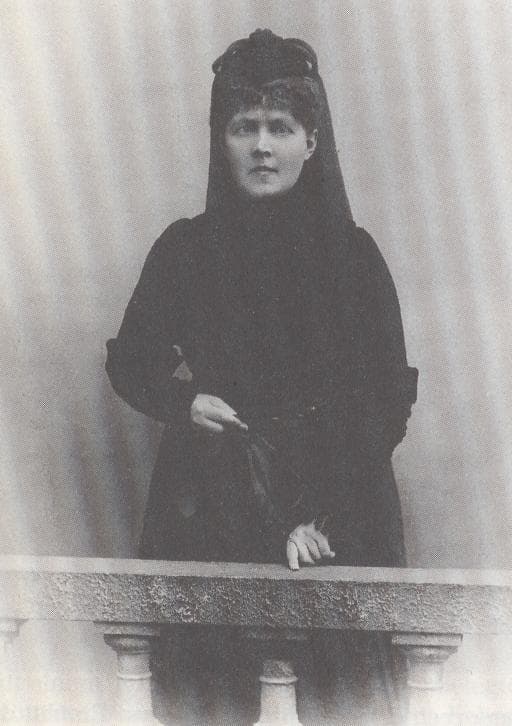
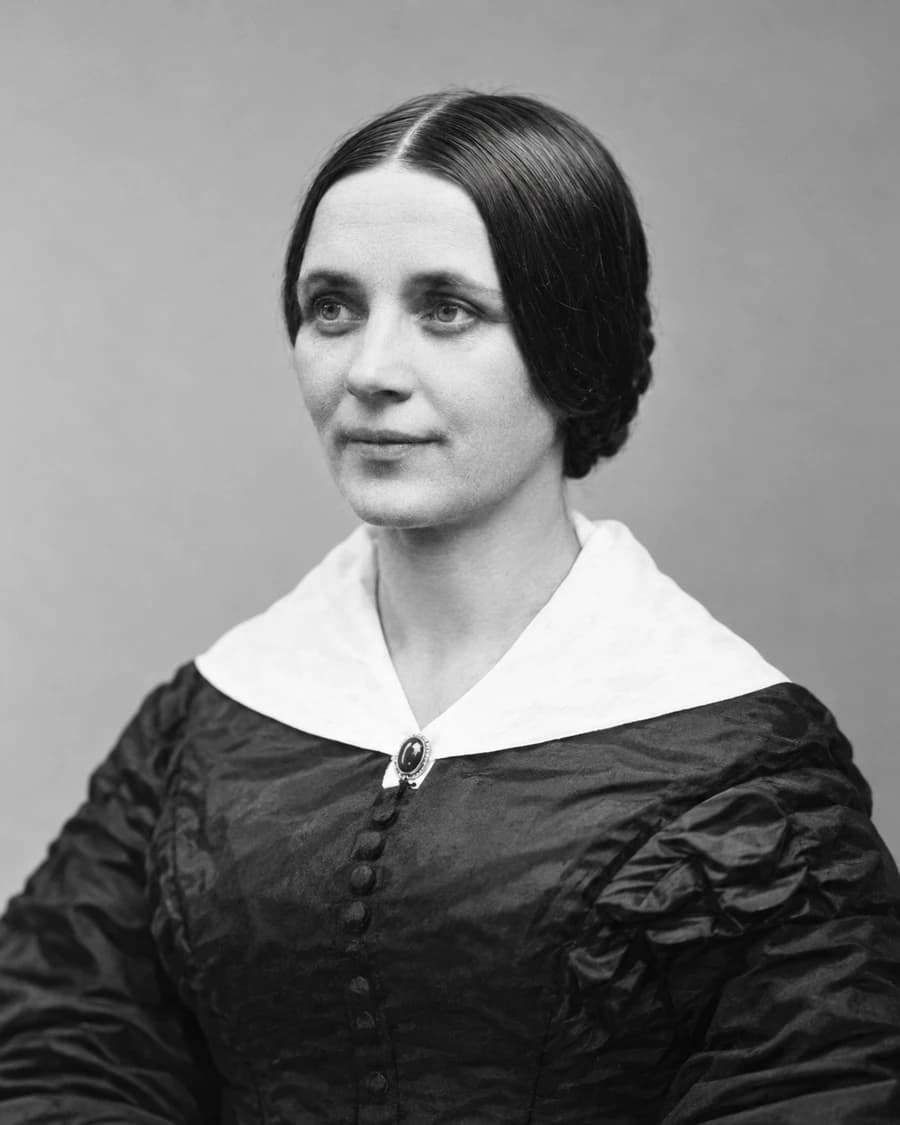
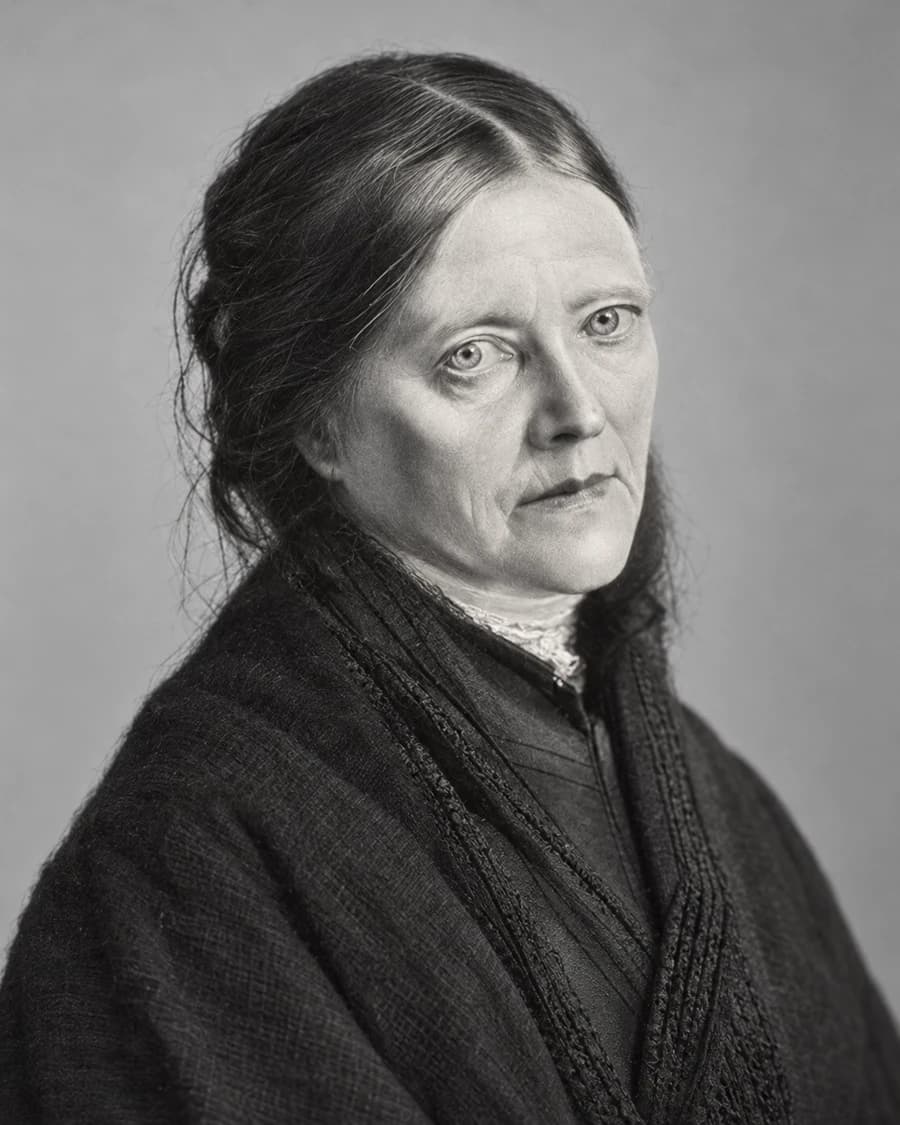
Elisabeth Nietzsche

Nietzsche letters

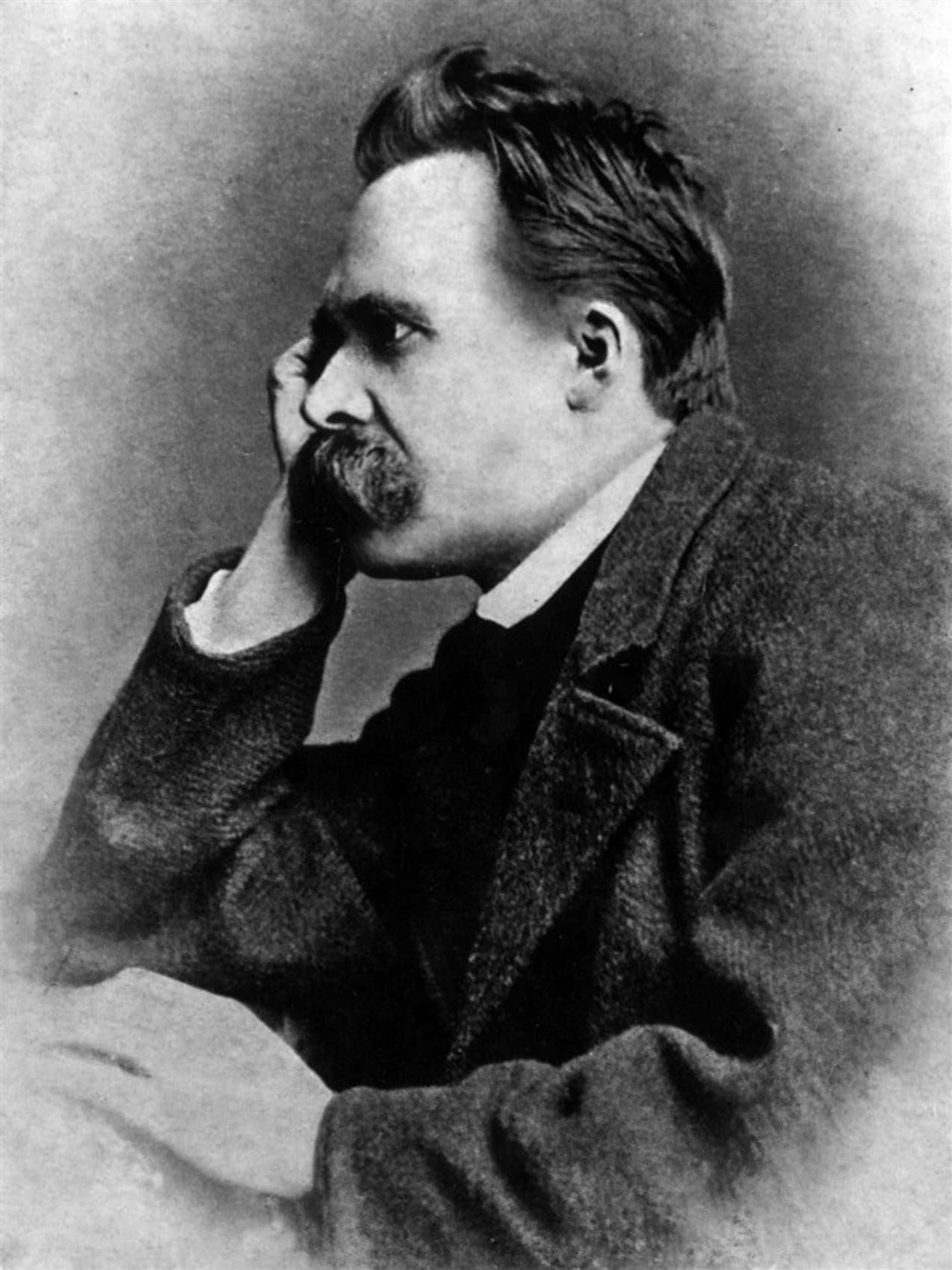
Nietzsche & Elisabeth Nietzsche

1856–1888 · 12 letters · Sister

Affection and disagreement across three decades of family life.

In conversation

Chat with Nietzsche

Explore his ideas. Challenge your own.

Start chatting

AI simulation inspired by his writings.

This selection contains Nietzsche’s outgoing letters. The recipient’s replies are not included in this edition. Original letter text in English translation. No imagined replies. Ellipses and omissions in the source editions are preserved.

1856

Friedrich Nietzscheto Elisabeth Nietzsche

DEAR ELIZABETH: As mother is writing to you to-day I am sending you a short note to put with hers. First of all, let me describe our journey. On the way to Weissenfels there was nothing I objected to more than the piercing wind, and in this respect my two coats served me in good stead. We reached the station almost an hour before the train came in. In the station buffet I read the Vossische Zeitung, which had a good deal to say about the Imperial baby. It is said to have three nurses and three governesses, one of the former having allowed him to fall. The nurse in question fainted immediately, but the child is supposed to have given vent to a shriek loud enough for a child a year old. He has already received two orders: the Cross of the Legion of Honour, and one other military order. Mother asked for a glass of sugared water just as the train entered the station. We quickly ate the sugar and wanted to get away to our train, but were stopped by the waiter who wanted change. We could not settle with him until at length he gave me one more sugar cake. We could scarcely find any room in the train, but at last found two seats. On reaching Naumburg we drove in with Bocher. When we reached the door of the house, little Eosa, Mine, and Ottos were standing there and were very glad to see us back; but grandmamma said she would have been ever so pleased if you had been with us. You will certainly be delighted with Pobles, for it is a very pretty place. I suppose you often play at ball and will be able to hit it better than I can when you come back. I have just heard that William is very ill; he has rheumatic fever. I wanted to take him an orange, but was not allowed to see him. So I went to Gustav, who was very much delighted with the paper for the walls of the forts. He thanks you very much indeed and greatly admires the cheapness of things in Magdeburg. My school time-table has been changed a good deal, for my lessons start at 7. I have not yet played with the soldiers, but will do so soon. I often wish I were at Pobles, too, and thank our grandparents very heartily for the nice stay I had there. Remember me most affectionately to them and also to Uncles Edmund, Theobald, Oscar, and to our aunts. Keep well and write frequent letters to your brother,

FRIEDRICH WILHELM NIETZSCHE.

1921 edition · Anthony M. Ludovici ↗

1875

Friedrich Nietzscheto Elisabeth Nietzsche

MY DEAR SISTER: It was a good thing that you wrote me a letter close on the heels of the one mother wrote, for I was beside myself and had already written down some bitter words. I now see that I misunderstood her.

But how is it that she was able to misunderstand me so, and all this time to conceal from me this incomprehensible hostility to the two Wagners? Am I so difficult to understand and so easy to misunderstand in all my intentions, plans, and friendships? Ah, we lonely ones and free spirits—it is borne home to us that in some way or other we constantly appear different from what we think. Whereas we wish for nothing more than truth and straightforwardness, we are surrounded by a net of misunderstanding, and despite our most ardent wishes we cannot help our actions being smothered in a cloud of false opinion, attempted compromises, semi-concessions, charitable silence, and erroneous interpretations. Such things gather a weight of melancholy on our brow; for we hate more than death the thought that pretence should be necessary, and such incessant chafing against these things makes us volcanic and menacing. From time to time we avenge ourselves for all our enforced concealment and compulsory self-restraint. We emerge from our cells with terrible faces, our words and deeds are then explosions, and it is not beyond the verge of possibility that we perish through ourselves. Thus dangerously do I live! It is precisely we solitary ones that require love and companions in whose presence we may be open and simple, and the eternal struggle of silence and dissimulation can cease.

Yes, I am glad that I can be myself, openly and honestly with you, for you are such a good friend and companion, and the older you grow and the more you free yourself from the Naumburg atmosphere, the more will you certainly adapt yourself to all my views and aspirations.

With love and devotion,

YOUR BROTHER.

(Marginal note by Nietzsche in the foregoing letter): You can read all this in print in my Schopenhauer; but they are at the same time my own experiences and feelings that always visit me—as at the present moment, for instance.

1921 edition · Anthony M. Ludovici ↗

1881

Friedrich Nietzscheto Elisabeth Nietzsche

Oh, my darling sister, you imagine that it is all about a book? Do you too still think that I am an author! My hour is at hand! I should like to spare you all this; for surely you cannot bear my burden (it is enough of a fatality to be so closely related to me). I should like you to be able to say with a clean conscience, to each and everyone, "I do not know my brothers latest views." (People will be only too ready to acquaint you with the fact that they are "immoral" and "shameless".) Meanwhile, courage and pluck; to each his appointed task, and the same old love!

YOUR F.

1921 edition · Anthony M. Ludovici ↗

1882

Friedrich Nietzscheto Elisabeth Nietzsche

Just a few lines, my darling sister, to thank you for your kind words about Wagner and Bayreuth. Certainly the time I spent with him in Triebschen and enjoyed through him at Bayreuth (in 1872, not in 1876) is the happiest I have had in my whole life. But the omnipotent violence of our tasks drove us asunder and now we can never more be united; we have grown too strange to each other.

The day I found Wagner I was happy beyond description. So long had I been seeking for the man who stood on a higher plane than I did, and who really comprised me. I believed I had found this man in Wagner. It was a mistake. And now it would not even be right to compare myself with him—I be long to another order of beings.

In any case I have had to pay dearly for my craze for Wagner. Has not the nerve-destroying power of his music ruined my health—was it not dangerous to life? Has it not taken me almost six years to recover from this pain? No, Bayreuth is impossible for me! What I wrote a day or two ago was only a joke. But you at all events must go to Bayreuth. Your going would be of the greatest value to me.

YOUR DEVOTED BROTHER.

1921 edition · Anthony M. Ludovici ↗

1883

Friedrich Nietzscheto Elisabeth Nietzsche

MY DEAR SISTER: To-day, just as it was three days ago, the weather is perfectly bright and clear and I can survey with cheerfulness and confidence that which I have and have not achieved up to the present, and that which I still expect from myself. You do not know this, and that is why I cannot take it amiss that you should wish to see me on other ground, more secure and more protected. Your letter to _______ made me think a good deal, and the chance remark you made about my condition in Bâle having certainly been the best hitherto, made me think even more. I, on the other hand, judge the matter as follows: the whole meaning of the terrible physical suffering to which I was exposed lies in the fact that, thanks to it alone, I was torn away from an estimate of my life-task which was not only false but a hundred times too low. And as by nature I belong to the modest among men, some violent means were necessary in order to recall me to myself. Even the teachers I had as a young man are probably, in relation to what I have to do, only minor and transitory forces. The fact that I stood above them and contemplated their ideals over their heads—above all these Schopenhauers and Wagners—this is what prevented them from being quite indispensable to me, and now I could not do myself a greater injustice than to judge myself according to these contemporaries whom I have in every sense overcome. Every word in my Zarathustra is simply so much triumphant scorn and more than scorn, flung at the ideals of this period, and behind almost every word there stands a personal experience, an act of self-overcoming of the highest order. It is absolutely necessary that I should be misunderstood; nay, I would go even further and say that I must succeed in being understood in the worst possible way and despised. The fact that those "nearest to me" should be the first to do this was what I understood last summer and the following autumn, and by that alone I became filled with the glorious consciousness of being on the right road. This feeling may be read everywhere in Zarathustra. The dreadful winter, together with my bad health, made me forget it, and sapped my courage, just as the things which have happened to me during the last few weeks have brought me into the greatest danger—the danger of departing from my appointed path. The moment I am now forced to say: "I cannot endure loneliness any longer," I am conscious of having fallen to untold depths in my own estimation—of having deserted the highest that is in me.

What do these Rées and Lous matter! How can I be their enemy? And even if they have harmed me, I have surely derived enough profit from them, if only from the fact that they are people of such a different order from myself; in this I find complete compensation—aye, even a reason for feeling grateful to them both. They both seemed to be original people and not copies, and that is why I suffered their company, however distasteful they were to me. As regards "friendship"—until now I have practised the most severe abstinence (Schmeitzner declares that I have no friends, that I "have been left absolutely in the lurch for ten years!") In so far as the general trend of my nature is concerned, I have no comrades; nobody has any idea when I most need comfort, encouragement, or a shake of the hand. An extreme instance of this occurred last year, after my stay at Tantenburg and Leipzig. And if ever I complain the whole world thinks it is entitled to exercise its modicum of power over me as a sufferer—they call it consolation, pity, good advice, etc.

But men like myself have always had to put up with the same sort of thing; my purely personal trouble is my declining health, which makes itself felt by a depreciation of my feeling of power and by a lack of confidence in myself. And as, under this European sky, I suffer and am low-spirited for at least eight months in the year, it is a stroke of exceptional luck that I am able to bear it any longer. What I mean by luck in this connection is no more than the absence of such strokes of ill fortune as that of last year—that is to say, that no other stones should enter the works of my watch. For I might perish from the effects of small stones, because at present the watch is most highly complicated and the responsibility for all the most exalted questions of knowledge rests on my shoulders. In summa, to draw some practical conclusions from these generalities, remember, my dear sister, never to remind me either by word of mouth or in writing, of those matters that would deprive me of my self-confidence, aye, almost of the whole point of my existence hitherto. If these things affect and have affected me so much, ascribe it to my health! Cultivate forgetfulness and anything else new and quite different from these things, in order that I may learn to laugh at the loss of such friends! And remember that his contemporaries can never be just to a man like myself, and that every compromise for the sake of "a good name" is unworthy of me.

Written under a bright clear sky, with a clear mind, a good digestion, and the time—early morning.

Your Brother.

1921 edition · Anthony M. Ludovici ↗

Friedrich Nietzscheto Elisabeth Nietzsche

MY DEAR LAMA: The thought of being reckoned among the authors! that belongs to the things that make me tremble with disgust. But, my dear sister, just study "Dawn of Day" and "Joyful Wisdom" books whose contents and whose future are the richest on earth! In your last letters there was a good deal about "egoistic" and "unegoistic," that ought no longer to be written by my sister. I draw above all a sharp line be tween strong and weak men—those who are destined to rulership, and those who are destined to service, obedience, and devotion. That which turns my stomach in this age is the untold amount of weakness, unmanliness, impersonality, changeableness, and good-nature—in short weakness in the matter of "self"-seeking, which would fain masquerade as "virtue." That which has given me pleasure up to the present has been the sight of men with a long will—who can hold their peace for years and who do not simply on that account deck themselves out with pompous moral phraseology, and parade as "heroes" or "noblemen," but who are honest enough to believe in nothing but themselves and their will, in order to stamp it upon mankind for all time.

Excuse me. That which drew me to Richard Wagner was this; Schopenhauer, too, had the same feeling all his life. . . .

I know perhaps better than anyone else how to recognize an order of rank even among strong men, according to their virtue, and on the same principle there are certainly hundreds of sorts of very decent and lovable people among the weak—in keeping with the virtues peculiar to the weak. There are some strong "selves" whose selfishness one might call divine (for instance Zarathustra's) but any kind of strength is in itself alone a refreshing and blessed spectacle. Read Shakespeare! He is full of such strong men, raw, hard, and mighty men of granite. Our age is so poor in these men and even in strong men who have enough brains for my thoughts!

Do not form too low an estimate of the disappointment and loss I have suffered this year. You cannot think how lonely and "out of it" I always feel when I am in the midst of all the kindly Tartufferie of those people whom you call "good," and how intensely I yearn at times for a man who is honest and who can talk even if he were a monster [. . . . . ] , but of course I should prefer discourse with demi-gods.

But once again, forgive me! I am writing you all this out of the heartiest depths of my heart, and know very well how very good your intentions are where I am concerned. Oh, this infernal solitude!

F. N.

P. S.—Stein is still too young for me. I should spoil him. I almost spoilt Gast—I have to be most awfully careful of my Ps and Qs with him.

1921 edition · Anthony M. Ludovici ↗

1885

Friedrich Nietzscheto Elisabeth and Bernhard Förster

MY DEAR BROTHER AND SISTER: The weather is perfect, and so your "famous animal" must also assume a pleasant countenance, although it has had many a sad day and night. Christmas, however, was a regular day of rejoicing for me. At midday I received your kind presents, and lost no time in putting the chain round my neck; while the nice little calendar found its way into my waistcoat pocket. But the money must certainly have slipped out, if there really were money in the letter (and mother says there was.) Forgive your blind animal for this! I unpacked my treasure in the street, and something may certainly have fallen out, for I fumbled very eagerly for the letter. Let us hope that some poor old woman was not far off, and that she thus found her "Christimas stocking" filled in the street. I then drove to my peninsula St. Jean, ran a long way along the coast, and at last sat down among some young soldiers who were playing skittles. Fresh roses and geraniums adorned the hedges and everything was green and warm; nothing northern! Then your famous animal drank three quite large glasses of a sweet local wine, and was just the slightest bit top-heavy; at least, not long afterwards, when the breakers drew near to me, I said to them as one says to a bevy of farmyard fowls, "Shsh! Shsh! Shsh!" Then I drove back to Nice, and regaled myself in princely fashion at dinner in my pension. A large Christmas tree was also lighted up. Just think, I have discovered a boulanger de luxe who understands what cheesecakes are. He said that the King of Würtemberg had ordered one of these cakes for his birthday. It was the word "princely" that brought this to my mind.

Ever your loving, F.

1921 edition · Anthony M. Ludovici ↗

1886

Friedrich Nietzscheto Elisabeth Nietzsche

MY DEAR OLD LAMA: Your kind and cheerful proposition has just reached me. If by any chance it could serve the purpose of giving your husband a good opinion of the incorrigible European and anti-antisemite, your utterly heterodox brother and "Jack-in-the-Corner"—Fritz (although Dr. Forster had certainly other things to think of without troubling about me), I would willingly tread in Fraulein Alwinchen Forster's footsteps, and beseech you to convert me into a South American landowner on the same lines and conditions. I must, however, stipulate most emphatically that the plot of land be called not Frederickland or Frederickwood (for, to begin with, I do not wish to die yet and be buried there) but, in memory of the name I have given you—Lamaland.

Joking apart, I would send you everything I possess if it would help to get you back here soon. Generally speaking, everybody who knows you and loves you is of opinion that it would have been a thousand times better for you to have been spared this experiment. Even if that country were found to be ever so well suited to German colonization, no one would admit that precisely you two ought to be the colonizers. The fact that you should be seems to be the result of an absolutely arbitrary choice—excuse the expression!—it is moreover dangerous, particularly for a lama who is accustomed to a gentle culture and prospers and capers about best in such an environment. The whole of this heating up of feelings, constituting as it does the cause of the whole affair, is too tropical and, in my opinion, not even wholesome for a Lama (or to speak more accurately, for the whole of our real family type, whose art lies in the reconciliation of contrasts.) One keeps one's beauty and youth longer when one neither hates nor feels mistrustful. After all, I cannot help thinking that your nature would prove itself more useful in a truly German cause, here in Europe, than over there particularly as the wife of Dr. Forster, who, as I thought once more on reading his Essay on Education, would really find his natural mission as a Director of Education at a place like Schnepfenthal—and not (forgive your brother for saying so) as an agitator in that anti-Semitic movement which is three-quarters rotten. The things most urgently needed in Germany at present are precisely independent Educational Institutions, which would actively compete with the slave-drilling education of the State. The confidence that Dr. Forster enjoys vis-a-vis the nobility of northern Germany, would seem to be a sufficient guarantee that a sort of Schnepfenthal or Hofwyl (do you remember?—the place where Vischer was educated), would succeed under his direction. But right out there, among peasants, in close proximity to Germans, who have become impossible, and are probably embittered and poisoned at heart—enough, what a wide field this provides for worry and anxiety! The big stupid ocean between us! and whenever, here, we get news of a hurricane, your brother grows angry and agitated, and cudgels his brains to discover how on earth it ever occurred to the Lama to embark upon such an adventure. I do the best I can to bear up, but every day, and more particularly at night, I am overcome by incomparable sadness—always, simply owing to the fact that the Lama has run away and has completely broken with her brother's tradition.

I have just heard from the Court Orchestra Conductor of Carlsruhe (to whom I had written a line to please poor G.) that my recommendation ("the recommendation of a man whom I admire enthusiastically") had prepossessed him most favourably towards the work, and while I am rejoicing over this news, it occurs to me that you will say, "He is of course a Jew!" This, in my opinion, proves how the Lama has leaped aside from her brother's tradition: we no longer rejoice about the same things. Meanwhile it cannot be helped. Life is an experiment; one can do what one likes, and one has to pay too dearly for everything. Onward, my dear old Lama! And may you face what you have resolved to face, with courage!

YOUR F.

1921 edition · Anthony M. Ludovici ↗

Friedrich Nietzscheto Elisabeth Nietzsche

MY DARLING LAMA: I have ceased to be in favour of the idea of living for good in Leipzig or Munich; life in such circles demands too heavy a toll on my pride; and after all, however much I "belittle" myself, I still do not attain to that cheerful and comforting courage and self-reliance which are necessary for the continued pursuit of my path in life—attributes which at all events spring into existence more readily in Sils and in Nice than in the places above mentioned. How many humiliations and acts of foolishness did I not have to swallow down during my last stay in Germany, and without my friends ever dreaming of anything of the sort! No—they one and all "mean well" by me. I endured hours of spiritual depression that I can remember only with a shudder. The humiliating experiences of the autumn of 1882, which I had almost forgotten, came back to my mind, and I recollected with shame the type of humanity I had already treated as my equal! Wherever I turned I was confronted by opinions utterly opposed to my own—to my great astonishment, however, not about Wagner. Even Kohde has refused to have anything to do with Parsifal.

Where are those old friends with whom in years gone by I felt so closely united? Now it seems as if we belonged to different worlds, and no longer spoke the same language! Like a stranger and an outcast, I move among them not one of their words or looks reaches me any longer. I am dumb for no one understands my speech ah, but they never did understand me! or does the same fate bear the same burden on its soul? It is terrible to be condemned to silence when one has so much to say [ . . . ] Was I made for solitude or for a life in which there was no one to whom I could speak? The inability to communicate one's thoughts is in very truth the most terrible of all kinds of loneliness. Difference is a mask—which is more ironbound than any iron mask and perfect friendship is possible only inter pares! Inter pares!—an intoxicating word; it contains so much comfort, hope, savour, and blessedness for him who is necessarily always alone; for him who is "different"; who has never met anyone who precisely belonged to him, although he has sought well on all sorts of roads; who in his relationship to his fellows always had to practise a sort of considerate and cheerful dissimulation in the hope of assimilating himself to them, often with success, who from all too long experience knows how to show that bright face to adversity which is called sociability—and some times, too, to give vent to those dangerous, heart rending outbursts of all his concealed misery, of all the longings he has not yet stifled, of all his surging and tumultuous streams of love—the sudden madness of those moments when the lonely man embraces one that seems to his taste and treats him as a friend, as a Heaven-sent blessing and precious gift, only to thrust him from him with loathing an hour later, and with loathing too for himself, as if he had been contaminated and abased, as if he had grown strange even to himself, as if he had fallen from his own company. A deep man needs friends. All else failing, he has at least his god. But I have neither god nor friends! Ah, my dear sister, those you call by that name were certainly friends once but now? For instance [ . . . ].

. . . Now I ought once more to give myself a little rest, for the spiritual and intellectual tension of the last few years has been too severe, and my temper has grown sharper and more gloomy. My health is really quite normal—but my poor soul is so sensitive to injury and so full of longing for good friends, for people "who are my life." Get me a small circle of men who will listen to me and understand me—and I shall be cured!

Your FRITZ.

1921 edition · Anthony M. Ludovici ↗

1887

Friedrich Nietzscheto Elisabeth Nietzsche

MY DEAR LAMA: It is now difficult to help me. When one has been at great pains for half one's life to secure independence for one's self, as I found it necessary to do, one has to accept the disadvantages of the situation as well. One cannot have the one without the other. Among these disadvantages is the fact that no one can tell from appearances what are the things I lack. I should like to have a little more money in order, for instance, that in the interests of my declining health, alone, and with the view of avoiding innumerable mistakes in dieting that I am exposed to in restaurants and hotels, I might have my own kitchen. It is also a question of pride; I should like to lead a life that really is suitable to me, and does not look so conventional as that of "a scholar on his travels." But even the five conditions that might make life endurable, and are really not pretentious, seem to me impracticable. I require (1) Some one to superintend my digestion, (2) Somebody who can laugh with me and who has cheerful spirits, (3) Some one who is proud of my company and who constrains others to treat me with becoming respect, (4) Some one who can read aloud to me without making a book sound idiotic. There is yet a fifth condition; but I will say nothing about it.

To marry now would perhaps be simply an act of folly, which would immediately deprive me of the independence that I have won with such bloody strife. And then I should also have to choose some European State, to belong to and become a citizen of it. I should have to consider my wife, my child, my wife's family, the place I lived in, and the people we associated with, but to forbid myself the free expression of my ideas would kill me. I should prefer to be miserable, ill, and feared, and live in some out of the way corner, than to be "settled" and given my place in modern mediocrity! I lack neither courage nor good spirits. Both have remained with me because I have no acts of cowardice or false compromise on my conscience. Incidentally I may say that I have not yet found a woman who would be suited to associate with me, and whose presence would not bore me and make me nervous. (The Lama was a good housemate for whom I can find no substitute, but it wanted to vent its energy and to sacrifice itself. For whom? For a miserable foreign race of men, who will not even thank her—and not for me. And I would be such a grateful animal, and always ready for merry laughter. Are you still able to laugh at all? I am afraid that you will quite forget how to do it among these embittered people.) Moreover I know the women folk of half Europe, and wherever I have observed the influence of women on men, I have noticed a sort of gradual decline as the result; for instance in the case of poor _____. Not very encouraging is it? I shall leave Nice at the beginning of next month in order to seek peaceful retirement on Lake Maggiore, where there are woods and shaded groves, and not this blindingly white incessant sunshine of Nice in the spring! The address is: Villa Badia, Cannobio (Lago Maggiore), but before this letter reaches you who knows where I shall be?

With love, Your F.

1921 edition · Anthony M. Ludovici ↗

Friedrich Nietzscheto Elisabeth Nietzsche

MY DEAR LAMA: Here I am in a magnificent spot, and every morning I marvel at the glory of the colouring. The noble cloisterly nature of the situation and the arrangements also pleases me—and yet I am so out of sorts that I feel as if I could no longer be heartily glad about anything. Nothing comes to me from the outside world to give me courage or strength. My fellow-boarders are incomparably tedious! In that respect I was better off in Nice this winter. There were a few people there who interested me. Our dear mother will have written to you all about it.

And now about yourself, my dear Lama! I was very much impressed by the purchase of this huge piece of land, "larger than many a German principality." But I must confess that I am absolutely at sea about the whole affair. If I understand anything at all, it is that the real owner of that vast complex of territory is that rich Paraguayan who is so friendly with Förster. This would not prevent him from wishing to serve his own interests by means of this "German colony." He is certainly bent on turning it to his own profit. Now the principal thing to me seems to be, not that the colony should be inhabited, but that it should do some business, sell wood, etc. For without that I absolutely cannot see how such a great outlay of capital can get its proper return.

Förster promised to invest a portion of your money securely either in Germany or in Paraguay; but, if I know my sister well, this last portion will certainly find its way before long into the pockets of those numerous paupers. I confess that they are my one bugbear; remember that if anything goes wrong they constitute a most unpleasant element with which to deal. Then they always believe that one has unjustly led them into trouble; whereas success and failure often depend on accidents. To tell you the truth, my dear Lama, your letters do not comfort me in the least. If we were situated as you are we should all write such contented and hopeful letters home—particularly to relatives. I have not written to you about it yet; but I am not edified by the whole affair. In my mind's eye, I can see these paupers, dependent upon your pity, pressing themselves covetously upon you in order to exploit your all too ready liberality. No colony can prosper with such elements; do not deceive yourself on that point. If they were peasants it would be quite a different thing.

Also please allow me to question whether you are so well fitted for colonizing as my brother-in-law so often affirms. Not long ago I was talking to one of your former friends and he declared that we did not even know what colonizing meant. It was an incessant struggle with the elements . . . and you were as well fitted for it as "lily and rose-branches would be for sweeping a chimney." A fine simile! but very sad for the Lama. Forgive this sad letter, but mother's anxiety on your account has infected me also. I believe she is feeling ill as the result of bad German weather; but the Lama in the atmosphere and the sun of the South holds her head up.

With love and solicitude, YOUR BROTHER.

1921 edition · Anthony M. Ludovici ↗

1888

Friedrich Nietzscheto Elisabeth Nietzsche

MY DEAR OLD LAMA: It was with great pleasure that I read my brother-in-law's pæan on his "incomparable wife." I am proud of having brought you up—only very few women would have overcome those extraordinary difficulties with such bravery and unassuming cheerfulness. But please let us have a little less modesty! Do not forget that the herd insists on having picturesque people—that is to say, people who draw pictures of their gifts, aspirations, and successes in such bold and obtrusive strokes that they can be grasped even by the dullest eyes. The herd honours everything in the nature of a pose, any solemn attitude,—things from which we two are averse. Only subtle spirits understand the shame of the noble mind, that conceals its highest and its best beneath a plain surface. I feel certain that among all those people over there, only a few have any idea with what little regard for yourself and with what passionate resolution you try to realize your ideals. The only question I ask myself is—are these ideals worthy of so much self-sacrifice? I very much fear you will yet have to overcome many bitter disappointments in your life. Ultimately you will be come a sceptical old woman—without having lost your bravery; and you will be well suited to your sceptical brother. How we shall laugh then over the idealism of our youth—possibly with tears.

Now let me tell you a little experience I have had. As I was taking my usual walk yesterday, I suddenly heard some one talking and laughing heartily along a side path (it sounded almost as if it might have been you); and when this some one appeared before me, it turned out to be a charming brown-eyed girl, whose soft gaze, as she surveyed me, reminded me of a roe. Then, lonely philosopher though I am, my heart grew quite warm—I thought of your marriage schemes, and for the whole of the rest of the walk I could not help thinking of the charming young girl. Certainly it would do me good to have something so graceful about me—but would it do her good? Would my views not make her unhappy, and would it not break my heart (provided that I loved her) to make such a delightful creature suffer? No, let us not speak of marrying!

But what you were thinking of was rather a good comrade [ . . . ]. Do you really think that an emancipated woman of this sort, with all her femininity vanished, could be a good comrade, or could be tolerable as a wife at all? You forget that, in spite of my bad eyesight, I have a very highly developed sense of beauty; and this, quite apart from the fact that such embittered women are repugnant to me and spoil my spirits and my whole atmosphere. Much intellect in a woman amounts to very little as far as I am concerned, for this so-called intellect, by which only the most superficial men are deceived, is nothing more than the most absurd pretentiousness. There is nothing more tiring than such an intellectual goose, who does not even know how tedious she is. Think of Frau O.! But in this respect I must admit that Fraulein X. is incomparably more pleasant—but, nevertheless! You think that love would change her; but I do not believe in any such change through "love." Besides, you have not seen her for many years it is obvious that she must have changed in the direction of ugliness and loss of womanliness. Believe me, if you were to see her now—at her very appearance the thought of love and marriage would strike you, as it does me, as absurd. You can take my word for it, that for men like me, a marriage after the type of Goethe's would be the best of all—that is to say, a marriage with a good housekeeper! But even this idea is repellent to me. A young and cheerful daughter to whom I would be an object of reverence would be much more to the point. The best of all, however, would be to have my good old Lama again. For a philosopher, a sister is an excellent philanthropic institution, particularly when she is bright, brave, and loving (no old vinegar flask like G. Keller's sister), but as a rule one only recognizes such truths when it is too late.

Well, this has been a nice chat on marriage with the Lama. With many hearty wishes and greetings to you and your Bernhard,

Your devoted F.

1921 edition · Anthony M. Ludovici ↗

About this correspondence

These are historical selections, not a complete archive. The conversation layout is a reading aid; adjacent letters may be separated by months or years. Texts retain the language and omissions of their source editions.

Selected Letters of Friedrich Nietzsche (1921), translated by Anthony M. Ludovici, edited by Oscar Levy, Doubleday, Page & Company. This early edition contains abridgements and dated editorial choices.

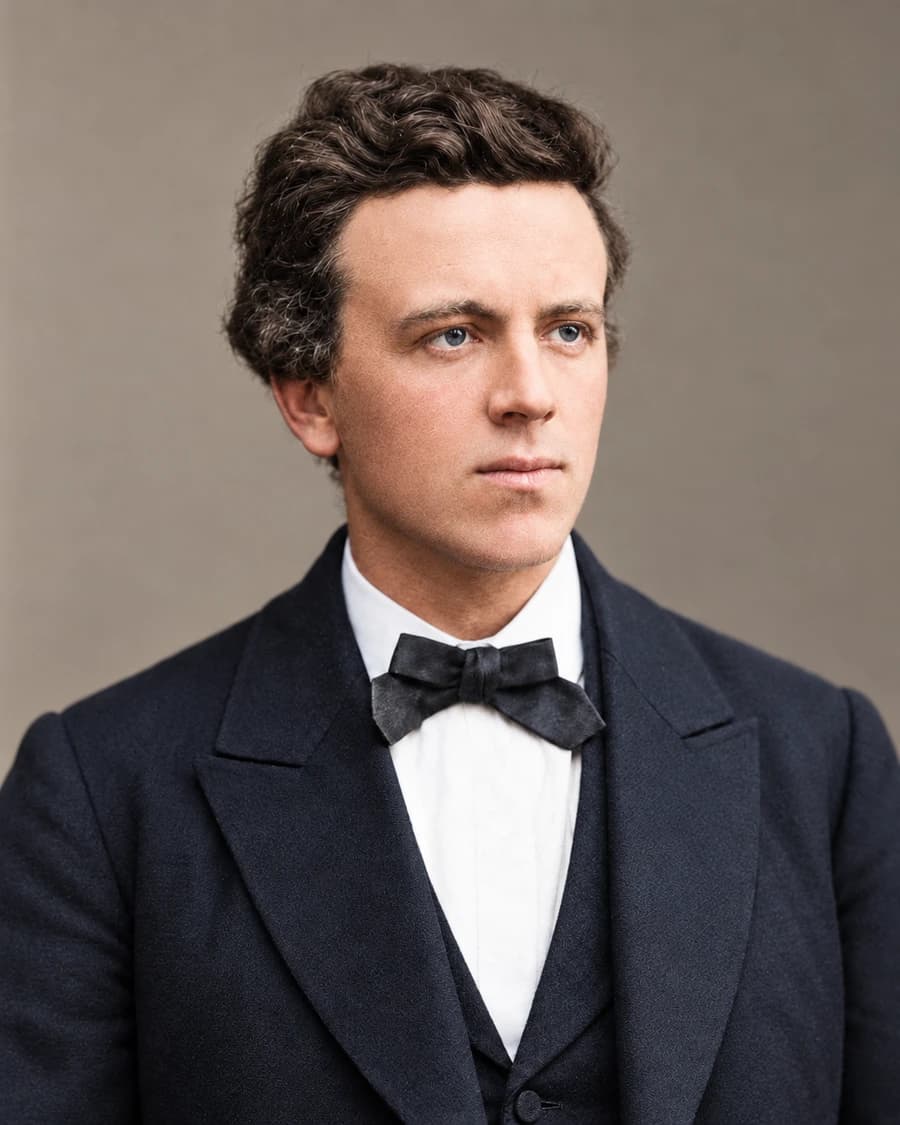
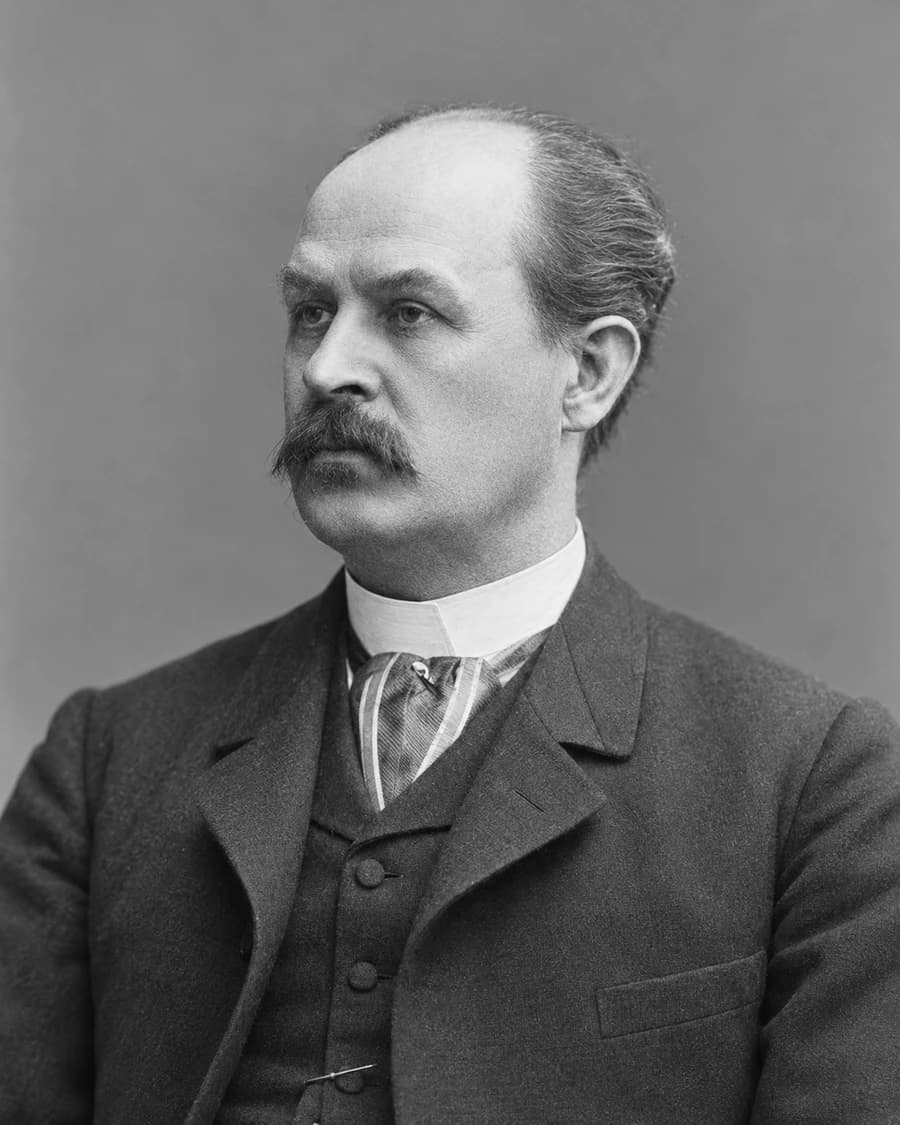
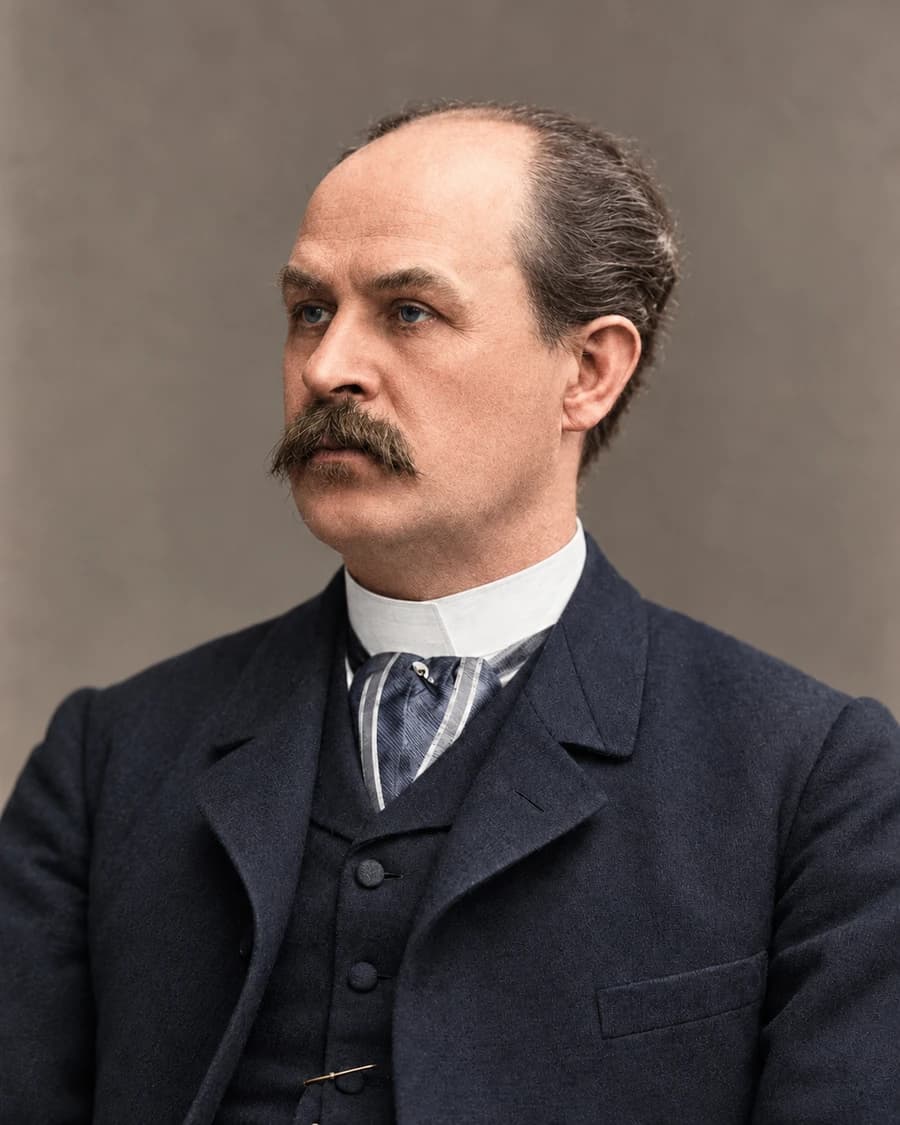
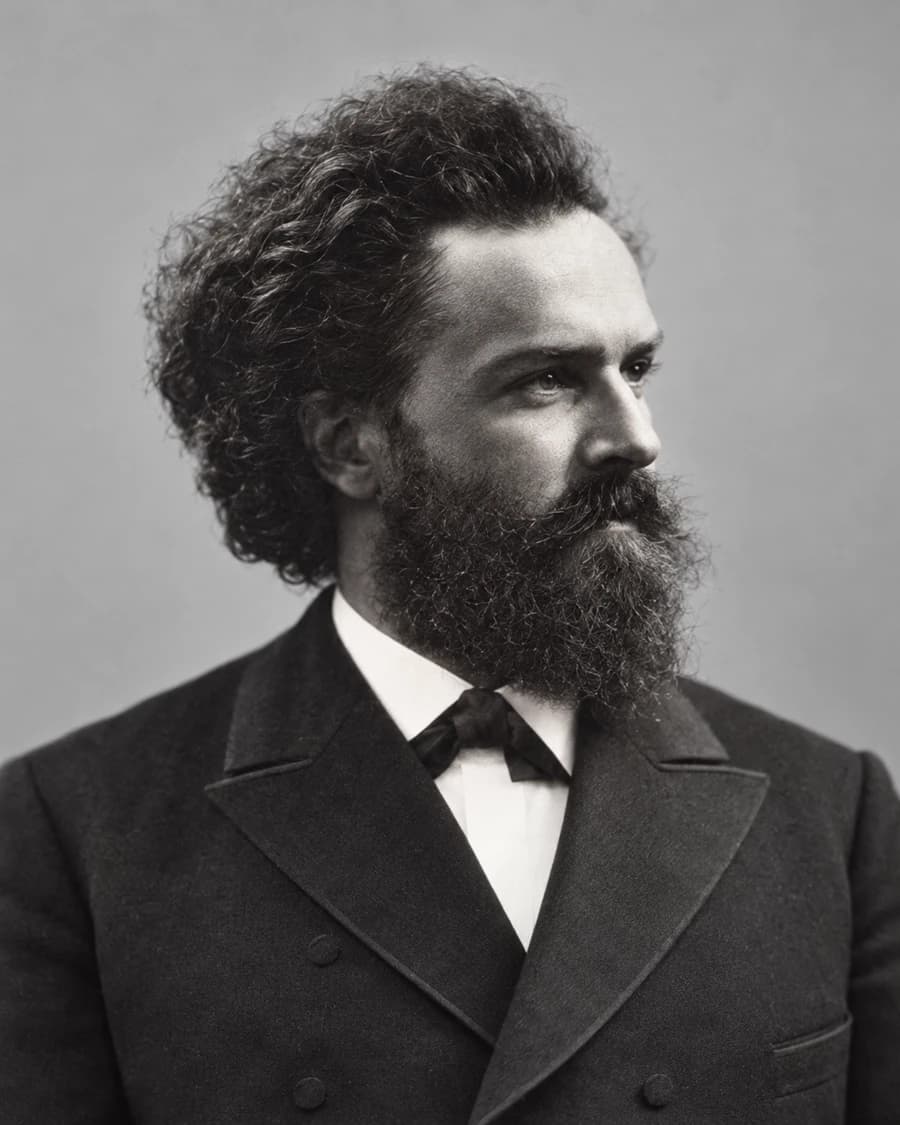
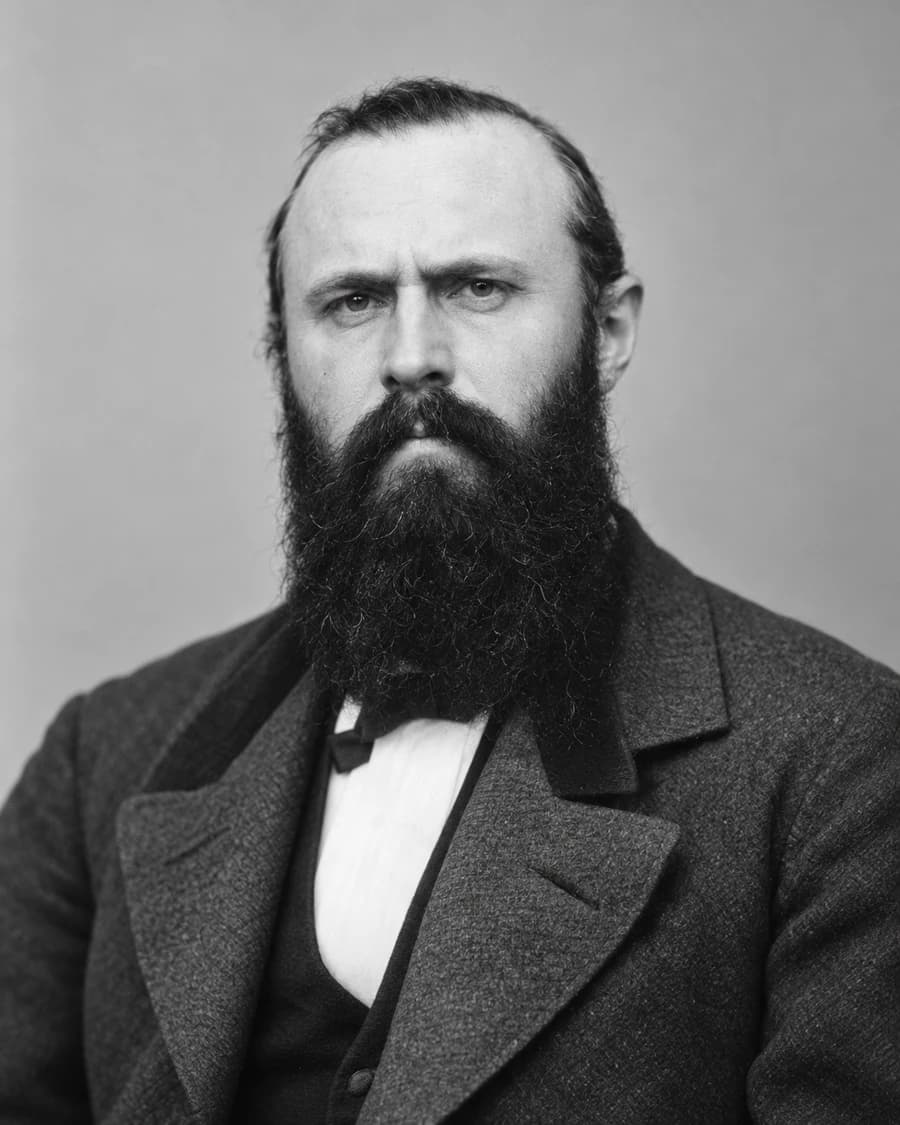
Portrait: a Mr Hertel. Public domain. Shown in grayscale with a display crop.

Explore another correspondence →