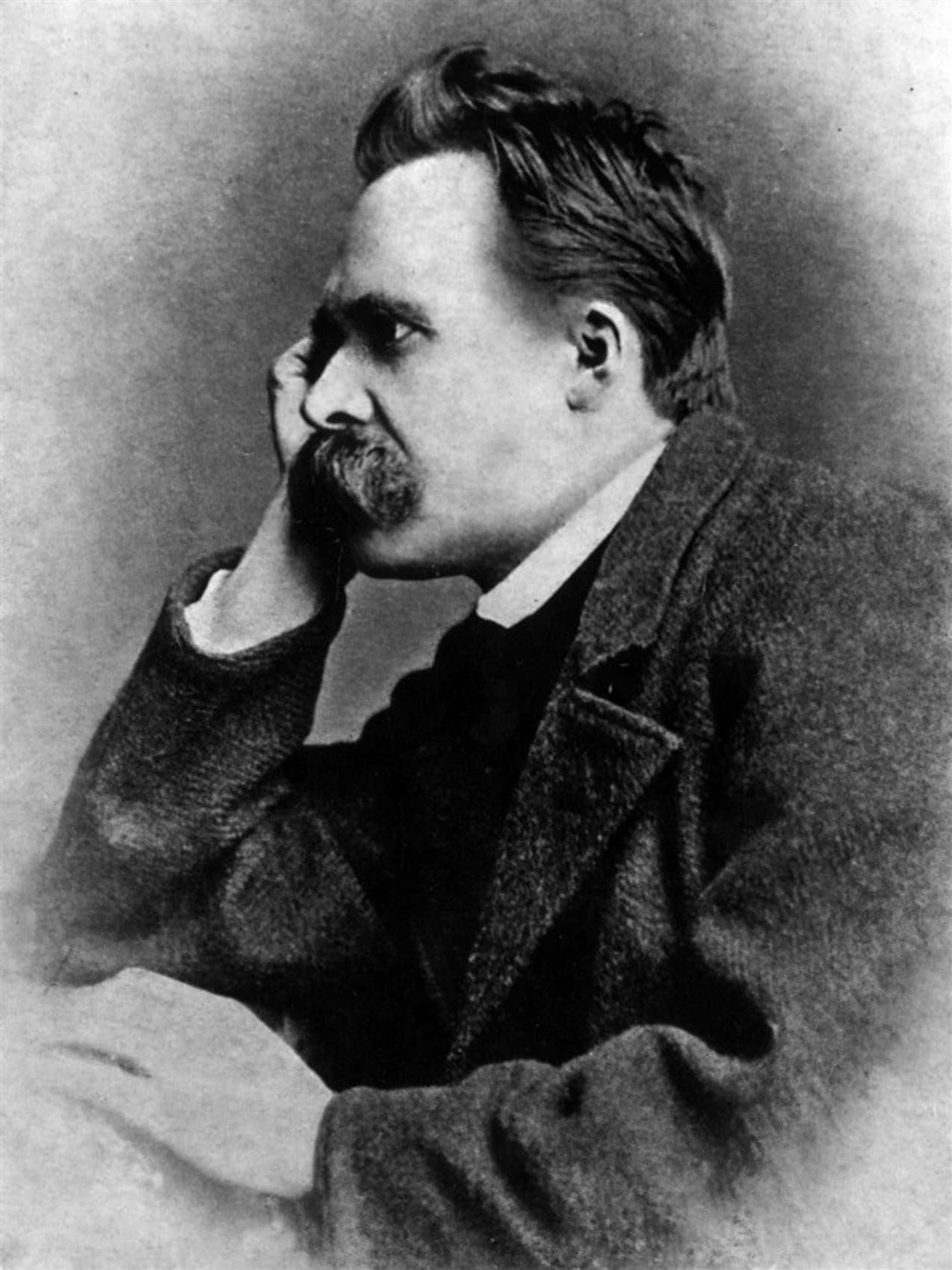
NewMeet Nietzsche, in his own voice.Listen
← All correspondents
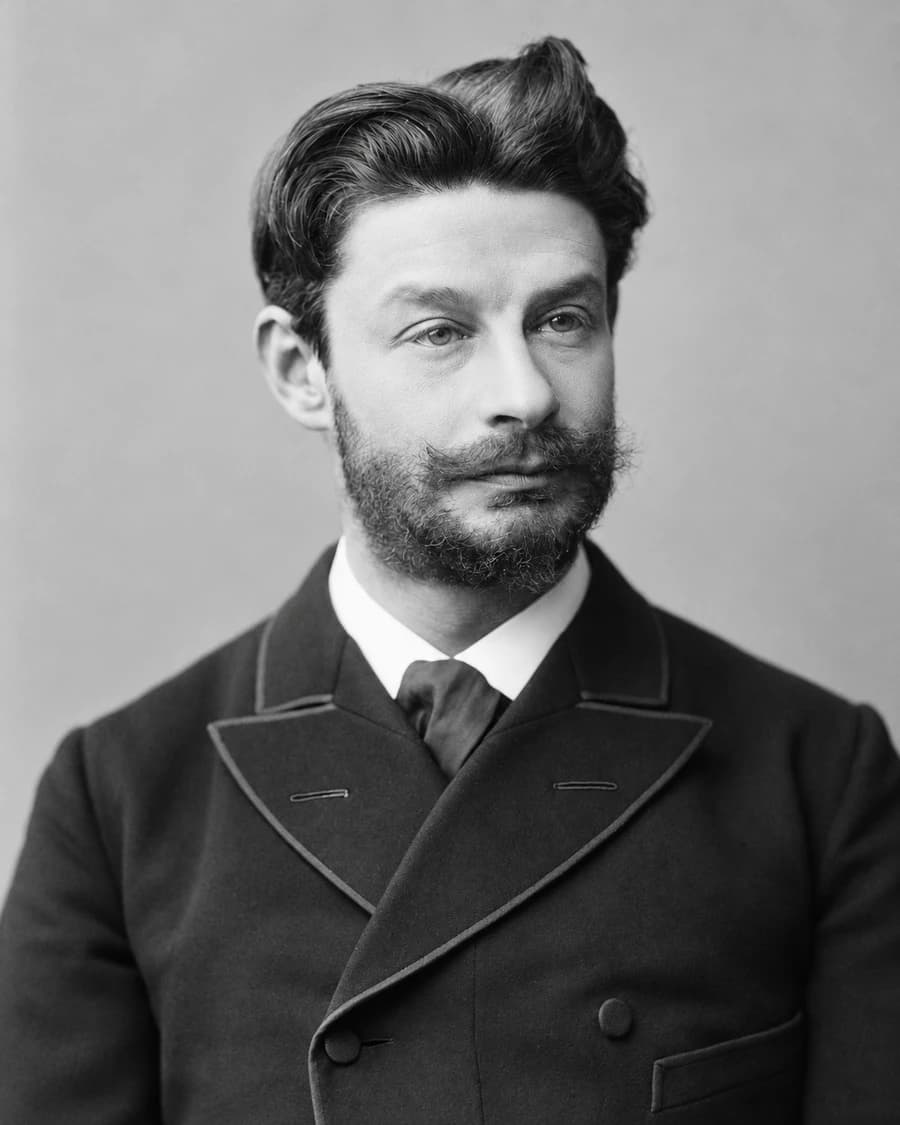
Erwin Rohde

Nietzsche letters

Nietzsche & Erwin Rohde

1868–1887 · 23 letters · Friend & classical scholar

Shared ambitions, Schopenhauer, Wagner and the changing course of a long intellectual friendship.

In conversation

Chat with Nietzsche

Explore his ideas. Challenge your own.

Start chatting

AI simulation inspired by his writings.

22 letters from Nietzsche · 1 from Erwin Rohde. Selected surviving correspondence; gaps remain between letters. Original letter text in English translation. No imagined replies. Ellipses and omissions in the source editions are preserved.

1868

Friedrich Nietzscheto Erwin Rohde

MY DEAR FRIEND: It is Saturday, and the day too is drawing to a close. For a soldier the word "Saturday" is full of magic charm and of a feeling of quiet and peace of which as a student I had no idea. To be able to sleep and dream peacefully, without one's soul being taunted by the terrifying picture of the morrow; to have overcome and done with another seven days of that excitement in uniform which is called a year's soldiering—what simple and at the same time deep joys such things awaken—joys worthy of a cynic and attained by us almost too cheaply and easily. I now understand that first and greatest Saturday afternoon mood, in which that easy and satisfied phrase πάντα λίαν καλά was pronounced; in which coffee and a pipe were invented, and the first optimist stepped into life. In any case, the Hebrews who concocted and believed this beautiful story were warriors or factory hands; they were certainly not students; for the latter would have proposed six days holiday and one workday in the week, and in practice would have converted even this into a holiday like the rest. At all events, that was my practice; and at the present moment I feel the contrast between my present life and my former scientific loafing very strongly indeed. If it were only possible to muster all the philologists of ten years together and drill them army fashion into the service of science, at the end of ten years the science of philology would no longer be necessary, because all the principal work would have been done. And, moreover, it would no longer be possible, because no man would join these colours voluntarily, colours with which the idea of the "one-year volunteer" cannot be associated at all.

As you see, a Saturday makes one talkative, because we have to be silent all the rest of the week and are accustomed to regulate the capacities of our souls according to our superior officer's word of command. That is why on Saturdays, when the eye of the master is removed, words gush forth from our lips and sentences pour out of the ink-pot—especially when the fire is crackling in the grate and outside you hear the roar of a February storm, heavy with the promise of Spring. Saturday, a storm, and a warm room—these are the best ingredients with which to brew the punch of a "letter-writing mood." . . .

My present life, my dear friend, is really very lonely and friendless. It offers me no stimulation that I do not myself provide; none of that harmonious concord of souls which many a happy hour in Leipzig used to afford; but rather, enstrangement of the soul from itself, preponderance of obsessional influences, which draw the soul up tightly with a sense of fear, and teach it to regard things with an earnestness that they do not deserve. This is the seamy side of my present existence, and you will certainly be able to enter into my feelings about it. Let us, however, turn it round the other way. This life is certainly uncomfortable, but enjoyed as an entremets, absolutely useful. It makes a constant call on a man's energy and is relished particularly as an ἀντίδοτον against paralyzing scepticism, concerning the effects of which we have observed a good deal together. Moreover, it helps one to become acquainted with one's own nature, as it reveals itself among strange and generally rough people, without any assistance from science and without that traditional goddess Fame which determines our worth for our friends and for society. Up to the present I have remarked that people are well disposed toward me, whether they happen to be captains or plain gunners; for the rest I do my duty with zeal and interest. Is it not something to be proud of, to be regarded as the best rider among thirty recruits? Verily, dear friend, that is more than a philological prize, although I am not insensible even to the kind of encomiums that the Faculty of Leipzig thought fit to bestow upon me. . . .

Ah, my dear friend, what a child of misfortune is a field artilleryman when he has literary tastes into the bargain. Our old god of War loved young women, not shrivelled old Muses. A gunner who often enough in his barrack room sits upon a dirty stool meditating upon Democritean problems, while his boots are being polished for him, is really a paradox on whom the gods must look with scorn. . . .

When I tell you that I am on duty every day from 7 in the morning to 5 in the evening, and that in addition I have to attend lectures given by a lieutenant and a vet respectively, you can imagine what a sorry plight I am in. At night the body is limp and tired and seeks its couch in good time. And so it goes on without respite or rest, day after day. What becomes of the reflection and contemplation necessary for scientific cogitation in the midst of it all? Even for things which are still more dear to me than my literary needs, for the delights of a friendly correspondence and for art, I so seldom have a free moment. Just let me be once more in full enjoyment of my time and my strength—

Si male nunc, non olim sic erit.

And next year I go to Paris.

Your devoted friend,

FR. NIETZSCHE.
1921 edition · Anthony M. Ludovici ↗

Erwin Rohdeto Friedrich Nietzsche

[…] And so I can perfectly understand the uncomfortable emptiness that possesses you. Though I appear to have remained more or less in the old groove, things are scarcely different with me! In future I shall rely still more firmly than before on my instinct, which is evidently the best part of the whole intellect. Did not that instinct tell me quite clearly: do not go to Kiel, my son, for there you will fall among an entirely decent, good-hearted, but square, spiritless, leaden race? And yet I came here. Now instinct has once again proved right. It is true that we spoilt ourselves a little in Leipzig; but when one has for some time enjoyed the happiness of going through life beside a friend who understood one in one’s deepest nature, and of receiving refreshing stimulation through a mutual exchange, one can take no pleasure in doing without such companionship.

[…] Yet what is the use of lamenting? Fortunately I have always put into practice the principle of never letting such thoughts get the better of me, and so it goes now too. Only, I miss your company painfully enough. Why should I not tell you openly how much I owe you, and how, with the thought of your friendship, an essential pillar of my existence would be taken from me? Whenever you write to me, I think that you are doing me a real kindness and setting the better, more resonant strings of my peculiar nature vibrating.

Would it not really be an excellent idea if we went to Paris together next year, preferably as early as next winter? I should look forward to it like a child, and might arrange my plans accordingly, so that I took my doctorate at the end of the summer semester. Do write to me about it! […]

1903 German edition · letter 4, pp. 24–26 · SUN translation of selected passages ↗

Friedrich Nietzscheto Erwin Rohde

MY DEAR FRIEND: . . . Not long ago I was reading (and that at first hand) Jahn's Essays on Music, as well as his essays on Wagner. A certain amount of enthusiasm is required to do justice to such a man, but Jahn shows instinctive repugnance and listens with his ears half closed. Nevertheless I agree with him in many respects, particularly when he says he regards Wagner as the representative of a modern dilettantism which is sucking up and digesting all art interests. But it is precisely from this point of view that one cannot cease wondering at the magnitude of each artistic gift in this man and his inexhaustible energy coupled with such a versatility of artistic talent. For as to "culture", the more variegated and extensive it happens to be, the more lifeless is usually the eye, the weaker are the legs and the more effete are the brains that bear it.

Wagner has, moreover, a range of feeling which lies far beyond Jahn's reach. Jahn remains a "Grenzbote" hero, a healthy man, to whom the Tannhauser saga and the atmosphere of Lohengrin are a closed book. My pleasure in Wagner is much the same as my pleasure in Schopenhauer—the ethical air, the redolence of Faust, and also of the Cross—death and the tomb. . . .

Your old friend,

FRIEDRICH NIETZSCHE, Prussian Gunner.

1921 edition · Anthony M. Ludovici ↗

Friedrich Nietzscheto Erwin Rohde

MY DEAR FRIEND: Today I intend to relate a whole host of sprightly experiences, to look merrily into the future and to conduct myself in such idyllic and easy fashion that your sinister guest—that feline fever—will arch its back and retire spitting and swearing. And in order that all discordant notes may be avoided I shall discuss the famous res severa which is responsible for your second letter on a special sheet of paper, so that you will be able to read it when you are in the right mood and place for it.

The acts of my comedy are: (1) A Club-night or the Assistant Professor; (2) The Ejected Tailor; (3) A Rendezvous with X. Some old women take part in the performance. . . .

At home I found two letters, yours and an invitation from Curtius, whom I am glad to get to know better. When two friends like us write letters to each other, it is well known that the angels rejoice. And they rejoiced as I read your letter—aye, they even giggled. . . .

When I reached home yesterday I found a card addressed to me with this note upon it: "If you would like to meet Richard Wagner, come to the Theatre Café at a quarter to four. Windisch".

Forgive me, but this news so turned my head that I quite forgot what I was doing before it came, and was thoroughly bewildered.

I naturally ran there and found our loyal friend, who gave me a lot of fresh information. Wagner was staying in Leipzig with his relations in the strictest incognito. The press had no inkling of his visit and all Brockhaus's servants were as dumb as graves in livery. Now Wagner's sister, Frau Brockhaus, that determined and clever woman, had introduced her friend Frau Ritschl to her brother, and on this occasion was able proudly to boast of the friend to the brother and of the brother to the friend, the lucky creature! Wagner played the Meisterlied, which you must know, in Frau Ritschl's presence, and this good lady told him that she already knew the song very well, mea opera. Imagine Wagner's joy and surprise! And with the utmost readiness in the world he graciously declared his willingness to meet me incognito. I was to be invited on Friday evening. Windisch, however, pointed out that I should be prevented from coming by my official post and duties, Saturday afternoon was accordingly proposed. On that day Windisch and I ran to the Brockhaus's, found the Professor's family but no Wagner. He had just gone out with an enormous hat on his huge head. It was thus that I made the acquaintance of the excellent family and received a kind invitation for Sunday evening.

On these days I felt as though I was living in a novel, and you must allow that in view of the inaccessibility of the exceptional man, the circumstances leading up to this acquaintance were somewhat romantic.

As I was under the impression that a large company of guests had been invited, I decided to dress very ceremoniously, and was glad that my tailor had promised to deliver a new dress suit for this very evening. It was a horrid day with constant showers of rain and snow. One shuddered at the thought of leaving the house, and I was therefore very pleased when little Roscher paid me a visit in the afternoon to tell me something about the Eleatics and about God in philosophy—for, as candidandus he is working up the material collected by Ahrens in his "Development of the Idea of God up to the Time of Aristotle" while Romundt is trying for the prize essay of the University, the subject of which is "On the Will". It was getting dark, the tailor did not turn up, and Roscher left me. I accompanied him, called on the tailor myself, and found his minions busily engaged on my clothes, which they promised to send round in three-quarters of an hour.

I went on my way in a jolly mood, looked in at Kintschy's, read the Kladderadatsch, and was amused to find a paragraph saying that Wagner was in Switzerland and that a fine house was being built for him in Munich, while I knew all the time that I was going to see him that evening and that the day before he had received a letter from the little monarch addressed to "The Great German Tone-poet, Richard Wagner."

But at home there was no tailor awaiting me, so I sat down and read the treatise on the Eudokia at my ease, but was constantly disturbed by the sound of a shrill bell that seemed to be ringing some distance away. At last I felt certain that someone was stand ing at the old iron gate; it was shut, as was also the door of the house. I shouted across the garden to the man to enter the house; but it was impossible to make oneself understood through the pouring rain. The whole house was disturbed, the door was ultimately opened, and a little old man bearing a parcel came up to me. It was half-past 6, time for me to dress and get ready, as I lived a long way off. It was all right, the man had my things. I tried them on and they fitted. But what was this suspicious development? He actually presented me with a bill. I took it politely, but he declared he must be paid on delivery. I was surprised, and explained that I had nothing to do with him as the servant of my tailor, but that my dealings were with his master to whom I had given the order. The man grew more pressing, as did also the time. I snatched at the things and began to put them on. He snatched them too and did all he could to prevent me from dressing. What with violence on my part and violence on his, there was soon a scene, and all the time I was fighting in my shirt, as I wished to get the new trousers.

At last, after a display of dignity, solemn threats, the utterance of curses on my tailor and his accomplice, and vows of vengeance, the little man vanished with my clothes. End of the First Act. I sat on my sofa and meditated while I examined a black coat and wondered whether it was good enough for Richard.

Outside the rain continued to pour.

It was a quarter past 7. I had promised to meet Windisch at half-past 7 at the Theatre Café. I plunged into the dark and rainy night, also a little man in black and without evening dress, yet in a beatific mood, for chance was in my favour—even the scene with the tailor's man had something tremendously unusual about it.

At last we entered Frau Brockhaus's exceedingly comfortable drawing-room. There was nobody there except the most intimate members of the family, Richard and us two. I was introduced to Wagner and muttered a few respectful words to him. He questioned me closely as to how I had become so well acquainted with his music, complained bitterly about the way his operas were produced with the exception of the famous Munich performances, and made great fun of the conductors who tried to encourage their orchestra in friendly tones as follows: "Now, gentlemen, let's have some passion! My good people, still a little more passion if you please!" Wagner enjoys imitating the Leipzig dialect.

Now let me give you a brief account of all that happened that evening. Really the joys were of such a rare and stimulating kind that even today I am not back in the old groove, but can think of nothing better to do than come to you, my dear friend, to tell you these wonderful tidings. Wagner played to us before and after supper, and went through every one of the more important passages of the Meistersinger. He imitated all the voices and was in very high spirits. He is, by the bye, an extraordinarily energetic and fiery man. He speaks very quickly and wittily, and can keep a private company of the sort assembled on that evening very jolly. I managed to have quite a long talk with him about Schopenhauer. Oh, and you can imagine what a joy it was for me to hear him speak with such indescribable warmth of our master—what a lot we owed to him, how he was the only philosopher who had understood the essence of music! Then he inquired as to how the professors were disposed toward him; laughed a good deal about the Philosophers Congress at Prague, and spoke of them as philosophical footmen. Later on he read me a piece out of the autobiography he is now writing, a thoroughly amusing scene from his Leipzig student days which I still cannot recall without a laugh. He writes extraordinarily cleverly and intellectually. At the close of the evening, when we were both ready to go, he shook my hand very warmly and kindly asked me to come and see him so that we might have some music and philosophy together. He also entrusted me with the task of making his music known to his sister and his relations, a duty which I undertook very solemnly to fulfil. You will hear more about it when I have succeeded in looking at this evening more objectively and from a greater distance. For the time being a hearty farewell and best wishes for your health from yours,

F. N.

1921 edition · Anthony M. Ludovici ↗

Friedrich Nietzscheto Erwin Rohde

MY DEAR FRIEND: Now that I can once more contemplate the teeming brood of philologists of our day at close quarters; now that I am obliged daily to observe the whole of their mole-hill activity, their swollen cheek pouches, their blind eyes, their rejoicing over the captured worm and their indifference towards the true—nay, the obvious—problems of life, and remember that I notice these characteristics not only in the young brood, but also in their venerable elders, I grow ever more clearly convinced that we two, if we wish to remain true to our genius, will not be able to pursue our life task without causing much offence, and being constantly thwarted and crossed in our purpose. When the philologist and the man are not of one piece, the whole tribe above mentioned gapes in astonishment at the miracle; it grows angry and finally scratches, growls, and bites. You have just experienced an example of this. For of this I am quite certain, that the trick you have been played was not directed at your work in particular, but at your individuality. And I, too, live in hope of having very soon a foretaste of what awaits me in this infernal atmosphere. But, my good man, what have the judgments of other people concerning our personalities to do with our achievements? Let us remember Schopenhauer and Richard Wagner, and the inexhaustible energy with which they maintained their belief in themselves in the face of protests from the whole of the "cultured" world, and even if we are not allowed to refer them to deos maximos we still have the consolation of knowing that however odd one is one cannot be denied the right to existence, and that two such odd creatures as ourselves who understand each other so well and are so deeply united must be a delightful spectacle for the gods.

Finally, nothing could be more regrettable than the fact that precisely at this moment, when we have just begun to put our views of life to a practical test, and explore all things and all circumstances in turn—men, states, studies, world histories, churches, schools, etc.—with our antennae, we should be separated by miles of territory, and each should be left alone with the semi-enjoyable and semi-painful feeling of having to digest his outlook on the world in solitude. As a matter of fact nothing would have been more exhilarating than to sit down together now, as we used to do, to digest our bodily meals together at Kintschy's, and symbolically drink our afternoon coffee in company, and, from this midday of our lives, glance backwards into the past and forwards into the future.

However, it will not be too late to do this even in Paris, where the great άναγνώφισις of our comedy takes place, and upon the most beautiful scene in the world, too, between the most brilliant wings and in numerable glittering supers.

Oh, how lovely this image is!

Therefore avaunt unadorned reality, shamefully vulgar empiricism, credit and debit, and "Grenzboten" sobriety!—no, let the whole of this letter be presented to my friend, with all my soul, as a solemn and lofty greeting!

(He drinks the contents of the ink bottle.) Chorus of the Ascetics:

Selig der Liebende, Der die betrübende, Heilsam' ünd ubende Prüfung bestanden.

1921 edition · Anthony M. Ludovici ↗

1869

Friedrich Nietzscheto Erwin Rohde

MY DEAR FRIEND: This is the last day of the holidays. Feelings long since dead and buried seem to wake again. I feel just like a fourth-form boy who waxes sentimental and writes poems about the ephemeral character of earthly happiness when he hears the clock strike on the last day of the holidays. Oh, dear friend, what a small amount of joy is mine and what a lot of my own smoke I have to consume! Aye, I wouldn't fear even an attack of that dreadful dysentery if by means of it I could purchase a talk with you every evening. How unsatisfactory letters are! Incidentally I discovered the following beautiful passage in old Goethe yesterday:

"How precious is the dear and certain speech Of the present friend! The Solitary, Robbed of its power benign, sinks into gloom; Too slowly ripens, then locked in his breast, Thought and each firm resolve ; but in the presence Of the beloved friend they leap to life!"

You see, that's the whole thing: we are in eternal need of midwives, and with the view of being confined most men go into the public house or to a "colleague," and then the little thoughts and little plans romp out like kittens. When, however, we are pregnant and there is no one at hand to assist us in our difficult delivery, then darkly and gloomily we lay our rude, unformed, newborn thought in the murky recess of some cave; the sunny rays of friendship are denied it.

But with my incessant talk about solitude, I shall soon develop into a regular Joseph, the carpenter, and then no kind Mary will wish to join her lot with mine. "The calf and the baby ass, men say, do praise the Lord most perfectly." There s the whole thing! A little cattle makes the whole world kin, the edifice is crowned. Remember it was the shepherds and the sheep who saw the stars; to people like us everything is dark. . . .

Now let me tell you something about my Jupiter, Richard Wagner, to whom I go from time to time for a breath of air, and receive more refreshment by so doing than any of my colleagues could possibly imagine. The fellow has not received a single honour yet, and has only just had the distinction of being elected honorary member of the Berlin Academy of Arts. A fruitful, rich and convulsive life, distinctly unheard of and deviating from the average standard of morals. But that is precisely why he stands there, firmly rooted in his own power, with his eyes always scanning a distance beyond everything ephemeral, and beyond his age in the finest sense. Not long ago he handed me the MS. of "State and Religion," intended as a mémoire for the young King of Bavaria. It is conceived on such a high plane, is so independent of time, and so full of nobility and Schopenhauerian earnestness that it made me feel I should like to be a king in order to receive such exhortations. By-the-bye, a little while ago I sent him one or two passages out of your letters for Frau von Bülow, who had often asked me for them. On my last visit but one a baby boy was born during the night and was called "Siegfried." The last time I was there Wagner had just completed the composition of his Siegfried, and was full of the exuberance of his power. Aren't you going to write to him? Perhaps you think he has more than enough lay admirers. But do not write as a musician; write as a man who is in sympathy with his thoughts and is as earnest as he is. He very rarely gets a sign of this sort, and every time he does happen to he is as delighted as if he had had a windfall. . . .

Farewell, my dear, true friend.

FRIED. NIETZSCHE.

1921 edition · Anthony M. Ludovici ↗

1870

Friedrich Nietzscheto Erwin Rohde

MY DEAR FRIEND: I suddenly began to feel anxious the other day. I am wondering how you are getting on in Rome, and thinking how remote from the world and isolated your life there must be. You may even be ill and are receiving no proper care and no friendly support. Set my fears at rest and dispel my pessimistic fancies. I always imagine Rome of the Christian Councils as a terribly poisonous place—no, I shall not write any more; for I have a feeling that the secrecy of a letter is not sufficiently secure for the discussion of ecclesiastical and Jesuitical matters. They might scent what the contents of the letter were, and pay you out for it. You are studying antiquity and leading the life of the Middle Ages.

Now let me impress this upon you most emphatically—don't forget on your return journey to come and spend some time with me. Perhaps, you know, it might be the last time for many years. I miss you terribly, so give me the comfort of your presence and try to make your stay not too short a one. For it is indeed a new experience for me to have no one on the spot to whom I can tell all the best and the worst that life brings me—not even a really sympathetic colleague. In such anchoritic conditions and with such difficult years in a young life, my friendship is actually becoming something pathological. I beg you, as an invalid begs : "Come to Bâle!"

My real refuge, which cannot be valued too highly, is still Triebschen, near Lucerne. The only thing is I can but seldom have recourse to it. I spent my Christmas holidays there, most beautiful and uplifting memory! It is absolutely necessary that you too should be initiated into this magic. When once you are my guest we shall go and visit our friend Wagner together. Can't you tell me anything about Franz Liszt? If you could possibly manage to come home via Lake Como you would have a fine opportunity of giving us all great pleasure. We, i.e., we Triebschen folk, have our eye on a villa on the lake near Fiume Latte. It is called "Valla Capuana," and consists of two houses. Could you manage to inspect this villa and give us the benefit of your opinion? . . .

I have delivered a lecture on "The Ancient Musical Drama" before a mixed audience, and on Feb. 1st. I shall deliver a second on "Socrates and Tragedy." Every day I get to like the Hellenic world more and more. There is no better way of approaching close to it than that of indefatigably cultivating one's own little self. The degree of culture I have attained consists in a most mortifying admission of my own ignorance. The life of a philologist striving in every direction of criticism and yet a thousand miles away from Greek antiquity becomes every day more impossible to me. I even doubt whether I shall ever succeed in becoming a proper philologist. If I cannot succeed incidentally, as it were, I shall never succeed. The trouble of it is that I have no example and am in the dangerous position of the fool who acts on his own responsibility. My plan for the immediate future is four years of work in cultivating myself and then a year of travel, in your company perhaps. Our life is really a very difficult one. Sweet ignorance led by teachers and traditions was so blissfully secure.

Moreover you will be well-advised not to choose a small University in which to settle down. One is isolated even in one's science. What would I not give for you and me to be able to live together! I am almost forgetting how to speak. But the most irksome feature of my life is that I must always be impersonating or representing somebody, either the teacher, the philologist, or the man, and that I have always to begin by proving my mettle to all whom I frequent. I am, however, a very bad hand at this, and get steadily worse as time goes on. I either remain dumb or intentionally only say as much as a polite man of the world is expected to say. In short, I am more dissatisfied with myself than with the world, and feel therefore all the more attached to the dearest of friends.

Farewell! Farewell!

1921 edition · Anthony M. Ludovici ↗

Friedrich Nietzscheto Erwin Rohde

MY DEAR FRIEND: I have not allowed a minute to elapse since reading your letter but am replying at once. I simply wanted to tell you that I felt just as you do and would regard it as a disgrace if we could not get out of this state of longing thirst by means of some energetic deed. Now listen to what I have been turning over in my soul! Let us drag on for another year or two in this University life! Let us accept it as an instructive burden of sorrow which we are obliged to bear earnestly and with surprise. Among other things it will be a period of probation for the art of teaching, by means of which I regard it as my mission to perfect myself. The only thing is I have set my goal a little higher.

In the long run I have become aware of the importance of Schopenhauer's teaching about the wisdom of the Universities. A thoroughly radically truthful existence is impossible here. But what is specially important is that nothing truly subversive can ever emerge from this quarter.

And then we can only become genuine teachers by straining every nerve to raise ourselves out of the atmosphere of these times and by being not only wiser but above all better men. Here also I feel that the very first prerequisite is to be true. And that is why, I repeat, I cannot endure this academic atmosphere too long.

So it comes to this, we shall sooner or later cast off this yoke—upon this I am firmly resolved. And then we shall form a new Greek Academy—Romundt will certainly join us in that. Thanks to your visits to Triebschen you must also know Wagner's Bayreuth plan. I have been considering quite privately whether we on our part should not simultaneously effect a breach with philology as it has been practised hitherto and its aspect of culture. I am preparing an important adhortatio to all those natures that have not been completely stifled and entangled in the present age. What a deplorable thing it is that I should have to write to you about these matters and that each individual thought should not have been discussed with you long ago! For, since you do not know the whole apparatus as it already exists, my plan will seem to you like an eccentric whim. But this it is not—it is a need.

A book of Wagner's about Beethoven that has just been published you will find full of suggestions about what I desire for the future. Read it; it is a revelation of the spirit in which we—we!—shall live in the future.

Even supposing we get but few adherents, I believe, nevertheless, that we shall be able to extricate our selves pretty well—not without some injuries, it is true—from this current, and that we shall reach some islet upon which we shall no longer require to stop up our ears with wax. We shall then be our own mutual teachers and our books will only be so much bait wherewith to lure others to our monastic and artistic association. Our lives, our work, and our enjoyment will then be for one another; possibly this is the only way in which we can work for the world as a whole. In order to prove to you how deeply in earnest I am in this matter, I have already begun to limit my requirements in order to be able to preserve a small vestige of private means. We shall also try our luck in lotteries; and, if we write books, I shall for the immediate future demand the highest possible fees. In short, we shall make use of every legitimate means in order to establish our monastery upon a secure material basis thus, even for the next few years, we have our appointed tasks.

If only this plan would strike you as being at least worthy of consideration! That it was high time to lay it before you is proved by the really stirring letter I have just received from you.

Ought we not to be able to introduce a new form of the Academy life into the world—

"And would my powerful longings, all in vain Charm into life that deathless form again—"

—as Faust says of Helen?

Nobody knows anything about this project, and whether we shall now send a preliminary communication about it to Romundt will depend upon you. Our school of philosophy is surely not an historical reminiscence or a deliberate whim—does not dire necessity impel us in this direction?

Apparently the plan we made as students to travel together has returned in a new and symbolically grander form. I will not again be the culprit who, as on that occasion, left you in the lurch. I have not yet ceased to be vexed about that.

With the best of hopes,

Your devoted FRATER FRIDERICUS.

1921 edition · Anthony M. Ludovici ↗

1872

Friedrich Nietzscheto Erwin Rohde

MY VERY DEAR FRIEND: The other day I was approached, through Susemihl, and asked whether I would accept a professorship at Greifswald. But I refused it immediately in your favour and recommended you for the post. Has the matter developed any further? I referred it to Ribbeck. Of course, the thing got to be known here and was the means of my earning much sympathy from the good folk of Bâle. Although I protested that it was not actually the offer of an appointment, but only a provisional inquiry, all the students decided to have a torchlight procession in my honour, declaring that they wished to express how much they valued and esteemed my past work in Bâle. But I declined to accept this demonstration. I am now holding a course of lectures here on "The Future of our Educational Institutions," and am making quite a sensation and even at times provoking genuine enthusiasm. Why do we not live together, for all that now surges in my breast and that I am preparing for the future cannot even be touched upon in letters? I have concluded an alliance with Wagner. You cannot think how near we stand to each other now and how closely related our schemes are. What I have had to hear about my book is incredible, but that is the reason why I do not write anything about it. What is your opinion on the subject? Everything I hear about it makes me uncommonly serious, for it is out of voices such as these that I divine the future of my schemes. This life is going to be very hard still.

In Leipzig irritation seems to prevail again. Nobody there writes me a line about it, not even Ritschl.

My dear friend, some time or other we absolutely must live together; it is a sacred necessity. For some while I have been living in a tremendous current; nearly every day something astounding happens, while my aspirations and intentions continue to rise. Let me tell you as a great secret, and begging you to keep it to yourself, that among other things I am preparing a Promemoria about the University of Strasburg in the form of an interpellation for the Reichstag, to be delivered to Bismarck. In it I wish to show how shamefully a great opportunity was lost of making a truly German Educational Institute for the regeneration of the German spirit and for the total extermination of what has hitherto been called "culture." War to the knife! or, rather, to the cannon!

Your friend, THE MOUNTED ARTILLERYMAN WITH THE HEAVIEST GUNS.

1921 edition · Anthony M. Ludovici ↗

Friedrich Nietzscheto Erwin Rohde

MY DEAR FRIEND: As the result of stomach and intestinal trouble I have been in bed for a few days and am still feeling rather seedy today. So do not expect anything exceptionally rational if I now answer your letter after having all sorts of conflicting thoughts and ideas about it. Ah, my dear friend, in such cases the wisest course cannot be discovered by cunning; it is only afterward that one realizes whether one has seized upon the right thing or not. For the case is exceptional, and I do not know by what analogy to decide it. For my part I lay very great stress upon the fact that the philologists will receive a wholesome surprise when you suddenly stand up for me as a philologist. What Wagner in his love for me has written I do not know. In view of the coarse rudeness of our fellow philologist, it will in any case have a different effect from what he expects. It is on occasions like these that the invisible conspiracy against the spirit becomes visible. But what they will least expect, the most terrible feature of it all, will be that a qualified philologist should come to my support. The confidence that this could never happen explains the superlatively impudent tone of this Berlin youth. I am moreover perfectly satisfied in my own mind that, to do him justice, he is only the echo of the "superiors" who inspire him. As a wholesome warning and to avoid having to deal with these disgusting Berlin Gesundbrunn people, every time we produce something new you would, according to Wagner's letter, do something eminently salutary if you described to philologists what in all its earnestness and rigour our position toward antiquity actually is, and above all if you could lay stress upon the fact that it is not open to every potty little philologist—whoever he may be—to have his say in these matters, much less, therefore, to criticise them. Dear friend, I imagine your essay starting off with general observations about our philological work; the more general and more earnest these observations are, the easier will it be to address the whole to Wagner. In your opening you might perhaps explain why you turn precisely to Wagner and why you do not address yourself to some philological body, for instance. You might point out that at present we entirely lack any supreme forum for the most ideal results of our studies of antiquity. Then you might make some mention of our experiences and hopes in Bayreuth and thus justify us in connecting our aspirations in regard to antiquity with this cry of "Awake! for the day is at hand!" And then you might proceed to deal with my book, etc. Ah, my dear friend, it is ridiculous for me, in this seedy mood, to go and write all this to you. But the principal thing seems to be that we should not forego our intention of addressing Wagner, because it is precisely this direct relationship to Wagner that most terrifies the philologists and compels them most forcibly to reflect. At the same time the slaughter of Willamowitz must be done on purely philological lines. Perhaps after a somewhat lengthy introduction dealing with generalities and addressed to Wagner, you might draw a line, and then with some apologies turn to the execution. In any case, toward the end of the essay your tone must once more become so general and earnest that the reader will forget Willamowitz and remember only that we are not to be trifled with—which will mean a good deal where philologists are concerned. For up to the present day they have always regarded me as a sort of philological joker, or, as I heard a little while ago, a writer on music.

As the essay will in any case be read by many who are not philologists, remember, dear friend, not to be too "noble" in the matter of your quotations, so that the non-philological friends of antiquity may find out where they have something to learn. Unfortunately the tone of my own essay did not allow of any instruction of this sort. If possible, try to wipe out the impression that it deals with creatures in the moon and not with the Greeks. Will your pamphlet cover as many as thirty or forty pages? And are you agreeable to its being published by Fritzsch, or should Trübner have it? Ritschl would be sure to manage that for me. (Ritschl is extraordinarily kind and well disposed to me.) Forgive this foolish letter, dear friend, and do exactly as you feel inclined in the matter. But rest assured that if you do it I shall thoroughly appreciate it. In my present isolated position I may be ignored as a visionary or an ass. But if we stand together, both united by our love for Wagner, we shall arouse a frantic, an egregious amount of attention among the army of philological duffers and rogues.

Your affectionate and devoted friend,

F. N.

1921 edition · Anthony M. Ludovici ↗

Friedrich Nietzscheto Erwin Rohde

MY VERY DEAR FRIEND: I think we shall be able to survive it. But something has happened here that somewhat depresses me. In our University the philologists hare kept away this winter term. A perfectly unique occurrence which you will interpret in the same way as I do. In one particular case I know for a fact that a certain student who wished to study philology here was prevented from doing so in Bonn, and that he joyfully wrote to his relations saying he thanked God he was not going to a University where I was a teacher. In short, the Vehmic Court has done its duty, but we must not take any notice of it. It is jolly hard though for me to know that the little University should have suffered on my account. We are twenty men short of what we were last term. With the utmost pains I was only able to muster two students to attend a lecture on the rhetoric of the Greeks and Romans—that is to say, one Germanic and one Law student.

Jacob Burckhardt and Ratsherr Vischer enjoyed your essay immensely. I informed each of them of the fine copies you sent me, and I also told Overbeck, Ritschl and the Florentine ladies, Olga Herzen and Fräulein von Meysenbug, of them. I even have two of them in an Edition de Luxe. I wonder whether these copies are as you pictured them in your dream. They bear the title E. Rohde on The Birth of Tragedy and include your two essays. To me these essays constitute a veritable treasure which every author of the past and future will have to envy me. My friend Immerman, here, always says that your stuff is at least as good as mine. In short, they have noticed our Orestes and Pylades relationship Χαλεποίσιν ἐνί Εείνοισι and they rejoice over it. What I only mention, because neither of us doubts it, is that many more are angry about it. . . .

. . . Have you heard of the Zollner scandal in Leipzig? Just have a look at his book on the nature of comets. There is a tremendous deal on our side in it. Since this production the honest man has been as good as excommunicated in the most shabby manner from the whole of the republic of letters. His nearest friends are renouncing him and he is proclaimed "mad" to all the world! He is seriously declared "deranged," simply because he refuses to blow into the Tantara trumpet of the clique. Such is the spirit of Leipzig's scholastic ochlocracy!

Are you aware, too, that a certain alienist has proved in the most "dignified language" that Wagner is demented? And you are probably aware of the fact that the same thing has been done for Schopenhauer by another alienist.

You see to what measures these ";healthy people" resort. True, they do not decree the scaffold for the discomfiting ingenia, but this sort of sneaking and malevolent creation of suspicion answers their purpose much better than the sudden removal of their enemies; they undermine the confidence of the rising generation. Schopenhauer forgot this dodge! It is singularly worthy of the vulgarity of the vulgarest age. . . .

Yours affectionately, F.

1921 edition · Anthony M. Ludovici ↗

1873

Friedrich Nietzscheto Erwin Rohde

MY DEAR FRIEND: What a lot of good you have done me with your letter, particularly as I was lying in bed feeling ill after the journey and full of resentment towards life. Really, if I had not my friends, I wonder whether I should not myself begin to believe that I am demented. As it is, however, by my adherence to you I adhere to myself, and if we stand security for each other, some thing must ultimately result from our way of thinking—a possibility which until now the whole world has doubted.

And to this whole world belong even the Ritschls, to whom I paid a short visit and who in half an hour fired a rapid volley of words at me and against me, under which I remained unscathed and, moreover, felt it. Finally they came to the conclusion that I was arrogant and despised them. The general impression was hopeless. At one moment old Ritschl simply raved with indignation about Wagner as a poet, and then again about the French (by-the-bye, I am understood to be an admirer of the French); finally he argued from hearsay, but in the most atrocious manner, about Overbeck's book. I learnt that Germany was still in its 'teens, and therefore I too claimed the right of being something of a boy in his teens (for they also censured my lack of moderation and my brutality towards Strauss). On the other hand, Strauss as a classical writer of prose is completely annihilated, for old Ritschl and his wife say so, and have long since come to the conclusion that even "Voltaire" was written in abominably bad style.

I lived at Fritzsch's and was really delighted with that good man. Things are going well with him, his health included. My second "Thoughts Out of Season" (or over-seasoned thoughts) is now in the press. You will receive the first proofs in a few days, for, my dear friend, I am going to avail myself of your willing kindness and beg you to help me with your advice here and there, and moral and intellectual correction. After all, we must not lose much time, for it will be printed quickly and must be quite ready at the end of January.

Therefore, my dear good friend, send your corrected proofs every time as soon as possible to me here in Bâle, for the long distances make things a little complicated and we must try to avoid any hitch in the printing. . . .

Karl Hillebrand's anonymous book, "Twelve Letters By An Aesthetic Heretic" (Berlin, Oppenheiin, 1874), has given me the most unbounded joy. How refreshing it is! Read and wonder; he is one of us, one of the "Company of the Hopeful."

May this company flourish in the new year and may we remain good comrades! Ah, my dear fellow, we have no choice; we must either be hopeful or desperate. Once and for all, I have resolved to hope. I was very vexed at the horribly cautious academic Confratres in Kiel. Fancy such fear of "Youth"! . . .

So may we remain faithful friends in 1874 and continue so until the last day.

Yours,

FRIEDRICH NIETZSCHE.

1921 edition · Anthony M. Ludovici ↗

1874

Friedrich Nietzscheto Erwin Rohde

DEAREST FRIEND: First of all, my best Sunday greeting to you. Are you living in the gray north? We are having such fine warm days with plenty of sunshine and even deep coloured sunsets already. We have only had one day's snow the whole winter. Since the new year, too, I have been living more carefully and rationally, and am feeling fit in consequence. My eyes are the only trouble. I sorely need an amanuensis. I must tell you though that for the last six months a most sympathetic and talented pupil has come under my notice, one who already belongs to our party heart and soul. His name is Baumgartner, an Alsatian, and the son of a manufacturer of Mülhausen. He comes to me every Wednesday afternoon and stops the evening, and then I dictate to him or he reads aloud to me, or letters are written. In short, he is a godsend to me, and, I assure you, will be for all of us one day. At Easter I shall go back to Naumburg again in order to try a systematic course of rest and wholesome living, and then I shall ultimately be able to bear things a little better. I have thought out a good deal since Christmas, and have had to roam so far afield that often when my proofs arrive I wonder when I could have written the stuff, and whether it can all be my work. I am feeling very hostile just now towards all political and smug bourgeois virtues and duties, and occasionally I even soar far above "national" feeling. May God mend this and me!

In addition to all your trouble, dear faithful friend, you have also had that of proof-reading. The smallest hint is gratefully turned to account, and many a blemish has been removed by your hand. By-the-bye, a whole number of strange errors had nothing to do with me, but arose out of the copying of my illegible MS. Unfortunately I was unable to avail myself of your help for the last sheet. For many reasons I thought they had forgotten to send it to you and time was pressing. Luckily I was able to remove the worst stumbling block myself, and have made the text of the conclusion a little lighter by cutting out about a page. A certain generality of treatment was, however, necessary, as I had to take into account the elaboration of some of the special arguments in subsequent "Thoughts Out of Season." So let the monster go its way. I wonder who will find any pleasure in it! Who will even read it? I believe people will think it a piece of great foolishness on my part—and they will be right! But I am really heartily tired of all this cleverness and must become absorbed in myself. On my honour, I cannot help it. But promise me you will not immediately despise me on that account. For I really believe that you understand me in these things and have a right to it, dear friend. When I think of my fellow philologists I sometimes feel something like shame. Still, I do not believe I can be so easily driven off my appointed path—and before that I mean to say for once all I have to say; one cannot do oneself a greater kindness than that. When you get your copy (which I hope will be within a fortnight), I beg you to do me just this one favour: tell me as severely and briefly as you like all about my faults, my mannerisms, and the dangers of my method of exposition, for I am not satisfied with it and aspire to something quite different. Help me, therefore, with a few little hints, I shall be most grateful. . . .

Good-bye, dear friend.

Yours, FRIEDRICH N.

1921 edition · Anthony M. Ludovici ↗

Friedrich Nietzscheto Erwin Rohde

MY DEAR FRIEND: Last night I returned from the mountains, and this morning I mean to set to and consecrate the work of the winter term by means of a birthday letter to you. I do not lack either courage or confidence; I have brought back both of these with me from the mountains and the lakes, where I discovered what it was that one lacked most, or rather what it was that one has too much of. That is to say, egoism; and this is the result of one's eternal lonely brooding and lonely suffering. In the end, one begins to feel constantly as if one were covered with a hundred scars and every movement were painful. But, joking apart, I shall very soon be thirty and things must change somewhat; they must become more virile, more even in tenour, and no longer so damned unstable. To continue one's work and to think of oneself as little as possible—that must be the first necessity. After some reflection it has struck me that I am very ungrateful and childish with my irritating despair, for I have been thinking how incomparably lucky I have been during the last seven years and how little I can gauge how rich I am in my friends. Truth to tell, I live through you; I advance by leaning upon your shoulders, for my self-esteem is wretchedly weak and you have to assure me of my own value again and again. In addition to that, you are my best examples, for both you and Overbeck bear life's lot with more dignity and less wailing, although in many respects things are more and more difficult for you than for me. But what I feel most is the way you outstrip me in loving solicitude and unselfishness. I have thought much about these facts of late, and I may surely be allowed to mention them to you in a birthday letter.

Farewell, my dear friend, and remain as affectionate to me as you have been hitherto—then we shall easily be able to endure life yet a while longer.

Your devoted friend, FRIEDRICH NIETZSCHE.

1921 edition · Anthony M. Ludovici ↗

1875

Friedrich Nietzscheto Erwin Rohde

DEAREST FRIEND: . . . . Now, let me tell you something you do not yet know—something which you, as my most intimate and most sympathetic friend, have a right to know. We two, Overbeck and I, have a domestic trouble, a domestic ghost. Please don't have a fit when you hear that X— is contemplating going over to the Holy Catholic Church and wants to become a Catholic priest in Germany. This has only just come to light, but as we afterwards heard, to our dismay, he has been thinking over it for years, though his resolution has never been so mature as it is now. I cannot help feeling hurt over it, and at times it seems to me the worst possible slight that could be given me. Of course, he does not mean it in that way, for up to the present he has not for one moment thought of anyone but himself, and the confounded stress our religion lays on the "salvation of one's own soul" leaves him utterly indifferent to anything else, friend ship included. . . . At last, he confessed what his attitude was, and now every three days, almost, there is an explosion. The poor man is in a desperate condition and no longer accessible to words of counsel; that is to say, he is so entirely led by vague aspirations that he seems to us like a wandering valleity. Oh, our excellent, pure Protestant air! I have never in my life before felt my dependence upon the spirit of Luther so strongly as I do now, and this wretched man wants to turn his back on all these liberating geniuses! It is so very hard for me to understand how, after eight years of intimate association with me, this spectre should arise at my elbow, that I often wonder whether he can be in his right senses, and whether he ought not to undergo a cold-water cure. And, after all, I am the man on whom the blame of this conversion will rest. God knows I do not say that out of egoistic solicitude. But I, too, believe that I stand for something holy, and I should blush for shame if I were suspected of having had anything to do with Catholicism, for there is nothing I hate with a more deadly hatred.

Interpret this ghastly story in as friendly a manner as possible and send me a few words of comfort. I have been wounded precisely in my friendship, and hate the dishonest, sneaking nature of many friendships more than ever, and shall have to be more cautious in future. X— himself will doubtless be quite at home in some sort of conventicle, but in our company he seems to me now to be suffering incessantly.

Your disconsolate friend, FRIEDRICH N.

For Overbeck also. Please burn this letter if you think fit.

1921 edition · Anthony M. Ludovici ↗

Friedrich Nietzscheto Erwin Rohde

Ah, dear friend, I did not know what to say to you, so I held my peace and was full of fear and anxiety on your account. I did not even like to ask how things were going, but how often, how very often my heartfelt sympathy sped your way! Everything has turned out as badly as possible, and I can think of only one way in which it could have been worse—to wit, if the matter were less appallingly plain than it actually is. The most intolerable thing of all is surely doubt, ghostlike semi-certainty—and you have at least been relieved of this, which was such a torment to you here. I am now racking my brain in trying to discover how you can possibly be helped. For a long while I thought that they were going to transfer you and that they would give you an appointment at Freiburg in Breisgau. But afterwards it struck me that such an idea had never even entered their minds. Certainly the publication of your work will prove the best remedy in your case. One cannot help deriving some pleasure from that, and at all events it will force you to think of other matters. This promises to be a steady pursuit and will perhaps help you over this terrible winter.

Let me tell you how I am faring. As far as my health is concerned, things are not so good as I really supposed they would be when I effected the complete change in my mode of life here. Every two or three weeks I have to lie in bed for about thirty-six hours in great pain with the usual trouble you know so well. Perhaps it will gradually get better, but I feel as if I had never had such a hard winter. What with new lectures, etc., the day drags so wearily that in the evening I am always more and more glad to have finished, and actually marvel at the hardness of existence. The whole exasperating business does not seem worth while; the pain you inflict on yourself and others is out of all proportion to the benefit either they or you yourself derive from your efforts. This is the opinion of a man who does not happen to be troubled by his passions, though he is certainly not made happy by them either. During the hours that I rest my eyes, my sister reads aloud to me, almost always Walter Scott, whom I would readily agree with Schopenhauer in calling "immortal." What pleases me so much in him is his artistic calm, his Andante. I should like to recommend him to you, but there are some things which, though they benefit me, can get no hold of your spirit, because you think more quickly and more sharply than I do. As to the use of novels for the treatment of one's soul, I will say nothing more particularly as you are already forced to help yourself with your own "novel." Nay, I advise you to read "Don Quixote" again—not because it is the most cheerful but because it is the most austere reading I know. I took it up during the summer holidays, and all personal troubles seemed to shrink to nothing and appear simply laughable, not even worthy of a wry face. All earnestness, all passion, and everything men take to heart is Quixotism—for some things it is good to know this; otherwise it is better not to know it. . . .

Your friend, F. N.

1921 edition · Anthony M. Ludovici ↗

1877

Friedrich Nietzscheto Erwin Rohde

DEAR OLD FRIEND: How can I express it? But every time I think of you I am overcome by a sort of deep emotion; and when, a day or two ago, someone wrote to me "Rohde's young wife is an exceedingly sweet woman whose every feature is illumined by her noble soul," I actually wept. And I can give you absolutely no plausible reason for having done so. We might ask the psychologists for an explanation. Ultimately they would declare it was envy and that I grudged you your happiness, or that it was my vexation at someone having run away with my friend and having concealed him Heaven alone knows where, on the Rhine or in Paris, and refused to give him up again. When I was humming my "Hymn to Solitude" to myself a few days ago, I suddenly had the feeling that you could not abide my music at all and that you would much have preferred a song on Dual Bliss. The same evening I played a song of this sort, as well as I was able, and it was so successful that all the angels might have listened to it with joy, particularly the human ones. But it was in a dark room and no one heard it. Thus I am forced to consume my own happiness, tears, and everything in private.

Shall I tell you all about myself—how every day I set out two hours before the sun rises on the hills and after that take my walks only among the lengthening shadows of the afternoon and evening? How many things I have thought out, and how rich I feel now that this year I have at last been allowed to strip off the old moss growth of the daily routine of teaching and thinking! As to my life here, I can only say that it is tolerable, in spite of all my ailments which have certainly followed me even up to the heights—but I have so many intervals of happy exultation both of thought and feeling.

A little while ago I had a genuinely sacred day, thanks to "Prometheus Unbound." If the poet be not a true genius then I do not know what genius means. The whole thing is wonderful, and I felt as if I had met my own transfigured and exalted self in the work. I bow low before a man who is capable of having and expressing such thoughts.

In three days I shall return to Bâle. My sister is already there and busy preparing the place for my arrival.

The faithful musician P. Gast is going to join our household, and is going to undertake the duties of a friendly amanuensis.

I am rather dreading the coming winter. Things must change. The man who only has a few moments a day for what he regards as most important, and who has to spend the rest of his time and energy performing duties which others could carry out equally well—such a man is not a harmonious whole; he must be in conflict with himself and must ultimately fall ill. If I exercise any influence over youth at all, I owe it to my writings, and for these I have to thank my leisure moments—yes, the intervals I have won for myself, in the midst of professional duties by means of illness. Well, things must change: si male nunc non olim sic erit. Meanwhile may the happiness of my friends increase and flourish. It is always a great solace to me to think of you, my dear friend (just now I have a vision of you on the bank of a lake surrounded by roses and with a beautiful white swan swimming towards you).

With brotherly affection,

Yours F.

1921 edition · Anthony M. Ludovici ↗

1881

Friedrich Nietzscheto Erwin Rohde

Thus the sands of life run out and the best of friends hear and see nothing of each other! Aye, the trick is no easy one—to live and yet not to be discontented. How often do I not feel as if I should like to beg a loan from my robust, flourishing and brave old friend Rohde, when I am in sore need of a "transfusion" of strength, not of lamb's but of lion's blood. But there he dwells away in Tübingen, immersed in books and married life, and in every respect inaccessible to me. Ah, dear friend, to live for ever on my own fat seems to be my lot, or, as every one knows who has tried it, to drink my own blood! Life then becomes a matter of not losing one's thirst for oneself and also of not drinking oneself dry.

On the whole, however, I am, to tell the truth, astonished at the number of springs a man can set flowing in himself—even a man like myself who am not one of the richest. I believe that if I possessed all the qualities in which you excel me I should be puffed up with pride and insufferable. Even now there are moments when I wander over the heights above Genoa here with glances and hopes like those which dear old Columbus may perhaps have cast from this very spot out over the sea and the whole of the future.

Well, it is with these moments of courage and of foolishness too, perhaps, that I have to adjust the equilibrium of my life's vessel—for you have no idea how many days, and how many hours, even on endurable days, I have to overcome, to say the least.

As far as it is possible to alleviate and mitigate a bad state of health by means of wise living I think I probably do all that can be done in my case—in that respect I am neither thoughtless nor devoid of ideas. But I wish no one the lot to which I am growing accustomed, because I am beginning to understand that I am equal to it.

But you, my dear good friend, are not in such a tight corner as to be forced to grow thin in order to squeeze out of it; neither is Overbeck. You both do your good work and, without saying overmuch about it, perhaps without even being conscious of it, derive all that is good from the midday of life—with some sweat of your brow, too, I suppose. How glad I should be to have a word or two from you about your plans, your great plans—for with a head and a heart like yours, behind all the daily routine of work, petty enough perhaps, a man always carries something bulky and very big about with him—how happy you would make me if you held me not unworthy of such confidence! Friends like yourself must help me to sustain my belief in myself, and this you do when you confide in me about your highest aims and hopes. Beneath these words does there lurk the request for a letter from you? Well, yes, dearest friend, I should rejoice at receiving something really personal from you once more if only not always to have the Rohde of the past in my heart, but also the Rohde of the present and, what is more, the Rohde who is developing and willing—yes, the Rohde of the future.

Affectionately yours, N.

1921 edition · Anthony M. Ludovici ↗

1882

Friedrich Nietzscheto Erwin Rohde

MY DEAR OLD FRIEND: It cannot be helped; today I must prepare you for a new book from my pen; you have at most another month's peace before it will reach you. There is this extenuating circumstance, that it will be the last for many a long year—for in the autumn I am going to the University of Vienna to begin student life afresh, after having made somewhat of a failure of the old life, thanks to a too one-sided study of philology. Now I have my own plan of study and behind it my own secret goal to which the remaining years of my life are consecrated. I find it too hard to live if I cannot do so in the grand style—this in confidence to you, my old comrade! Without a goal that I could regard as inexpressibly important I should not have been able to hold myself aloft in the light above the black floods. This is really my only excuse for the sort of literature I have been producing ever since 1875; it is my recipe, my self-concocted medicine against the disgust of life. What years they have been! What lingering agony! What inward strife, upheavals, and isolation! Who has ever endured as much as I? Certainly not Leopardi. And if today I stand above it all with the courage of a conqueror and laden with weighty new plans—and, if I know myself, with the prospect of even harder and more secret sorrows and tragedies, and with the courage to meet them—then no one has the right to blame me if I think well of my medicine. Mihi ipsi scripsi—that settles it. And so let everyone do the best he can for himself—that is my moral—the only one I have left. Even if my bodily health returns, to whom do I owe this change? In every respect I have been my own doctor, and as everything in me is one I was obliged to treat my soul, my mind, and my body all at once and with the same remedies. I admit that others would have perished from my treatment, but that is why I am so eager in warning people against myself. This last book, which bears the title of "The Joyful Wisdom," will act as a special danger signal to many, even to you perhaps, dear old friend Rohde! It contains a portrait of myself and I am convinced it is not the portrait of me which you carry in your heart.

Well, then, have patience even if only because you must realize that with me it is "aut mori aut ita vivere"

Yours very affectionately, NIETZSCHE.

1921 edition · Anthony M. Ludovici ↗

1884

Friedrich Nietzscheto Erwin Rohde

MY DEAR OLD FRIEND: I know not how it was, but when I read your last letter and especially when I saw the charming photograph of your child, I felt as if you were shaking me by the hand gazing at me sadly the while—sadly, as if you meant to say: "How is it possible that we should have so little in common now, and that we should be living as if in different worlds! And there was a time when—"

The same thing, dear friend, has happened in regard to all the people I love; everything is over, it all belongs to the past, it is all merely merciful indulgence now. We see each other still, we talk in order to avoid being silent—we still write each other letters in order to avoid being silent. Truth, however glances from their eyes, and these tell me (I hear it well enough): "Friend Nietzsche, you are now quite alone!"

That's what I have lived and fought for!

Meanwhile I continue along my road; as a matter of fact it is a journey, a sea-journey—and it is not in vain that I sojourned for so many years in Columbus' town.

My Zarathustra has come to an end in its three acts. You have the first, and the two others I hope to be able to send you within a month or six weeks. There is a sort of abyss of the future, something uncanny, particularly in his supreme happiness. Everything in it is my own, independent of all example, parallel, or predecessor. He who has once lived in its atmosphere returns to this world with another face.

But of this one should not speak. From you, however, as a homo literatus I shall not withold a confession: I have the idea that with this Zarathustra I have brought the German language to its acme of perfection. After Luther and Goethe there still remained a third step to be taken—just ask yourself, dear old comrade, whether power, suppleness, and euphony have ever before been united in this way in our language. Read Goethe after having read a page of my book and you will find that that "undulating quality," which Goethe as a draughtsman possessed, was not unknown even to the word-painter. It is in my more severe and more manly line that I excel him, without, however, descending to the coarse mob with Luther. My style is a dance, a play of all kinds of symmetries, and a vaulting and mocking of these symmetries. And this even extends to the choice of vowels.

Forgive me! I shall take care not to make this confession to anyone else, but once, I believe, you alone expressed the pleasure my style had given you. Moreover I have remained a poet to the utmost limits of this concept, although I have already tyrannized over myself thoroughly with the reverse of everything that could be called poetry.

Ah, dear friend, what an absurdly silent life I lead! So much alone, so much alone! So "childless"!

Remain fond of me; I am truly fond of you.

Yours, F. N.

1921 edition · Anthony M. Ludovici ↗

1887

Friedrich Nietzscheto Erwin Rohde

No, my old friend Rohde, I allow no one to speak so disrespectfully of Monsieur Taine as you do in your letter and you least of all, because it is contrary to all decency to treat any man in the way you do, when you know I think highly of him. If you choose to do so you may, if you like, talk nonsense about me to your heart's content—that lies in the natura verum; I have never complained about it or ever expected anything else. But in regard to a scholar like Taine who is more akin to your own species, you ought to have eyes in your head. To call him "jejune" is, to return to our student's jargon, simply frantically stupid—for he happens to be the most substantial thinker in present-day France; and in this connection it would not be inopportune to remark that where a man can detect no substance it does not necessarily follow there is none, but simply that there is none for him. In the harrowing history of the modern soul, which is in many respects a tragic history, Taine takes his place as a well-constituted and venerable type possessing many of the noblest qualities of this soul—its reckless courage, its absolutely sincere intellectual conscience, its stirring and modest stoicism amid acute privations and isolation. With such qualities a thinker deserves respect; he belongs to the few who immortalize their age. I enjoy the sight of such a brave pessimist who does his duty patiently and resolutely without any need of noise or stage effect—aye, and who can honestly say of himself: satis sunt mihi pauci, satis est unus, satis est nullus. In this way, whether he wishes it or no, his life becomes a mission, his attitude to all his problems is an inevitable one (and not the optional or accidental one that your own and most philologists are to philology).

No offence, I hope. But if I knew you only by this one remark of yours about Taine I believe that, owing to the lack of instinct and tact it reveals, I should thoroughly despise you. Fortunately, however, as far as I am concerned, you have proved your self a man in other ways.

But you really ought to hear Burckhardt speak about Taine.

Your friend, N.

1921 edition · Anthony M. Ludovici ↗

Friedrich Nietzscheto Erwin Rohde

DEAR FRIEND: It was not nice of me to have yielded suddenly as I did yesterday to a fit of anger against you, but it is at least a good thing that it has all come out, for it has brought me something valuable in the form of your letter. This has relieved me immensely and given a different direction to my feelings against you.

Your remark about Taine seemed to me extravagantly contemptuous and ironical, and the part of me that revolted against it was the anchorite. For this part in me knows from an all too rich experience with what unrelenting coldness all those who live off the beaten track are dismissed and even dispatched. In addition to this, with the exception of Burckhardt, Taine is the only man who for many a long year has sent me a word of encouragement and sympathy about my writings. For the moment I even think of him and Burckhardt as my only readers. As three fundamental nihilists we are indeed irrevocably bound one to another, although, as you may perhaps suspect, I have not yet abandoned all hope of finding a way out of the abyss by means of which we can arrive at "something."

When a man keeps digging deep down in his own mine, he becomes "subterranean" or perhaps suspicious. It spoils his character—hence my last letter. Take me as I am.

Yours, N.

1921 edition · Anthony M. Ludovici ↗

Friedrich Nietzscheto Erwin Rohde

DEAR FRIEND: I seem to feel as if I still had to make amends to you for something that happened last Spring. And to show you how perfectly willing I am to do all I can, I send you herewith a copy of a work I have just published (but, perhaps, I owe you this book anyhow, because it belongs inseparably to the one I sent last—). No, do not let yourself be estranged from me too easily! At my age, and lonely as I am, I do not feel any too eager to lose the few men who had my confidence in the past.

Yours, N.

N. B.—About Monsieur Taine, let me beg you to recover your senses. The coarse things you say and think about him annoy me extremely. I would forgive such behavior on the part of Prince Napoleon but not on the part of my friend Rohde. It would be difficult for me to believe that the man who misunderstands such severe and magnanimous spirits as Taine (who is the educator of all the serious scientific character in France today) could understand anything about my own mission. Honestly, you have never breathed a word to me that might lead me to suppose that you knew anything of the destiny that hangs over me. But have I ever reproached you for this? Not once, even in my own heart, if only for the simple reason that I am not accustomed to any different treatment from anyone. Who has ever approached me with even a thousandth part of my passion and my suffering! Has anyone even an inkling of the real cause of my prolonged ill health over which I may even yet prevail? I am now forty-three and am just as much alone now as I was as a child.

1921 edition · Anthony M. Ludovici ↗