NewMeet Nietzsche, in his own voice.Listen
← All correspondents
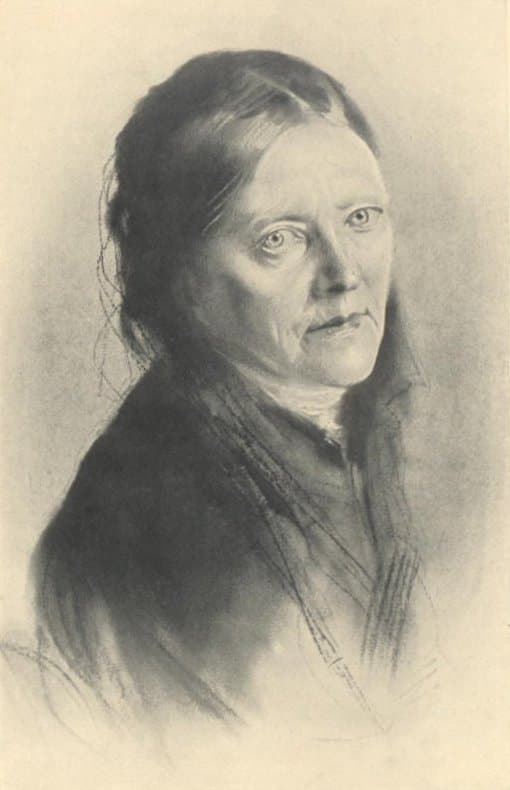
Malwida von Meysenbug

Nietzsche letters

Nietzsche & Malwida von Meysenbug

1873–1887 · 4 letters · Writer & confidante

Art, friendship and independence in letters to an older intellectual companion.

In conversation

Chat with Nietzsche

Explore his ideas. Challenge your own.

Start chatting

AI simulation inspired by his writings.

This selection contains Nietzsche’s outgoing letters. The recipient’s replies are not included in this edition. Original letter text in English translation. No imagined replies. Ellipses and omissions in the source editions are preserved.

1873

Friedrich Nietzscheto Malwida von Meysenbug

DEAREST FRAULEIN: . . . At Bayreuth I hope to find courage and good cheer once more and to fortify myself in all that is right. I dreamt last night that I had my Gradus ad Parnassum rarely and beautifully bound; the symbolism attached to the binding of a book is comprehensible enough, even if deficient in taste. This is a truth! From time to time one ought to have oneself newly bound, so to speak, by intercourse with good and robust men; otherwise one loses isolated leaves and falls ever more and more to pieces. And that our life ought to be a Gradus ad Parnassum is also a truth which one ought often to repeat to oneself. My Parnassus of the future is—provided I take great pains and have decent luck as well as plenty of time—to become perhaps a tolerable writer, but above all to become ever more moderate in the production of literature. From time to time I feel a childish repulsion toward printed paper, which at such times seems to me simply soiled paper. And I can picture a time when men will prefer reading little and writing less, while thinking much and doing even more. For the whole world is now waiting for the man of deeds, who strips the habits of centuries from himself and others, and who sets a better example for posterity to follow. Under my own roof something very fine is in process of completion, a description of our present day theology, bearing particularly upon the spirit of Christianity. My friend and brother in thought, Professor Overbeck, to my own knowledge the freest theologist now living, and in any case one of the greatest authorities on Church history, is now at work on this description, and will, if I am not mistaken—and we are quite agreed on this point—make known a few terrible truths to the world. Bale looks well on the road to becoming the most suspected of places! . . .

Your devoted friend, FRIEDRICH NIETZSCHE.

1921 edition · Anthony M. Ludovici ↗

1874

Friedrich Nietzscheto Malwida von Meysenbug

DEAREST FRAULEIN: At last I am able once again to let you have some news of me by sending you another work of mine.From the contents of this last essay you will be able to form some idea of all that I have experienced in the interval. Also, that with the lapse of years I am, among other things, in a much more serious and precarious position than you might gather from the mere reading of the book itself. In summa, however, you will surmise that things are going well with me, and going onwards, too, and that all I lack, alas! is just a little of the sunshine of life. Otherwise I should be compelled to acknowledge that things could not be going better with me than they are. For it is indeed a piece of great good fortune for me to progress step by step towards the accomplishment of my mission. And now I have written three of the thirteen "Thoughts Out of Season," and the fourth is already taking shape in my mind. How happy I shall feel when I have at last unburdened my heart of all its negative hates and all its indignation, and yet I dare hope that in five years I shall be within sight of this glorious goal! Already at the present moment I am thankful to feel how very much more clearly and sharply I am learning to see things—spiritually (not bodily, alas!) and how very much more definitely and intelligibly I can express myself. Provided that I am not led entirely astray in my course, or that my health does not break down, something must certainly come of all this. Just imagine a series of fifty such essays as the four I have already written—all the product of a soul's experience forced into the light of day! With such matter one could not help but produce some effect; for the tongues of many would have been unloosed and enough would have been put into words that could not be so quickly forgotten, much that today is almost as good as forgotten yea, that is scarcely to hand. And what should divert me in my course? Even hostile attacks I can now turn to account and to pleasure, for they often enlighten me more quickly than friendly sympathy, and I desire nothing more than to be enlightened about the highly complex system of conflicting elements that constitutes the "modern world." Fortunately, I am quite devoid of all political and social ambition, so that I need fear no dangers in that direction—no loadstones to draw me aside, no compulsion to compromise or to consider consequences; in short, I can say all I think, and what I want to do is to test once and for all to what extent modern mankind—so proud of its freedom of thought—can endure free thought. I do not ask anything either excessive or fantastic from life; besides, in the course of the next few years we shall experience something for which all the world of the past and the future may envy us. Moreover, I am blessed beyond all deserts with the most excellent of friends; and now, quite between ourselves, the only thing I want, and that quite soon, is a good wife, and then I shall regard all my worldly wishes as fulfilled. All the rest depends upon myself. . . .

Meanwhile, my heartiest wishes for your health, and may you continue to think kindly of

Your most devoted servant, FRIEDRICH NIETZSCHE.

1921 edition · Anthony M. Ludovici ↗

1878

Friedrich Nietzscheto Malwida von Meysenbug

Who was it who thought of me on May 30? I received two very fine letters (from Gast and Rée)—and then something still finer: I was quite moved—the fate of the man about whom for the last hundred years there have existed only party prejudices loomed as a terrible symbol before my eyes. Towards the emancipators of the spirit mankind is most irreconcilable in its hate, and most unjust in its love. Albeit I shall go on my way in peace, and renounce everything that might stand in my way. This is the decisive element in life: were I not conscious of the superlative fruitfulness of my new philosophy, I should certainly feel frightfully isolated and alone. But I am at one with myself.

Your heartily devoted friend, F. N.

1921 edition · Anthony M. Ludovici ↗

1887

Friedrich Nietzscheto Malwida von Meysenbug

DEAREST FRAÜLEIN: How strange it is! With regard to what you so kindly said to me at the last moment, I wonder whether it might not prove both refreshing and fruitful for us both once more to join our two solitudes in closest and heartiest proximity! I have frequently thought about this of late, and asked myself searching questions about it. To spend one more winter with you and to be looked after and waited upon perhaps by Trina herself that is indeed an extremely alluring prospect for which I cannot thank you sufficiently! I should prefer above all to return to Sorrento once more (δίς καί τοίς τὸ καλόν say the Greeks: "all good things twice or thrice!") Or to Capri—where I shall play the piano to you again but better than I did before Or to Amalfl or Castellamare. Finally even to Rome (although my suspicion of the Roman climate and of large towns in general is based on good reasons and is not to be over thrown so easily). Solitude in the midst of solitary nature has hitherto been my chief refreshment, my means of recovery; such cities of modern traffic as Nice or even Zurich (which I have just left) in the end always make me feel irritable, sad, uncertain, desperate, unproductive, and ill. I have retained a sort of longing and superstition with regard to that peaceful sojourn down there, as if there I had breathed more deeply, if only for a few moments, than anywhere else in my life. For instance, on the occasion of that very first drive we took together in Naples when we went to Posilippo.

Taking everything into consideration, you are the only person on earth about whom I could cherish such a wish; besides, I feel that I am condemned to my solitude and my citadel. There is no longer any alternative. That which bids me live, my exceptional and weighty task, bids me also keep out of the way of men and no longer attach myself to anyone. Perhaps it is the pure element in which this task has placed me that explains why it is that I have gradually grown unable even to bear the smell of men and least of all "young men," with whom I am not infrequently afflicted (—oh, how obtrusively clumsy they are, just like puppies!) In the old days, in our solitude in Sorrento, B. and R. were too much for me; I fancy that at that time I was very reticent with you—even about things of which there is no one I should have spoken to more readily than yourself.

On my table there lies the new edition (in two volumes) of "Human-all-too-Human," the first part of which I worked out then—how strange! Strange that it should have been in your respected neighbourhood. In the long "address" which I found a necessary preface for the new edition of my complete works there are a number of curious things about myself which are quite uncompromising in their honesty. By this means I shall hold "the many" once and for all at arm's length; for nothing annoys men more than to show them some of the severity and hardness with which, under the discipline of one's own ideal, one deals and has dealt out to oneself. That is why I have cast my line out for "the few," and this after all I did without impatience, for it is in the nature of the indescribable strangeness and dangerousness of my thoughts that ears should not be opened for them until very late—certainly not before 1901.

You ask me to come to Versailles—oh, if only it were possible! For I esteem the circle of men that you meet there (a curious admission for a German, but in present-day Europe I feel related only to the most intellectual among the French and Russians, and in no way whatever to my countrymen who judge all things on the principle of "Germany, Germany above all"). But I must return to the cold air of the Engadine; spring attacks me unconsciously; I dare not tell you into what abysses of despair I sink under its influence. My body (and my philosophy, too, for that matter), feels the cold to be its appointed preservative element—that sounds paradoxical and negative, but it is the most thoroughly demonstrated fact of my life.

This is by no means a sign of a "cold nature": but you, of course, understand that, my most dear and faithful friend!

Always your affectionate and grateful friend, NIETZSCHE.

P.S.—Fräulein Salome has also informed me of her engagement, but I did not answer her either, however much happiness and prosperity I may honestly wish her. One must keep out of the way of the kind of creature who does not understand awe and respect.

1921 edition · Anthony M. Ludovici ↗