More Than a Driver: The Critical Role of the Medical Courier
The Professional Medical Courier: Specimen Transport Mastery
More Than a Driver: The Critical Role of the Medical Courier
The Daily Readiness Checklist: Compliance and Gear
The Pickup Protocol: Precision at the Point of Origin
The Cold Chain: Temperature Control and Integrity
Route Optimization and Time Management
Incident Management: Biohazard Spills and Vehicle Issues
The Final Link: Laboratory Delivery and Handoff
Beyond the Routine: STATs, Home Pickups, and Organs
The Professional Courier: Continuous Excellence

Transcript
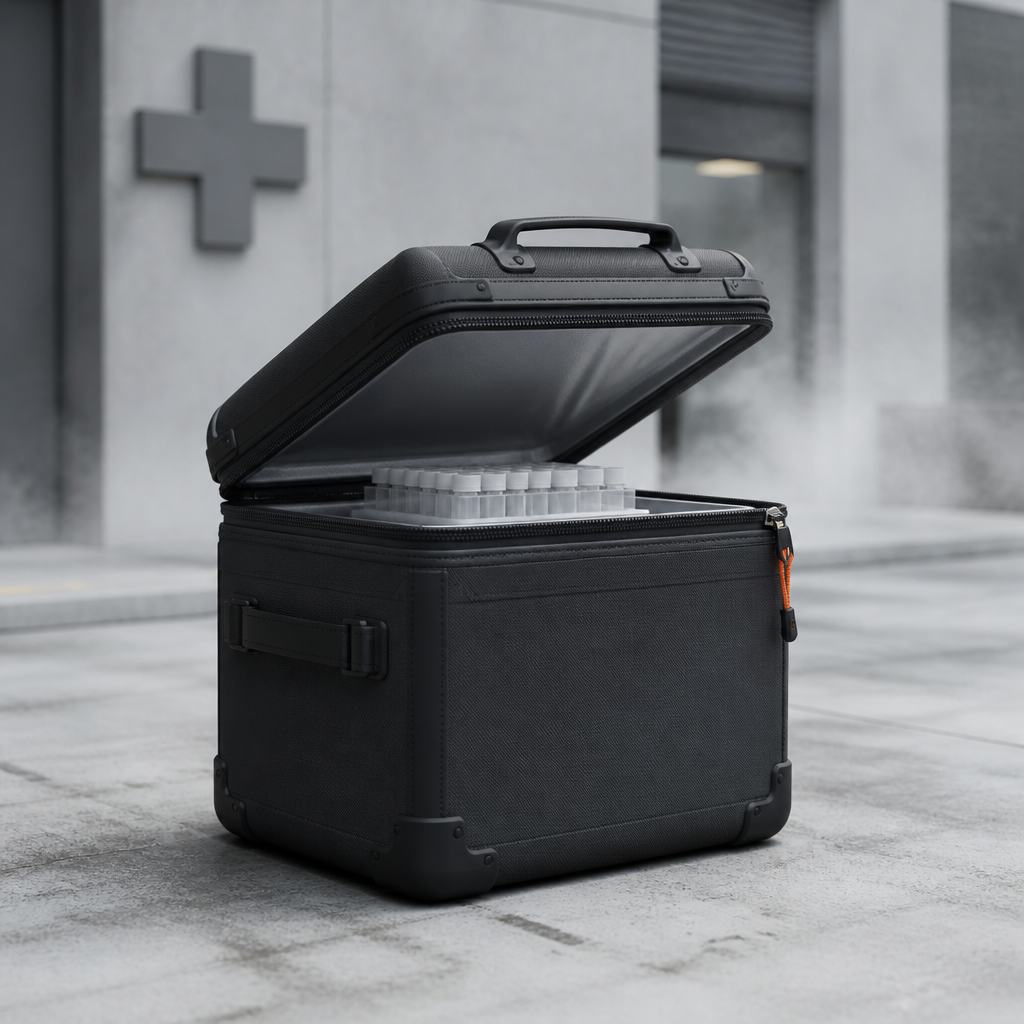
A tube of blood sits in a cooler on your passenger seat. Somewhere in a hospital lab, a physician is waiting on results that will determine whether a patient goes home or goes into surgery. That tube — and every decision you make in the next thirty minutes — is the bridge between those two realities. Studies indicate that up to seventy percent of clinical laboratory errors occur in the pre-analytical phase, which includes collection and transportation. That means the courier's role isn't peripheral to patient care. It is patient care. Now, the key idea here is that medical couriers operate inside a healthcare system worth staggering sums. The healthcare logistics market is projected to exceed one hundred fifty billion dollars globally by 2030. But the dollar figure isn't the point. The point is what that scale represents — millions of specimens moving daily, each one tied to a real person waiting on a diagnosis. Think of yourself not as a logistics worker filling a gap in the supply chain, but as a clinical professional operating in a mobile, unsupervised environment. That shift in mindset changes everything about how you approach the job. There are three pillars every courier must protect: specimen integrity, chain of custody, and patient privacy. Integrity means the sample arrives in the same viable condition it left the collection site. For example, certain sensitive specimens — like those drawn for blood gas analysis — must often be transported and processed within a strict thirty-minute window. Miss that window, and the results become clinically unreliable. The physician makes a decision based on bad data. That is a pre-analytical error, and it originates not in the lab, but in your vehicle. Chain of custody transforms a simple pickup into a legal and medical record. Every handoff must be documented — who released the specimen, who received it, at what time, and in what condition. Remember, that documentation can be subpoenaed. It can be the difference between a defensible process and a liability. The third pillar — privacy — surprises many new couriers. You may never see a patient's face. You may never know their name. But under HIPAA, courier services are classified as Business Associates of covered healthcare entities. That classification carries real legal weight. Civil penalties for failing to secure patient data range from one hundred dollars to over fifty thousand dollars per violation. A manifest left on a dashboard. A conversation about a pickup overheard in a waiting room. A bag left unattended with a label visible. Each of those scenarios is a potential HIPAA exposure. The key idea is that HIPAA compliance isn't a paperwork formality — it's an active, moment-to-moment discipline that applies every time you handle anything bearing patient information. The takeaway from all of this is straightforward, but it carries real weight. You are not simply moving packages from point A to point B. You are the final human link in a clinical chain that begins with a needle and ends with a diagnosis. The responsibility that comes with this role isn't about intimidation — it's about clarity. When you understand why the thirty-minute window matters, you drive with purpose. When you understand what chain of custody actually protects, you document with precision. When you understand HIPAA's reach, you guard information instinctively. That foundational mindset — treating every run as a clinical act, not a delivery — is what separates a competent medical courier from a great one.