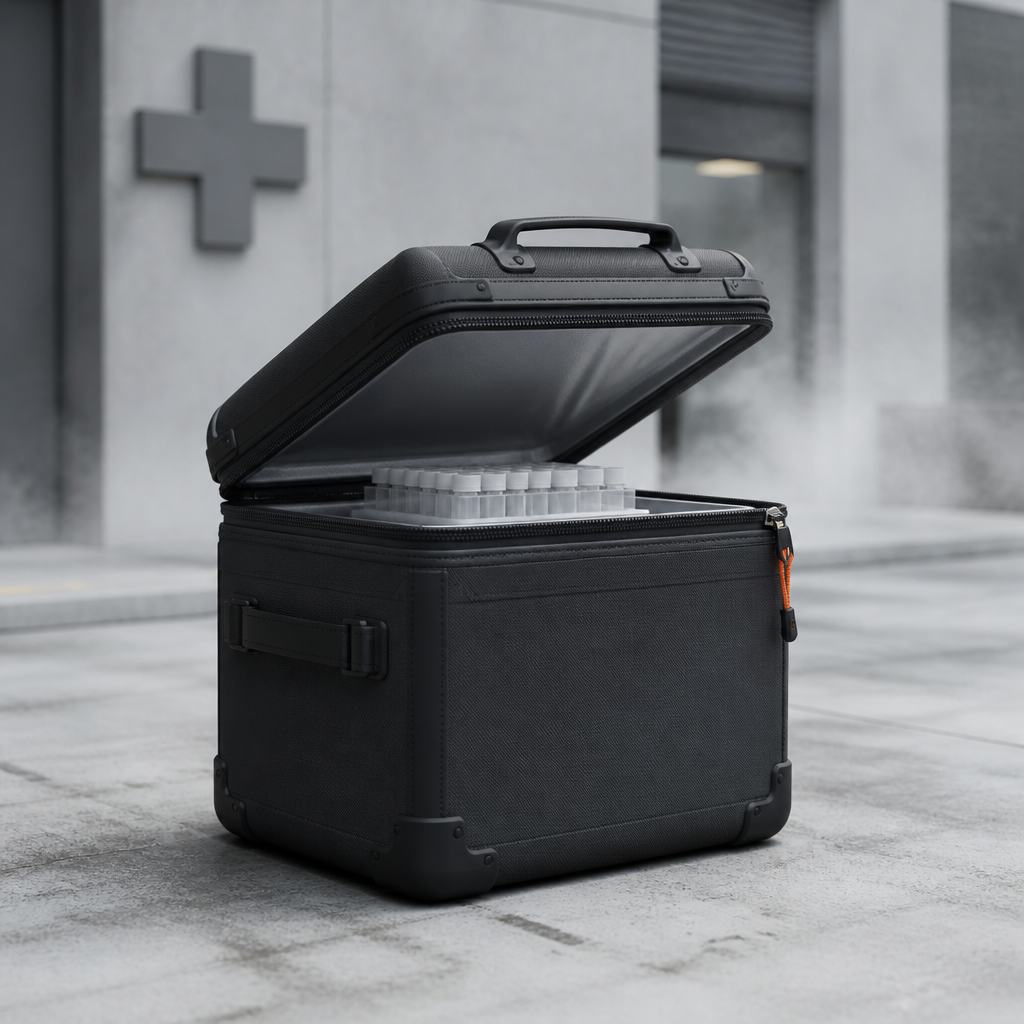
The Final Link: Laboratory Delivery and Handoff
The Professional Medical Courier: Specimen Transport Mastery
More Than a Driver: The Critical Role of the Medical Courier
The Daily Readiness Checklist: Compliance and Gear
The Pickup Protocol: Precision at the Point of Origin
The Cold Chain: Temperature Control and Integrity
Route Optimization and Time Management
Incident Management: Biohazard Spills and Vehicle Issues
The Final Link: Laboratory Delivery and Handoff
Beyond the Routine: STATs, Home Pickups, and Organs
The Professional Courier: Continuous Excellence

Transcript
SPEAKER_1: Alright, so let's focus on what happens when everything goes right. The courier arrives at the lab. Now what? SPEAKER_2: That moment is more structured than most people picture. Arriving at the lab isn't the finish line — it's the final checkpoint. The courier still has to verify packaging integrity before unloading. The same check done at pickup gets repeated here. SPEAKER_1: Wait — so the outer package gets inspected twice? Once at pickup and again at delivery? SPEAKER_2: Exactly. And for good reason. Something can shift in transit. A container that was intact at pickup might show a crack or a compromised seal by the time it reaches the receiving area. Catching that before handoff matters enormously for what comes next. SPEAKER_1: So once the courier confirms the packages are intact, what does the actual handoff sequence look like inside the lab? SPEAKER_2: The key idea is specimen reconciliation. Every specimen delivered has to be counted and matched against the pickup log, the manifest, and the chain-of-custody form. Each one carries a unique patient or specimen identifier, and that identifier is what ties the physical sample to every document in the record. SPEAKER_1: Mm-hmm. And what specific data gets captured at that handoff moment? SPEAKER_2: Quite a bit. Delivery time, the name of the person receiving the specimens, their signature or electronic confirmation, the specimen count, current temperature status from the logger, and any discrepancy notes. The lab should record the date and time of receipt and the identity of the person receiving when relevant. SPEAKER_1: So not just a count — the condition of each package at the moment custody changes hands. SPEAKER_2: Right. Chain-of-custody records have to document the condition of the specimen or package at each transfer. Think of it like a legal receipt. For forensic or legally sensitive specimens, every single transfer must be signed and dated by the responsible individuals — no gaps, no exceptions. SPEAKER_1: That raises something I think our listener might be wondering — what if the lab receiver flags a problem right there at the counter? A missing specimen, a damaged container, a temperature excursion? SPEAKER_2: [short pause] If the receiver reports a discrepancy, the courier documents it immediately — on the spot, not later. The sender gets notified right away, and the lab is informed of the steps needed to reduce risk and prevent recurrence. The courier escalates and records the issue. SPEAKER_1: And what about just leaving specimens on an unattended counter if the courier is running behind? I'd assume that's not acceptable, but why exactly? SPEAKER_2: It breaks the chain entirely. An unattended placement means there's no documented receiver, no confirmed condition at transfer, no signature. The lab's defined sample-receipt procedure requires authorized personnel to evaluate specimens against acceptance criteria. If no one receives them properly, that evaluation never happens — and the custody trail has a gap that can't be reconstructed. SPEAKER_1: For example, what does a gap like that actually cost downstream? SPEAKER_2: Suppose a coagulation sample arrives after hours and gets set on a counter. No timestamp, no receiver name. The lab can't confirm when it arrived or whether the temperature held. That sample may be rejected entirely — meaning a redraw, another patient stick, another delay. The chain-of-custody gap made the specimen legally and clinically unusable. SPEAKER_1: So what's the protocol for after-hours deliveries when no one is physically at the receiving desk? SPEAKER_2: Secure lockboxes with access codes, cameras, and electronic timestamps. Designated receiving refrigerators for temperature-sensitive specimens. The courier logs the deposit — time, specimen identifiers, temperature reading — and the system captures it. GPS tracking and environmental monitoring are increasingly treated as part of the complete custody record, not just convenience features. SPEAKER_1: [inhale] And once delivery is confirmed — proper handoff or secure lockbox — how does the courier close out the route? SPEAKER_2: scan completion for each specimen, exception documentation for any discrepancy, and a final temperature log entry. Then the coolers get sanitized before the next run. Remember, a contaminated cooler from one route becomes a risk on the next one. Closing out the route is the last clinical act of the shift. SPEAKER_1: So the takeaway for everyone following this course is that delivery isn't passive — it's a structured verification event with the same rigor as pickup. SPEAKER_2: That's exactly it. The specimen has to remain traceable through the entire pickup-to-receipt process. Every name, every timestamp, every condition note — that's what makes the chain of custody defensible. The courier who closes the loop completely is the one who protects the patient, the lab, and themselves.