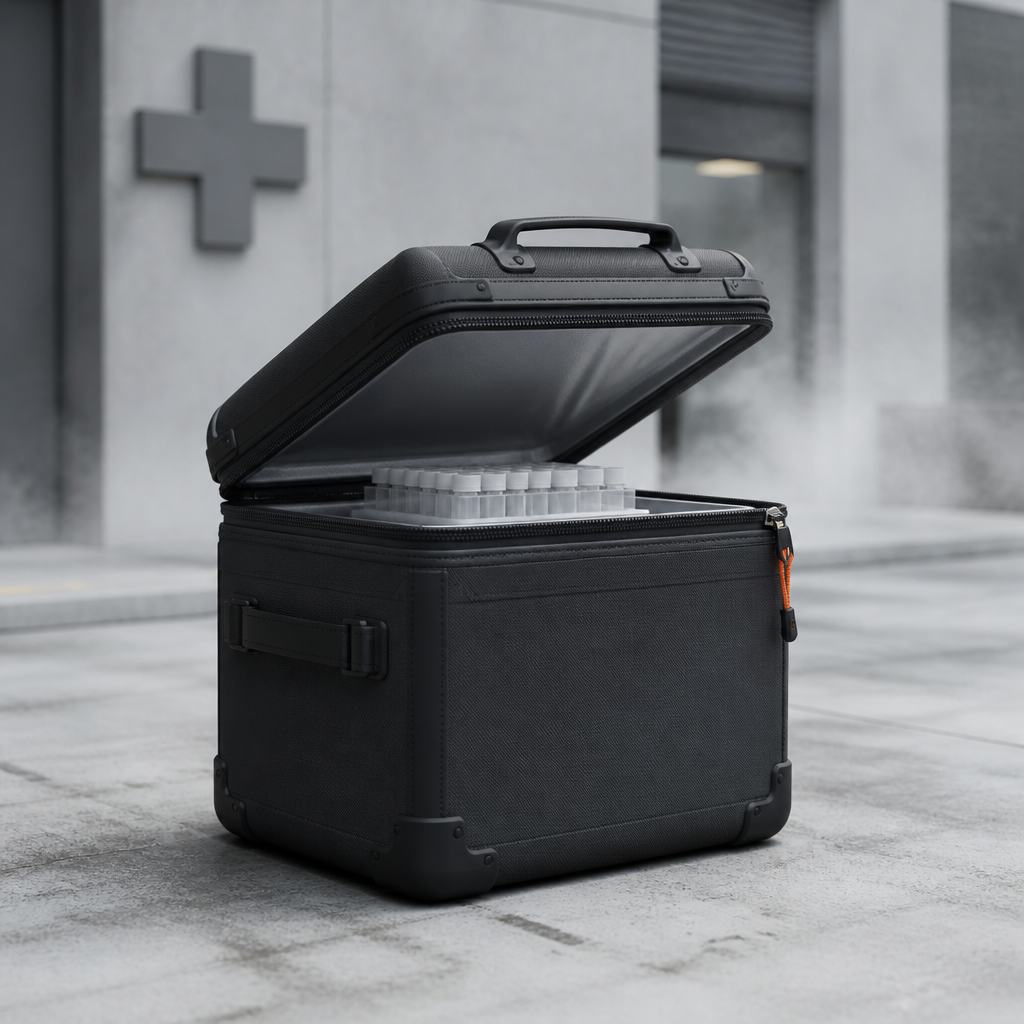
The Daily Readiness Checklist: Compliance and Gear
The Professional Medical Courier: Specimen Transport Mastery
More Than a Driver: The Critical Role of the Medical Courier
The Daily Readiness Checklist: Compliance and Gear
The Pickup Protocol: Precision at the Point of Origin
The Cold Chain: Temperature Control and Integrity
Route Optimization and Time Management
Incident Management: Biohazard Spills and Vehicle Issues
The Final Link: Laboratory Delivery and Handoff
Beyond the Routine: STATs, Home Pickups, and Organs
The Professional Courier: Continuous Excellence

Transcript
SPEAKER_1: Alright, so last time we established that the medical courier is essentially the final human link in a clinical chain — every run is a clinical act, not just a delivery. That framing really stuck with me. Now I want to get into what that actually looks like before the courier even leaves the building. SPEAKER_2: Right, and that's exactly where a lot of couriers underestimate the job. The shift doesn't start when you pick up a specimen. It starts with a readiness check — physical gear, documentation, vehicle condition — all of it verified before the route begins. SPEAKER_1: So walk everyone through the gear side. What does a courier actually need to have on their person or in the vehicle? SPEAKER_2: OSHA's Bloodborne Pathogens Standard is the governing rule here. It requires that any worker who may be exposed to blood or other potentially infectious materials use appropriate personal protective equipment. At minimum, that means nitrile gloves — not latex, because of allergy risks — plus a face mask, and eye protection. Additional protective clothing, such as a disposable gown or apron, may also be required. SPEAKER_1: And those items need to be in the vehicle at the start of every shift, not just available somewhere back at the office? SPEAKER_2: Exactly. If a courier discovers missing PPE before leaving, the correct procedure is to stop and restock before accepting any specimens. There's no workaround. Think of it like a pilot's pre-flight checklist — you don't take off with a known gap. SPEAKER_1: Mm-hmm. What about spill kits? I know those are OSHA-mandated, but what does a compliant kit actually contain? SPEAKER_2: A proper biohazard spill kit should include absorbent material — enough to contain a full primary receptacle leak — plus a biohazard waste bag, disposable gloves, a face shield, and a disinfectant appropriate for bloodborne pathogens. Most employers require at least one kit secured in the vehicle at all times, and some routes warrant two. The key idea is that the kit must be inspected for expiration dates on the disinfectant and for any depleted supplies before departure. SPEAKER_1: Wait — expiration dates on spill kit components? That's something a lot of people probably wouldn't think to check. SPEAKER_2: It catches people off guard. [short pause] Disinfectants degrade. Absorbent pads can be compromised if the packaging is torn. If a courier finds an expired item or damaged component, the kit is non-compliant and must be replaced before the route begins. Same logic applies to a malfunctioning temperature logger — if it's not reading accurately, it cannot be used. SPEAKER_1: Speaking of temperature loggers — how does a courier actually confirm one is calibrated and working before transport? SPEAKER_2: Most digital loggers have a self-test function or a display that shows the current reading alongside a calibration status indicator. The courier should power it on, confirm it's reading within the expected ambient range, and check that the last calibration date is within the manufacturer's recommended interval. CLSI guidance is explicit that maintaining appropriate temperatures for blood, serum, or plasma specimens is a core transport requirement — so a logger that can't be verified is a liability. SPEAKER_1: Now, what about the vehicle itself? I'd assume a clean-looking vehicle isn't necessarily a safe one for specimen transport. SPEAKER_2: That's a critical distinction. Visual cleanliness and sanitary readiness are not the same thing. Areas where specimen containers may sit — the cargo area floor, cooler interiors, any lockable transport boxes — need to be checked deliberately, not just glanced at because they look clean. Residual contamination from a previous spill that wasn't fully decontaminated is invisible. For everyone following along, the rule of thumb is: if you wouldn't place a sterile item on that surface, it hasn't been cleaned to the right standard. SPEAKER_1: So what does the document side of readiness look like? What credentials and paperwork should be in the vehicle? SPEAKER_2: The essential paperwork is shipment documentation: the correct shipping classification, proper shipping name, and UN number when applicable, an itemized contents list where required, labels and manifests that match, and responsible-person contact information when the carrier requires it. CDC biosafety guidance reinforces that proper documentation is mandatory and depends on the mode of transport, so a daily documentation check isn't optional. SPEAKER_1: What about the physical setup inside the vehicle — coolers, biohazard labels, separation barriers — how should all of that be arranged before pickup? SPEAKER_2: Coolers go in the cargo area, never on passenger seats where they can shift. Each cooler should be pre-labeled with a biohazard symbol, pre-loaded with the appropriate temperature medium — gel packs for refrigerated, dry ice for frozen — and confirmed closed and latched. Absorbent material lines the interior. Separation barriers keep specimen types from mixing. WHO guidance is clear that packaging must withstand shocks and vibration during normal transport, so nothing should be loose or unsecured. SPEAKER_1: [chuckle] It's a lot more involved than most people picture when they think 'courier.' SPEAKER_2: It really is. The takeaway for anyone building this habit is that the readiness checklist isn't bureaucratic overhead — it's a clinical safeguard at the start of the shift. A courier who completes it thoroughly has already protected specimen integrity before touching a single sample. That's the standard the job demands.