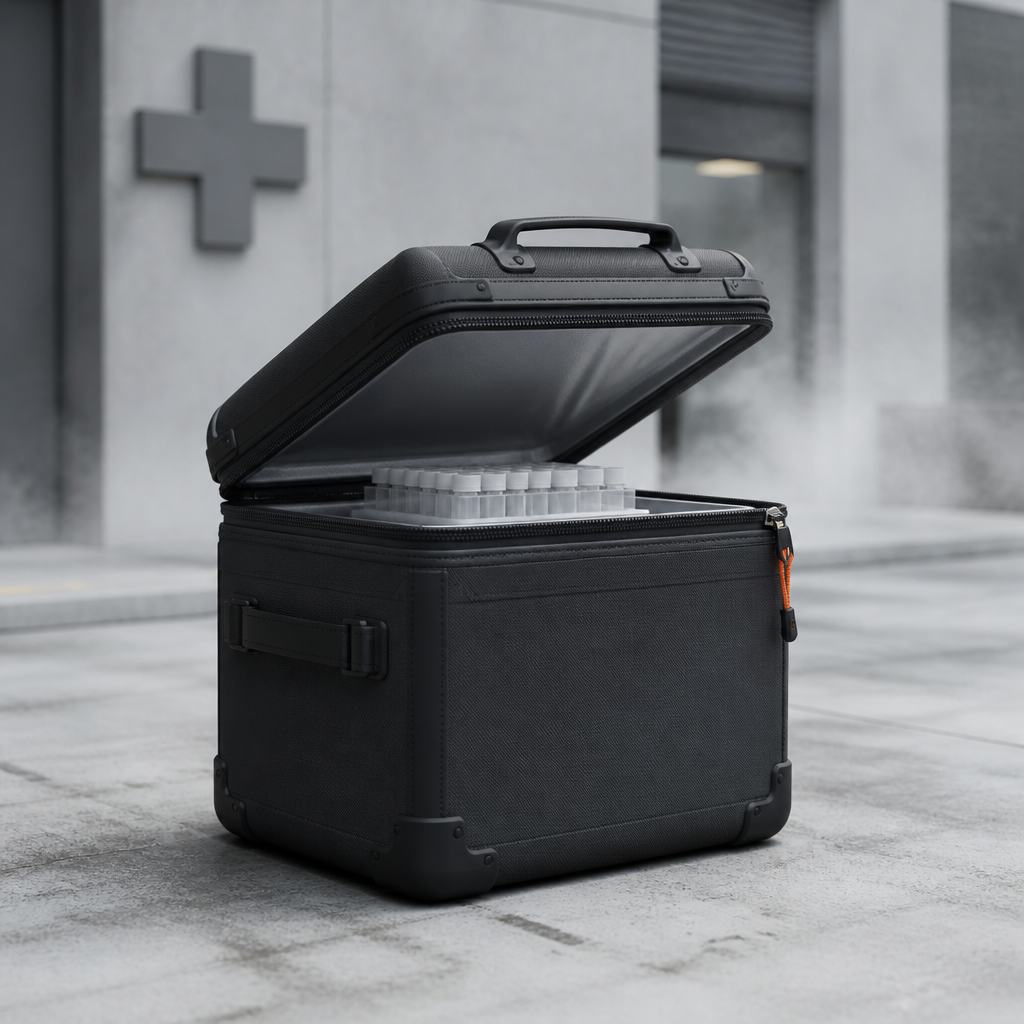
Incident Management: Biohazard Spills and Vehicle Issues
The Professional Medical Courier: Specimen Transport Mastery
More Than a Driver: The Critical Role of the Medical Courier
The Daily Readiness Checklist: Compliance and Gear
The Pickup Protocol: Precision at the Point of Origin
The Cold Chain: Temperature Control and Integrity
Route Optimization and Time Management
Incident Management: Biohazard Spills and Vehicle Issues
The Final Link: Laboratory Delivery and Handoff
Beyond the Routine: STATs, Home Pickups, and Organs
The Professional Courier: Continuous Excellence

Transcript
You are three stops into your route. A sharp turn. A thud from the cargo area. You pull over and open the cooler to find a cracked specimen tube, blood pooling at the bottom. This is not a hypothetical. It happens. And the next sixty seconds determine whether you handle it professionally or make it significantly worse. The instinct to keep moving, to finish the route and deal with it later, is exactly the wrong call. While route decisions prioritize specimen biology, incident management prioritizes immediate response and safety. When something goes wrong, the specimen and the people around it still come first. Delaying incident reporting compromises safety, risks exposure, and disrupts the chain of custody. The moment you discover a leak or broken container, stop the vehicle safely. Do not move it again until the situation is controlled. That is not optional guidance. Transport procedures are explicit: a vehicle must not be driven again until spillage is fully contained and the area ventilated. Next, cordon off the spill area. Use safety cones or caution tape from your kit. Then contact dispatch immediately. Report your location, the specimen identifiers involved, and the nature of the incident. Your supervisor and the sending and receiving laboratories all need to be notified. Before you touch anything contaminated, you put on PPE. The order matters. Gloves go on first, because your hands are the primary contact point. Then eye protection, because splashing is a real risk with liquid specimens. Then a mask. Then a gown or apron if splashing is likely. WHO guidance is clear: personnel must be trained in these procedures before performing them, and the protective clothing must be appropriate to the substance involved. Do not improvise. Now, the cleanup itself follows a specific sequence. Cover the spill with absorbent material first, cloth or paper towels, to contain it before any disinfectant is applied. Then apply disinfectant, starting from the outer margin and working inward toward the center. That direction matters. Working inward prevents spreading contamination outward. Leave the disinfectant in contact with the spill area for approximately thirty minutes. That contact time is required for pathogen inactivation, not just surface cleaning. For example, skipping or shortening that wait time leaves viable infectious material behind. After the contact time is complete, collect all absorbent materials, PPE, and any broken glass or cracked tubes. Use tools for broken glass or cracked tubes, not your bare hands. Use tools, then place everything into a closable, leak-proof, properly labeled biohazard waste container. That container must be closed before removal. If you were exposed, wash or disinfect the affected skin area immediately and seek medical advice. Document the exposure as part of the incident report. All incidents, including spills and breakdowns, require prompt reporting and thorough documentation to ensure safety and compliance. Follow your local incident reporting procedure to record the key facts, including where and when it happened, which specimens were involved, the exposure risk, the cleanup actions taken, who was notified, and any corrective actions. [short pause] If the vehicle breaks down rather than a spill occurring, the priority is identical: protect the specimens. Contact dispatch, report temperature logger readings immediately, and arrange transfer to a backup vehicle. Specimens must stay within their required temperature range throughout the transfer. The key idea is that documentation is not an afterthought. It is a regulatory obligation and a clinical record. The takeaway is this: incidents do not end your professionalism. They test it. A courier who stops safely, dons PPE correctly, follows the contain-disinfect-wait-collect sequence, reports immediately, and documents thoroughly has done the job exactly right. Remember, the protocol exists because these moments are predictable. A critical variable is whether you are ready for them.