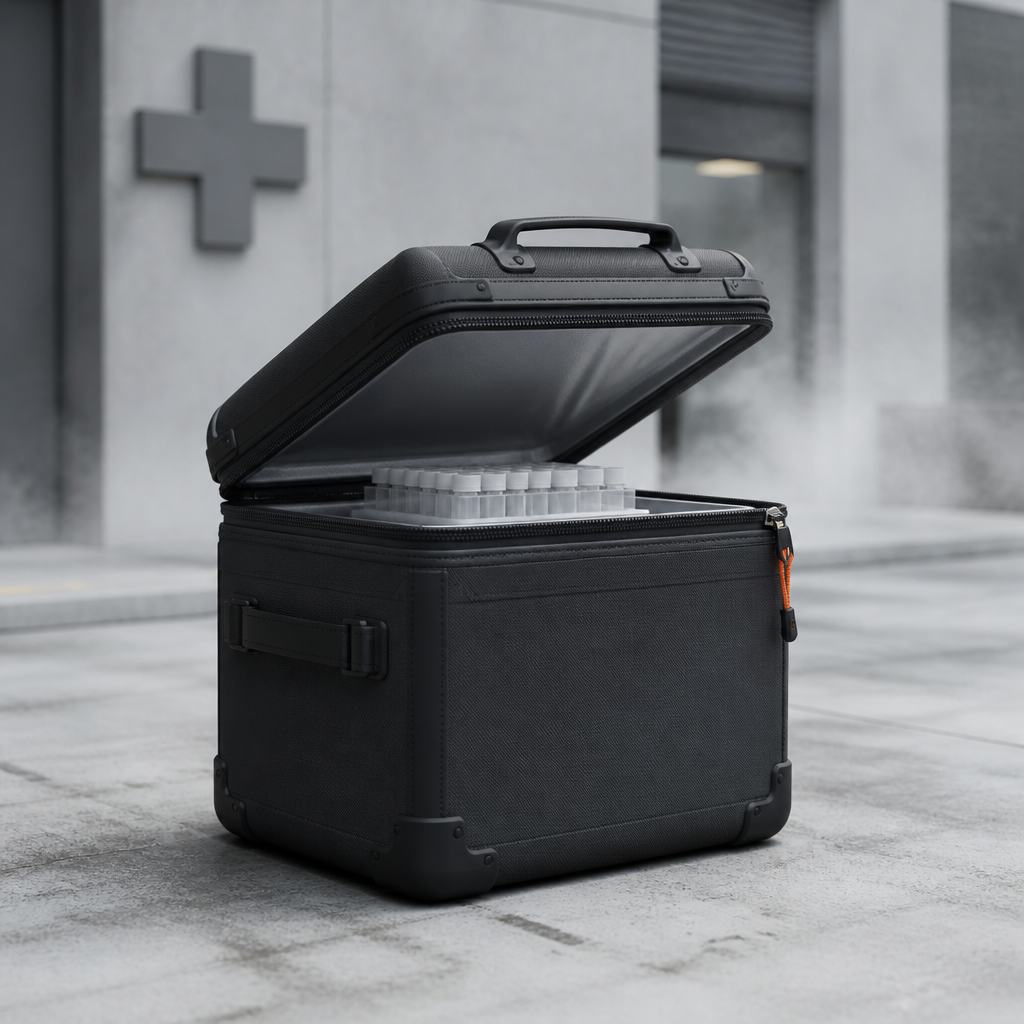
The Cold Chain: Temperature Control and Integrity
The Professional Medical Courier: Specimen Transport Mastery
More Than a Driver: The Critical Role of the Medical Courier
The Daily Readiness Checklist: Compliance and Gear
The Pickup Protocol: Precision at the Point of Origin
The Cold Chain: Temperature Control and Integrity
Route Optimization and Time Management
Incident Management: Biohazard Spills and Vehicle Issues
The Final Link: Laboratory Delivery and Handoff
Beyond the Routine: STATs, Home Pickups, and Organs
The Professional Courier: Continuous Excellence

Transcript
A blood sample leaves a clinic at seven in the morning. By the time it reaches the lab, the result is flagged as unreliable. No accident. No spill. The specimen simply got too warm. That single temperature excursion — invisible, silent — turned a viable sample into unusable data. The physician orders a redraw. The patient waits another day. That is what cold chain failure looks like in practice. It doesn't announce itself. It just quietly corrupts the result. This lecture focuses on the continuous discipline of temperature control from pickup to delivery. The key idea is that temperature control isn't a single moment at pickup. It is a continuous discipline that runs from the second you accept a specimen to the second you hand it off at the lab. Temperature zones are critical: ambient (room temperature), refrigerated (2-8°C), and frozen (-20°C or colder). Each has unique challenges, such as freezing refrigerated specimens or thawing frozen ones. Refrigerated specimens can be destroyed by freezing just as easily as by heat. Many biological products suffer irreversible damage when ice crystals form inside them — even if they later return to liquid. That means accidentally over-cooling a refrigerated specimen is not a safe error. It is still a loss. A validated insulated transport box acts as a thermal buffer, slowing temperature change rather than generating cold. Gel packs, phase-change materials, and dry ice each absorb heat at a predictable rate, buying time for the specimen to reach the lab within its safe window. For refrigerated transport, conditioned gel packs keep the interior between 2 and 8 degrees Celsius for the planned duration. For frozen specimens, dry ice maintains sub-zero temperatures. The system depends, though, on the container being validated to perform under worst-case conditions — maximum transport time, high ambient temperatures, and repeated opening. Dry ice requires careful handling as it sublimates, releasing CO2. Never pack it in airtight containers; ensure proper ventilation. Personnel working with dry ice must use insulated gloves, eye protection, and respiratory protection, and must handle it in well-ventilated areas. Inside a vehicle, a window cracked open is not optional — it is a safety measure. Label any dry ice shipment clearly so receiving staff know what they are handling before they open the container. Where you place a cooler in your vehicle matters more than most couriers realize. Direct sunlight through a rear window can raise a cargo area's temperature dramatically. Heater vents push warm air directly onto containers placed near them. The trunk of a vehicle in summer can exceed 60 degrees Celsius. Coolers belong in the shaded, stable part of the cargo area — secured so they cannot shift or tip. [short pause] Temperature monitoring doesn't stop at pickup. Validated digital data loggers with continuous recording are the standard. Check the logger at pickup, at each stop, and at delivery. Any event that could affect temperature — a door left open, an unexpected delay, a vehicle breakdown — triggers an immediate extra check. If a refrigerated specimen moves outside its required temperature range, or a frozen specimen shows signs that it moved outside its required range, do not guess. Document the excursion immediately — time, temperature reading, duration — and contact dispatch and the receiving lab before delivery. The lab decides whether the specimen is still viable. That decision is not yours to make alone. Opening a cooler repeatedly poses a thermal risk; trust the logger instead. The takeaway is this: the cold chain is not equipment. It is discipline. The right containers, the right placement, the right monitoring, and the right response when something goes wrong — that chain of decisions is what keeps the specimen viable from your hands to the lab's.