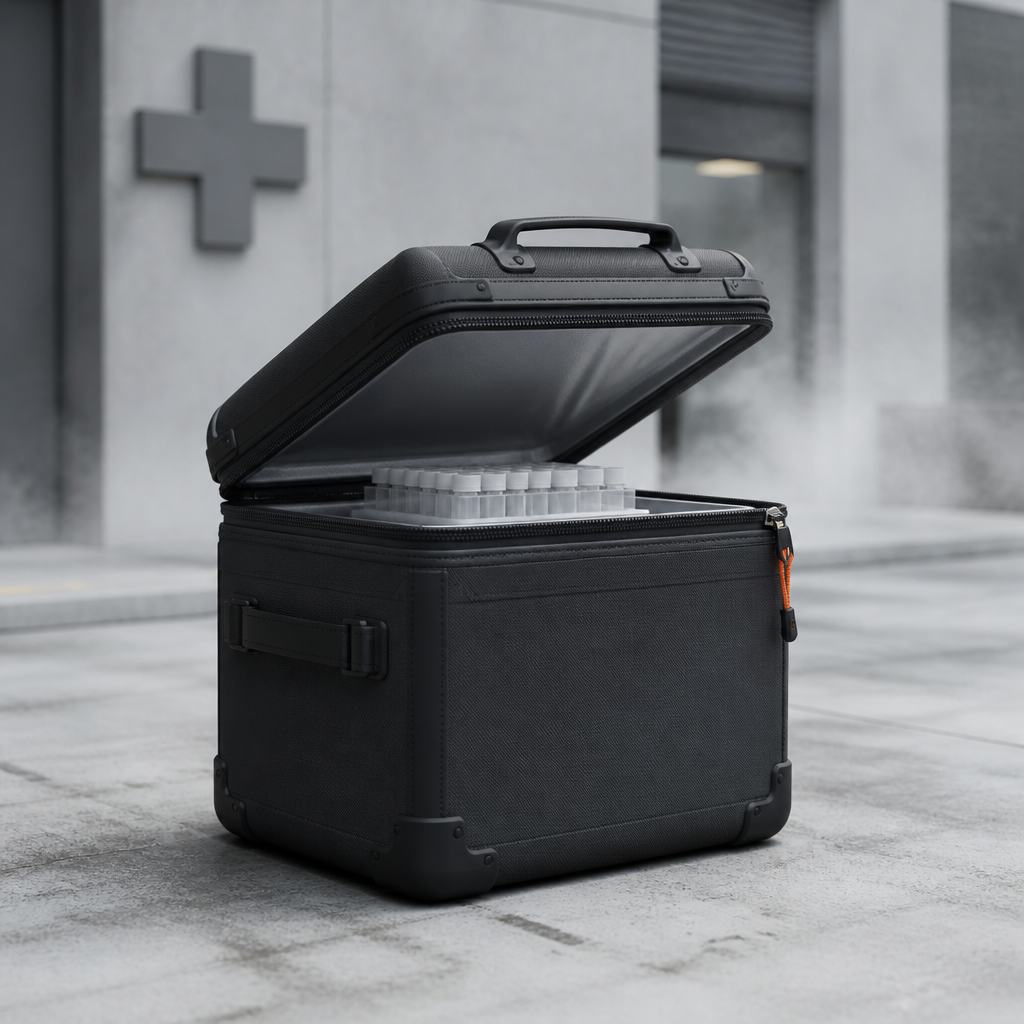
The Professional Courier: Continuous Excellence
The Professional Medical Courier: Specimen Transport Mastery
More Than a Driver: The Critical Role of the Medical Courier
The Daily Readiness Checklist: Compliance and Gear
The Pickup Protocol: Precision at the Point of Origin
The Cold Chain: Temperature Control and Integrity
Route Optimization and Time Management
Incident Management: Biohazard Spills and Vehicle Issues
The Final Link: Laboratory Delivery and Handoff
Beyond the Routine: STATs, Home Pickups, and Organs
The Professional Courier: Continuous Excellence

Transcript
Two couriers. Same route. Same specimens. One arrives at the lab with every label legible, every temperature logged, every handoff signed. The other arrives five minutes faster — but a seal is compromised, a timestamp is missing, and the receiving tech flags the package for review. The faster courier thinks the job went fine. The lab knows otherwise. Speed without discipline isn't efficiency. It's risk wearing a schedule. Throughout this course, you've developed a comprehensive understanding of the medical courier process, from mastering readiness checklists to ensuring cold chain discipline and effective incident response. Now the question isn't whether you know the procedure. It's whether you apply it consistently, every shift, without shortcuts. That consistency is what separates a professional from someone who just drives. Consider the importance of consistent habits, much like a surgeon's routine, to ensure reliability and minimize errors. Every shift starts with a full readiness check: PPE stocked, spill kit inspected, temperature logger verified, vehicle cargo area clean. Every pickup is treated as a controlled handoff, not a simple grab-and-go. Every label gets cross-checked. Every timestamp gets recorded. [short pause] These habits aren't bureaucratic overhead. They are the mechanism that keeps specimens viable and patients safe. Stay informed about regulatory changes, such as updates from OSHA, DOT, and HIPAA, and adapt to revised standard operating procedures. Relying only on initial training is a documented risk. The professional response is active currency — reading regulatory updates, attending refresher sessions, and completing competency checks. Many healthcare logistics programs require annual retraining on bloodborne pathogens, chain-of-custody procedures, and temperature control protocols. Written procedures and regular staff training are what standardize safe specimen handling across routes and facilities. Professionalism is measurable through performance metrics like delivery rates and error counts, helping identify and address potential issues early. For example, suppose a courier's rejected specimen count rises over three consecutive weeks. That data triggers a review. Maybe a cooler is underperforming. Maybe a pickup window is too tight. The metric surfaces the problem. Continuous quality improvement uses exactly that mechanism to reduce specimen loss and protect patients. A perfect driving record does not make a courier safe if paperwork is careless, privacy is ignored, or chain of custody has gaps. Remember, a specimen is not properly handled until the receiving laboratory has acknowledged delivery and the transfer is documented. When feedback comes — an audit finding, a corrective action, a documented mistake — the professional response is direct. Acknowledge it. Understand the root cause. Adjust the habit. That response is not weakness. It is the behavior that builds a defensible, trustworthy record over a career. The skills acquired here pave the way for career advancement in roles such as lead courier, dispatcher, and operations manager, all grounded in consistent excellence. [emphasis] Every pickup you verify correctly, every chain of custody you close completely, every temperature excursion you catch and report — those are the acts that build that record. The full specimen journey, from your readiness checklist through pickup, transport, incident response, delivery, and final documentation, is one connected patient-safety system. You are not a link in that chain. You are the professional who holds it together.