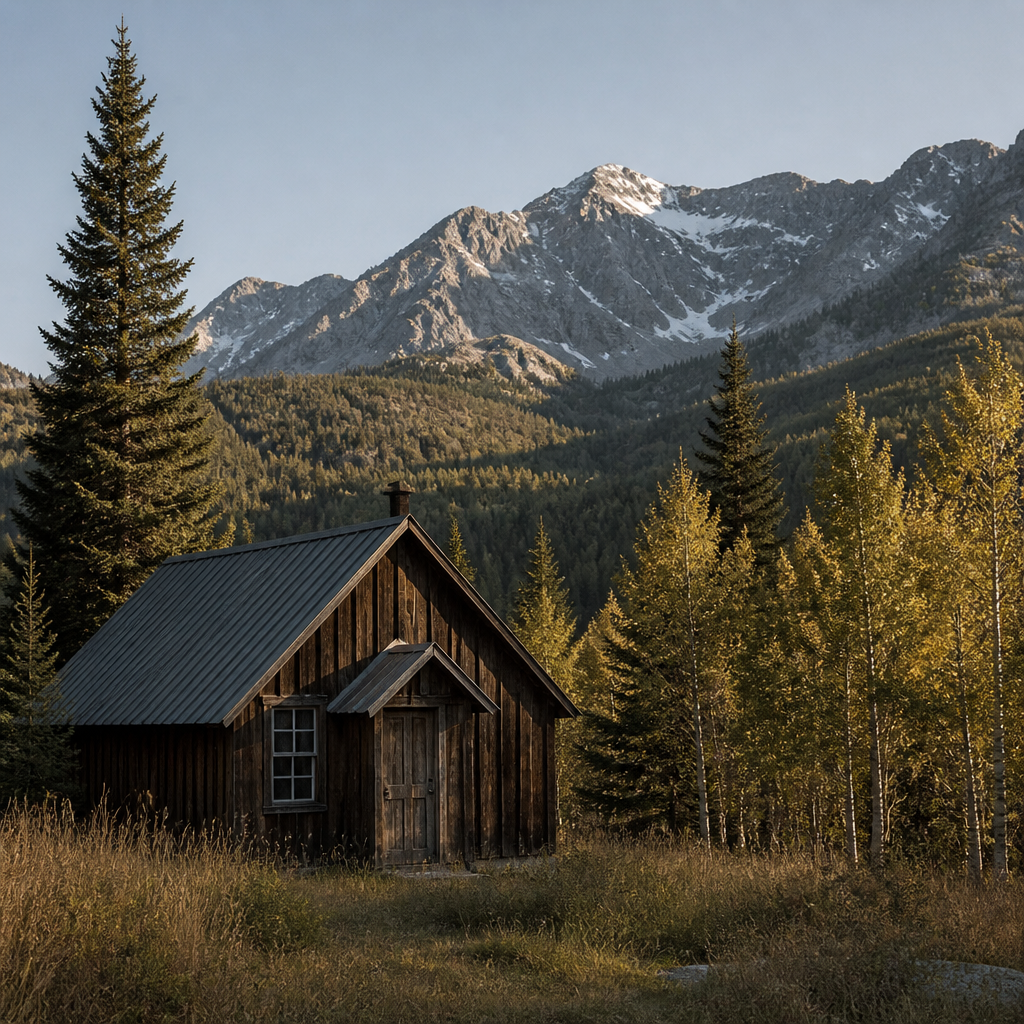
Start With the Real Goal: Affordable Cabin, Land, and Access
Draw the Search Map: South of Denver Without Going Too Remote
Corridor One: Pueblo, Walsenburg, Trinidad, and the I-25 Spine
Corridor Two: Cañon City, Florence, Penrose, and Foothill Living
Corridor Three: Westcliffe, Silver Cliff, La Veta, and Rural Acreage Dreams
Do Not Ignore the Border Strategy: Raton, Trinidad, and Nearby Alternatives
Finding Cabin-Specialist Realtors Without Guessing
The First Call Script: Questions to Ask a Rural Realtor
How to Read a Cabin Listing Like an Inspector
The Budget Reality Check: Purchase Price Is Not the Whole Cost
Selling the Raton House Before You Buy: Timing, Inventory, and Leverage
Your 30-Day Action Plan for an Affordable Cabin Search

Transcript
SPEAKER_1: Alright, so last time we built the first-call script — the questions to run past an agent before touring anything. The big insight was that a good agent answers with specifics, not 'we'll figure that out when we get there.' Now I want to back up even further, to the moment before the agent call. The listing itself. SPEAKER_2: Right — and the key idea here is that a listing is a sales document, not a disclosure form. It's written to attract interest, not to surface problems. So our listener has to read it like a preliminary inspection report, not like a brochure. SPEAKER_1: So what's the very first thing to flag when a listing comes up cheap and looks appealing? SPEAKER_2: The language. Specific phrases are doing real work. 'As-is,' 'cash only,' 'needs TLC,' 'off-grid,' 'seasonal access' — each one of those changes the financial picture before anyone drives out. 'Cash only' often means the property won't qualify for conventional financing. SPEAKER_1: Wait — so 'cash only' isn't just a seller preference. It's a signal about the property itself. SPEAKER_2: Exactly. Lenders won't finance properties with serious structural, water, or access issues. So when a seller says cash only, they may already know the property won't pass an appraisal or inspection contingency. That's the subtext. SPEAKER_1: What about 'seasonal access'? That one sounds almost charming — like a mountain retreat thing. SPEAKER_2: [sigh] It is not charming. Seasonal access means the road to the property may be impassable in winter. For someone planning year-round living, that's a hard no. The road question has to be verified property by property, not assumed from the listing description. SPEAKER_1: Mm-hmm. Now, acreage — the listing might say five acres, but our listener wants usable land. How does someone read that from a listing? SPEAKER_2: They mostly can't — not fully. But there are clues. If the listing mentions steep terrain, ravines, or 'dramatic views,' a portion of that acreage is likely slope that can't be built on or used practically. Think of a parcel advertised as ten acres with a cabin perched on a ridge. The photos look stunning. But eight of those acres may be vertical. SPEAKER_1: So the photo is actually one of the least useful pieces of information. SPEAKER_2: Often, yes. A wide-angle shot of a log cabin in golden light tells you almost nothing about the roof structure, the chinking condition, the drainage, or whether there's rot at the log ends. Inspection guides specifically flag upward-facing cracks in logs — called checks — because they collect water and accelerate rot. A listing that calls those 'character checking' without explaining water management is glossing over a real risk. SPEAKER_1: [short pause] What about the roof? Because Colorado snow loads are not uniform. SPEAKER_2: That's a critical one. Colorado residential code ties roof structural requirements to ground snow load, and that load increases sharply with elevation. A listing that says 'original roof' on a high-mountain cabin should prompt an engineer's review — not just a general inspection. Some lower-elevation roofs were designed for around 20 to 30 pounds per square foot. Move that same structure up in elevation and it may be undersized for current load requirements. SPEAKER_1: And water — because 'good well water' in a listing is not a water test. SPEAKER_2: Not even close. A proper well evaluation means reviewing construction logs, depth, flow rate — often targeting around five gallons per minute as a minimum — and lab results for bacteria, nitrate, lead, arsenic, and other contaminants. If a listing offers no history of regular testing, that's a maintenance backlog hiding in plain sight. And if the property is near any industrial or agricultural activity, specific testing for additional contaminants becomes relevant too. SPEAKER_1: So the step-by-step scan before anyone schedules a showing — what does that actually look like? SPEAKER_2: water source — is it documented, tested, and adequate? Two: septic — is there a system, and when was it last inspected? Three: heat type — propane, electric, wood? Each has different cost and supply implications. Four: road status — year-round or seasonal, paved or private dirt? Five: permits — are improvements documented, or are there unpermitted additions that become the buyer's legal problem? Six: financing language — does 'cash only' or 'as-is' signal a loan-eligibility problem? SPEAKER_1: Run that scan before the agent call, not after. SPEAKER_2: Before. Because if a listing fails two or three of those checks, the agent call is unnecessary. Save the time for properties that survive the screen. Remember — even a listing that passes all six still needs a professional inspection. The scan just filters out the obvious problems before anyone wastes a day driving to a property that was never going to work. Now, once a listing does survive that screen, the next challenge is whether the numbers actually hold up — financing, monthly costs, insurance. That's where we're headed next.