
Transcript
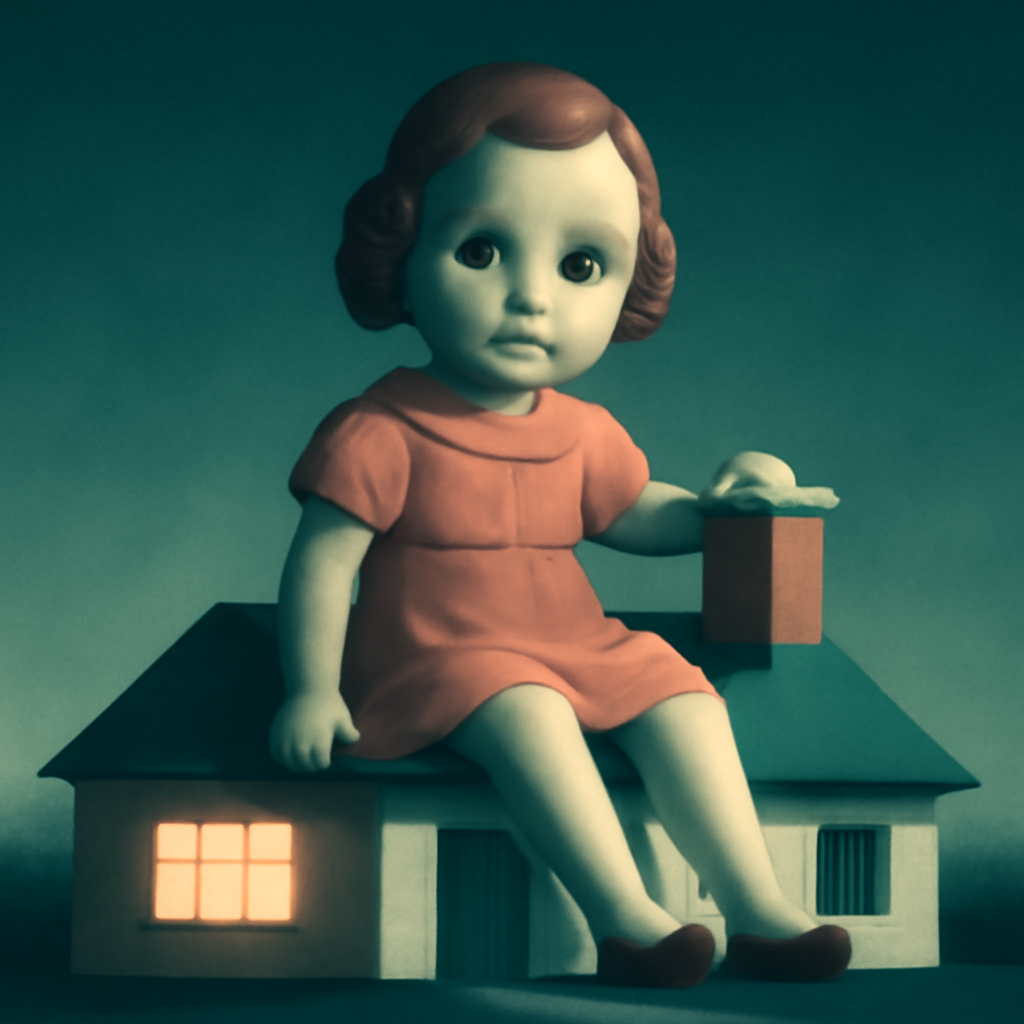
Picture a quiet house. Late afternoon light. A small girl winds a key in the back of a doll, and a voice comes out — bright, cheerful, completely safe. My name is Talky Tina and I love you very much. That sentence is a machine. It has a casing and a mechanism, and when you first hear it, the casing is all you notice. A toy doing what toys do. Identity, then affection. Clean, simple, harmless. But the same sentence, spoken privately to the man who resents the child holding the doll, sounds like this: My name is Talky Tina and I don't think I like you. The casing hasn't changed. The mechanism has. And that gap — between the familiar frame and the new thing living inside it — is where this episode does all of its real work. This lecture is about that gap. Not about how Tina moves, or what she's made of, or whether she's haunted. It's about how a repeated phrase becomes a governing law. How a toy sentence, spoken often enough and with enough precision, stops describing a world and starts building one. You can already feel it happening. Somewhere in this house, at the top of a dark staircase, that sentence is still running. Still waiting to complete itself.