
Transcript
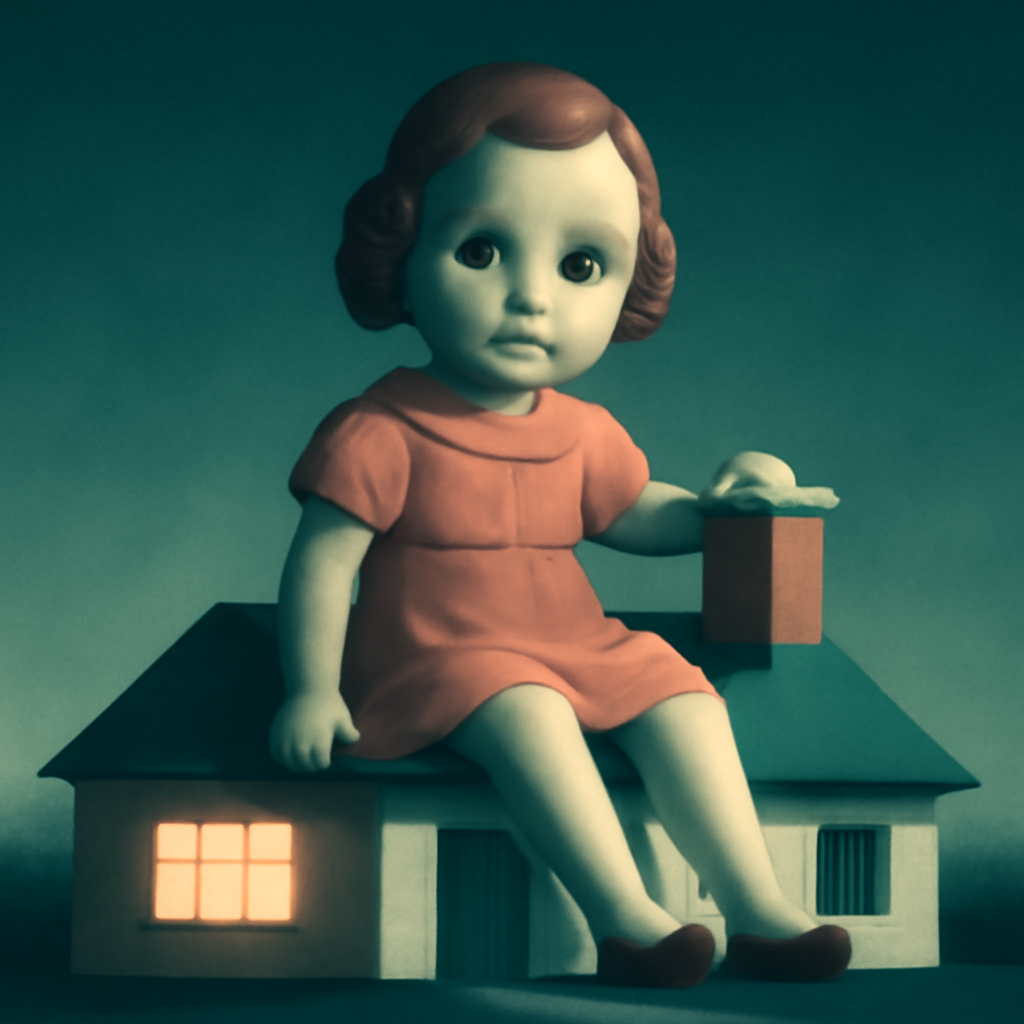
The music drops. The front door opens. Annabelle and Christie come in from shopping, arms full, and the house immediately tells you something is wrong — not because of anything supernatural, but because of the way the air changes when Erich is in a room. He is already there. Already watching. And the gift box Christie is carrying, the one with the doll inside, lands in the space between them like a small accusation. Think of what this household actually is before Tina says a single word. Erich Streator is Christie's stepfather, not her biological father, and that distinction is doing enormous work inside him. He cannot have children of his own. That wound is private, but it shapes everything — the way he looks at Christie, the way he hears her call him Daddy, the way a little girl's happiness in this house feels, to him, like a reminder of something he will never have. He does not hate Christie because she is difficult. He resents her because she exists, and because her existence keeps pointing at the one thing he cannot control or fix. That is the household Tina enters. Not a healthy home with one bad apple. A home already organized around a man's need to define who belongs and who doesn't, who has earned their place and who is tolerated. Annabelle is not passive in this. She is trying to hold the family together, which means she is also, quietly, managing Erich — softening his edges, steering Christie away from his worst moods, buying a doll on a shopping trip and hoping it lands gently. She is doing the invisible labor of keeping the peace in a house where peace is not actually available. And Christie, who is a child, does what children do. She calls him Daddy. She reaches toward the role she needs him to fill. When he corrects her on that — sharply, without warmth — it is not a single bad moment. It is the shape of the whole relationship, compressed into one exchange. Here is where the connection to The Ledge becomes useful, Mike, because you know that story well. In The Ledge, one man builds a system of rules designed to give himself total control over another person's fate. The rules feel airtight. They feel final. And then the system reverses, and the man who built it finds himself inside it. Erich is running the same kind of operation. He has constructed a household where his authority is the operating principle — where his definitions of father, family, and belonging are the only ones that count. He has not considered what happens when something enters that system that does not recognize his authority at all. That is the missing sentence in this house. Not a sentence Tina will speak — not yet — but a sentence no one is speaking: a plain, uncomplicated word of protection toward a child who needs one. Erich will not say it. Annabelle says it in gestures and shopping trips and careful silences. Christie keeps asking for it with every Daddy that gets corrected out of her mouth. The wind-up sentence, when it comes, will fill that gap. But it will fill it on Tina's terms, not Erich's. And as he stands in that living room, already deciding that the doll does not belong here, already reaching for the language of control — you can hear, just underneath the scene, the faint sound of a mechanism beginning to turn.