
Transcript
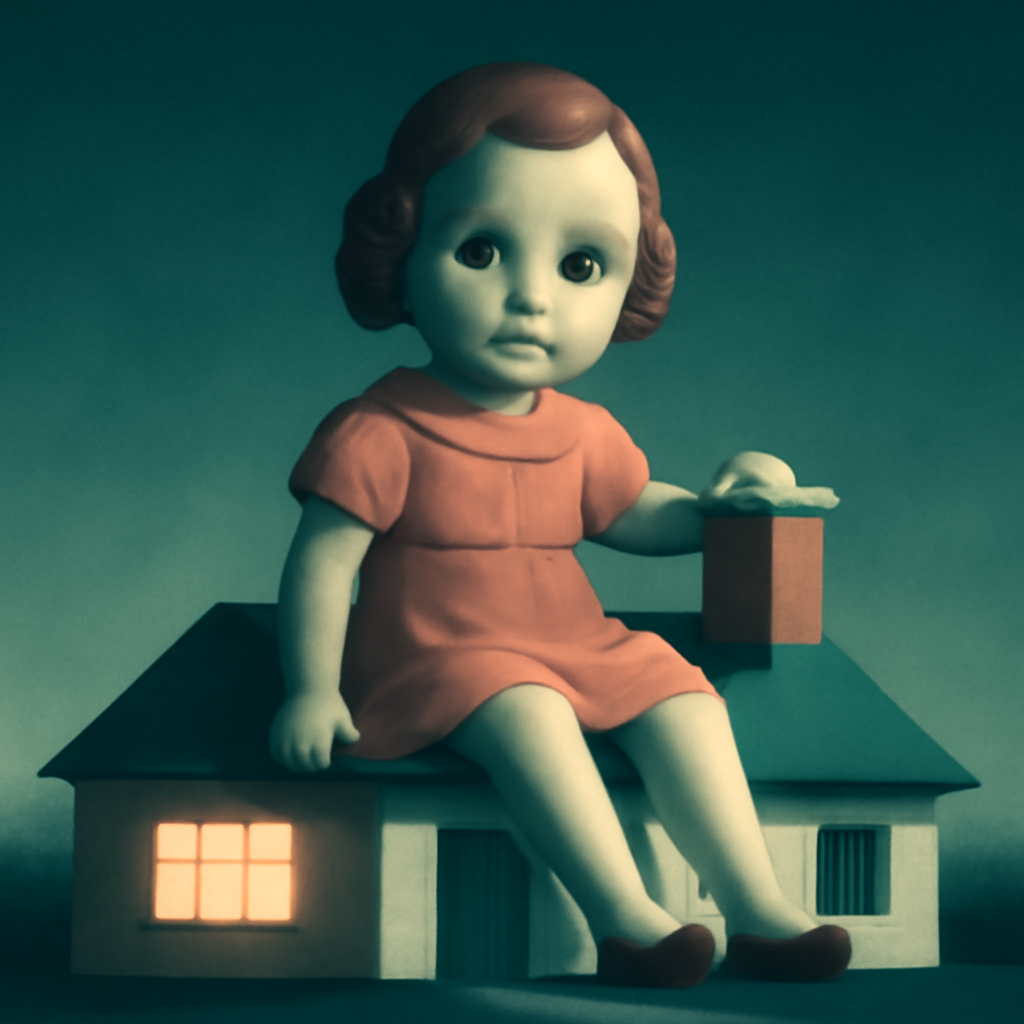
There is a quieter impossibility underneath all of this, and it has nothing to do with the doll. The on-screen credit for "Living Doll" reads Charles Beaumont. That is the surface. But the episode was written by Jerry Sohl, a friend who took the work on without any public acknowledgment. Sohl never received a writing credit on The Twilight Zone, even though he wrote three teleplays that made it to air. He revealed this years later to author Marc Scott Zicree. The credit stayed with Beaumont. The voice stayed with Sohl. Why? Because by 1963, Beaumont was losing the ability to write. He was thirty-four years old, and something was happening to his mind — his speech, his concentration, his memory — that no one could fully explain at the time. It was eventually attributed to a combination of Alzheimer's disease and Pick's disease, both advancing simultaneously. His friend William F. Nolan described it simply: he just dusted away. So the episode about a surface that speaks with a hidden voice was itself a surface speaking with a hidden voice. That is not a coincidence you need to stretch to find. It is sitting right there in the credits. Think of the wind-up sentence one more time. Tina's voice comes out of a painted face, a commercial casing, a product. The actual agency — whatever is driving the words — is somewhere underneath the surface, unreachable, unnamed. The episode works the same way. A familiar name on the title card. Another voice entirely moving underneath it. This is the kind of hidden message you mentioned wanting to find in horror, Mike — not a code buried in the plot, but a structural rhyme between the story and the act of making it. Sometimes the most unsettling thing about a piece of horror is that it is doing, at the level of its own production, exactly what it is describing. The doll is not just a puppet. The episode is not just a teleplay. Both are credited surfaces with concealed engines. What that does to the viewing experience, once you know it, is subtle but real. The authority you feel coming off the screen — the sense that something is speaking with more weight than a toy should carry — has a second source you were never shown. Sohl's voice is in there, behind Beaumont's name, the same way Tina's intent is in there behind the product-demonstration cadence. And now that voice is about to stop being linguistic entirely. The sentence has done its work. What comes next is not a word. It is a placement.