Five Inches
The Penthouse Trap
The Wager
Cressner’s Game
Onto the Wind
Pressure by Inches
The Mind Outside
The Return Inside
The Open Edge
How Fear Works

Transcript
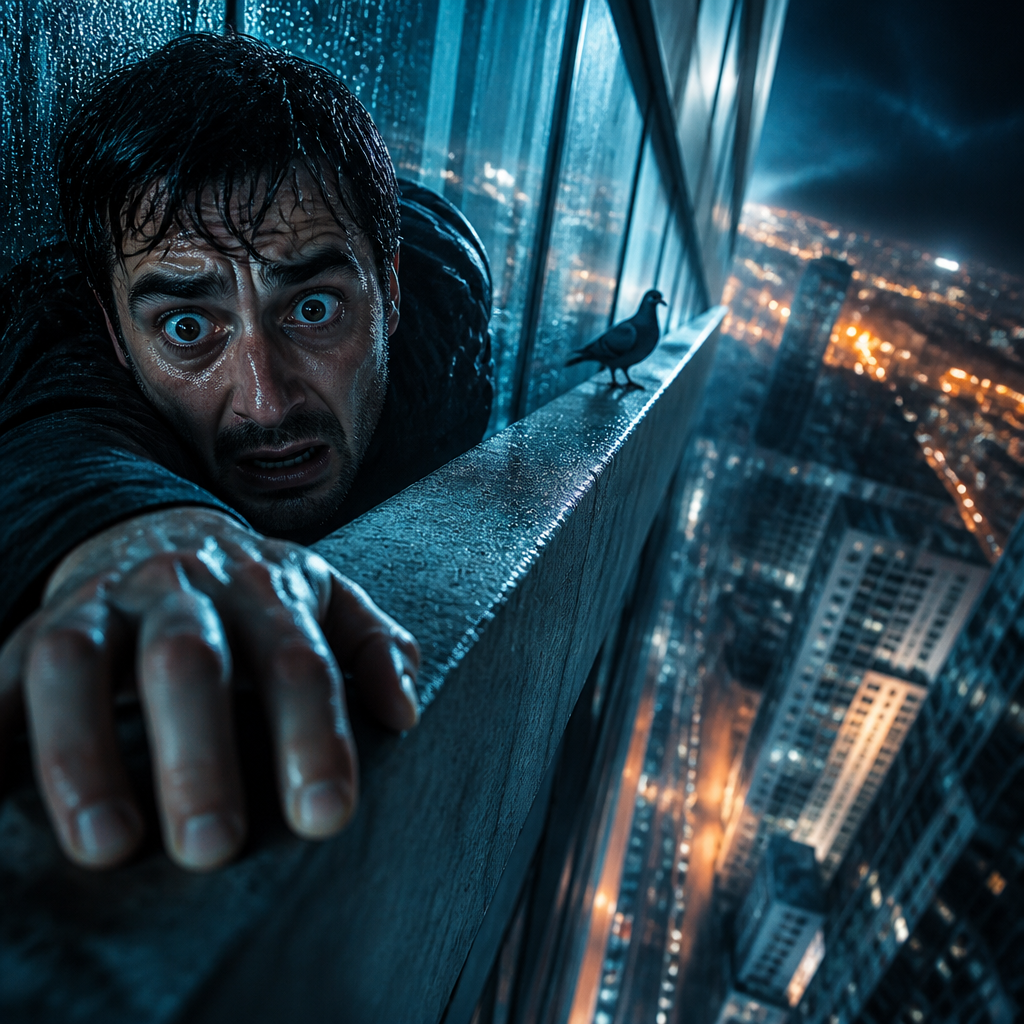
SPEAKER_2: That question — how does anyone end up outside that window — pulls us back inside. Into the room where it all starts. And the room matters, Mike, because the room is the trap before the ledge is ever the trap. SPEAKER_1: The story first appeared in Penthouse magazine in July 1976, then landed in Night Shift — King's first short story collection, published by Doubleday in February 1978. That context tells you something useful: this is early King, writing tight, writing lean, proving what a short form can hold. SPEAKER_2: And what it holds here is a pressure chamber. Not a sprawling novel with room to breathe. Every scene has to earn its place, which means the penthouse isn't just a backdrop — it's doing structural work from the first line. SPEAKER_1: The story is told in first person, from the perspective of a man named Stan Norris. He's in his thirties, a former professional tennis player, now coaching at a country club. Athletic. Disciplined. Someone who knows how to manage his body under pressure. SPEAKER_2: And he has been having an affair with a woman named Marcia Cressner. Her husband — a wealthy, powerful man known simply as Cressner — has found out. And Cressner has brought Stan to his penthouse to deal with it. SPEAKER_1: Now notice what King skips. He doesn't give us the romance. He doesn't show us the affair unfolding, the stolen evenings, the risk accumulating. He drops us directly into the consequence. Stan is already in the room. Already caught. The story begins at the moment when escape has already become complicated. SPEAKER_2: That compression is a choice, and it's a smart one. Because the feeling it creates — of having missed the window where you could have walked away — is exactly the feeling the story wants you sitting inside. SPEAKER_1: Think of it like a locked room that doesn't look locked yet. You walk in, the door closes behind you, and only then do you realize the walls are closer than they appeared. SPEAKER_2: That's the penthouse. It's lavish. It's controlled. Cressner lives above the city — literally above it, in a penthouse that insulates him from consequence, from noise, from anyone who might interfere. He has bodyguards. He has privacy. He has the kind of wealth that makes other people's problems disappear quietly. SPEAKER_1: And Stan Norris has walked straight into the center of it. SPEAKER_2: Already behind. Already watched. Cressner knew about the affair before Stan arrived. Which means everything in that room — the calm, the furniture, the polite surface of the conversation — is performance. Cressner is not surprised. He has been waiting. SPEAKER_1: And here's the thing about that room, Mike. While Stan is standing inside it, while Cressner is being composed and deliberate and in control — the ledge is already there. Outside the glass. Five inches of concrete running around the building's exterior, forty-three stories above the street. It isn't mentioned yet. It isn't visible in the scene. But it's present the whole time, like a mechanism that's already been wound. SPEAKER_2: [short pause] That's what makes the penthouse so unsettling in retrospect. Every detail of its comfort — the warmth, the height, the privacy — is also a detail of the trap. The height that makes Cressner feel powerful is the same height that makes the ledge lethal. SPEAKER_1: The room and the ledge are the same fact, seen from two different sides of the glass. SPEAKER_2: And Stan doesn't know that yet. He came here expecting — what, exactly? A confrontation. Maybe a payoff. Maybe a threat he could negotiate his way out of. He's a man who's spent his life managing pressure in competitive situations. He thinks he can read the room. SPEAKER_1: But Cressner has already written the room. Every exit Stan might imagine has been accounted for. That's the specific quality of dread King builds here — not the shock of sudden danger, but the slow realization that the danger was always present, that the room was never neutral. SPEAKER_2: It's like when you're watching a scene in a film and you notice, just before the character does, that the door behind them is already locked. The horror isn't the moment they try the handle. It's the moment you realize they haven't tried it yet. SPEAKER_1: Stan is still trying to read the room. Cressner already knows what the room is for. And outside the glass, patient and cold and five inches wide, the ledge is waiting for the conversation to finish.