Five Inches
The Penthouse Trap
The Wager
Cressner’s Game
Onto the Wind
Pressure by Inches
The Mind Outside
The Return Inside
The Open Edge
How Fear Works

Transcript
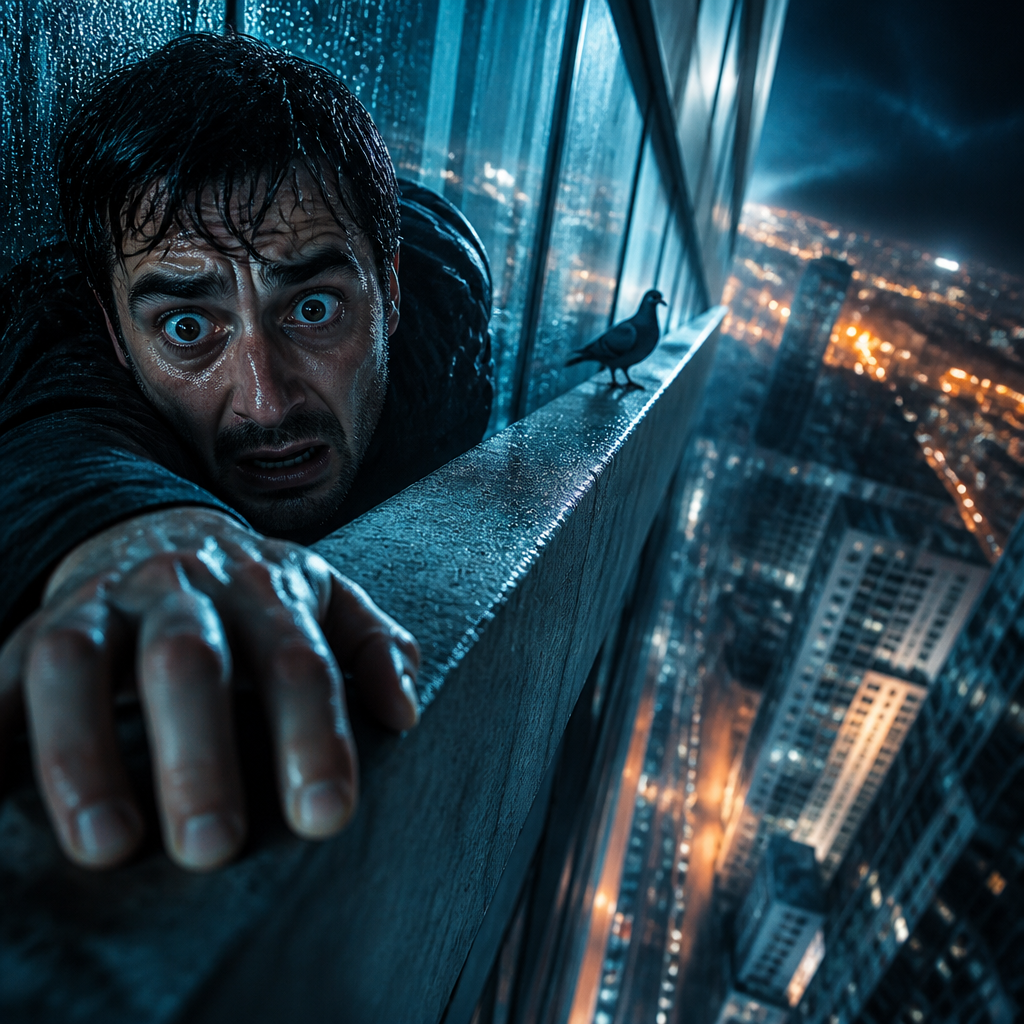
SPEAKER_1: So Cressner has decided gravity isn't enough. SPEAKER_2: Which tells you something important about him. He's not content to set the trap and wait. He wants to be part of it. SPEAKER_1: And the moment he starts inserting himself into the ordeal, the story shifts. The physical danger is still there — the wind, the cold, the five inches. But now there's a second threat, and it's aimed directly at Stan's concentration. SPEAKER_2: Which is the only thing keeping him alive. SPEAKER_1: Exactly. So attacking Stan's focus is functionally the same as attacking his footing. It just doesn't look like violence from the inside. SPEAKER_2: And Cressner knows that. That's the design. He's not throwing things at Stan. He's not cutting the ledge. He's doing things that look almost reasonable — leaning out a window, making noise — but in that context, they're lethal. SPEAKER_1: Think of it this way, Mike. Suppose you're trying to thread a needle in a moving car. Someone in the back seat doesn't need to grab your hand to make you fail. They just need to say your name at the wrong moment. SPEAKER_2: That's the noisemaker. SPEAKER_1: That's exactly the noisemaker. Cressner uses a New Year's Eve noisemaker — the kind of cheap, festive thing you'd find at a party — and sets it off while Stan is mid-circuit on the ledge. SPEAKER_2: A party favor. [short pause] As a weapon. SPEAKER_1: And it works because of where Stan is, not because of what the object is. In any other setting, that noise is nothing. On a five-inch strip forty-three stories up, it's a potential death sentence. SPEAKER_2: The ledge keeps converting ordinary things into crises. We said that with the pigeon. Now it's a noisemaker. The rule doesn't change — the ledge is still the ledge — but everything that touches it gets amplified. SPEAKER_1: And Cressner understands that amplification. He's using the ledge as a multiplier. He doesn't need a weapon. He just needs to introduce the right disturbance at the right moment. SPEAKER_2: Which is a specific kind of cruelty. It's not brute force. It's information control dressed up as entertainment. SPEAKER_1: And that brings us to the coat. SPEAKER_2: The coat is the detail that changes everything, actually. SPEAKER_1: Cressner is wearing a heavy winter coat while he watches. Which means he knew the conditions outside were cold enough to require one. And he didn't tell Stan. SPEAKER_2: He let Stan go out underprepared. SPEAKER_1: Right. And if you're thinking about hidden meanings, Mike, the coat isn't really about the weather. It's about when Cressner's control of the situation began. Not when Stan stepped onto the ledge. Earlier. Before the wager was even spoken aloud. SPEAKER_2: He was already managing the conditions before Stan had agreed to anything. SPEAKER_1: Which retroactively darkens every moment in the penthouse. Every calm word, every polite surface — Cressner was already running the game while Stan was still trying to read the room. SPEAKER_2: The five-inch strip was already loaded before Stan ever touched it. SPEAKER_1: That's a good way to put it. The ledge isn't just a physical space. It's a record of every lie Cressner told before Stan stepped outside. Every false assurance is written into the cold and the wind. SPEAKER_2: So Stan is navigating two things at once. The actual ledge under his feet, and the version of events Cressner constructed for him. And those two things don't match. SPEAKER_1: And when Stan realizes they don't match — when the coat makes the lie visible — that's when anger enters the picture. SPEAKER_2: Which is complicated. Because anger is dangerous on a ledge. SPEAKER_1: It pulls attention inward. It makes you want to react instead of hold still. And holding still is the only viable strategy Stan has. SPEAKER_2: But it also keeps him moving. That's the tension. Pure fear might freeze him. Rage gives him somewhere to direct the energy — toward the next inch, toward getting back inside, toward making Cressner answer for this. SPEAKER_1: So the anger is both a liability and a fuel source. Stan has to manage it the same way he manages the wind — not eliminate it, just keep it from tipping him. SPEAKER_2: There's something almost subjunctive about his whole mental state out there. Everything is conditional. What might happen if the next gust comes. What could happen if the noise startles him again. What he fears will happen if his hands go completely numb. SPEAKER_1: He's living entirely in the zone of what hasn't happened yet but could. Every second is a hypothesis he's trying not to confirm. SPEAKER_2: And Cressner is exploiting that zone deliberately. Every interruption — the noisemaker, leaning out the window — is a reminder that the worst-case hypothesis is still available. Still possible. Still close. SPEAKER_1: He's not just watching Stan suffer. He's actively refreshing the fear. Making sure it doesn't settle into something Stan can manage. SPEAKER_2: Which is what makes him more than a jealous husband with money. He understands the architecture of dread. He knows that sustained fear needs maintenance. SPEAKER_1: And he's providing that maintenance from a warm room, in a winter coat, with a party noisemaker in his hand. SPEAKER_2: The comfort of his position is part of the cruelty. He's not risking anything. Stan is risking everything. And Cressner has arranged it so that gap is as wide as possible. SPEAKER_1: But Stan keeps moving. Depleted, cold, angry, startled — and still moving. And that forward motion is going to matter enormously when he finally gets back inside. SPEAKER_2: Because coming back through that window isn't going to feel like safety. It's going to feel like the beginning of something else.