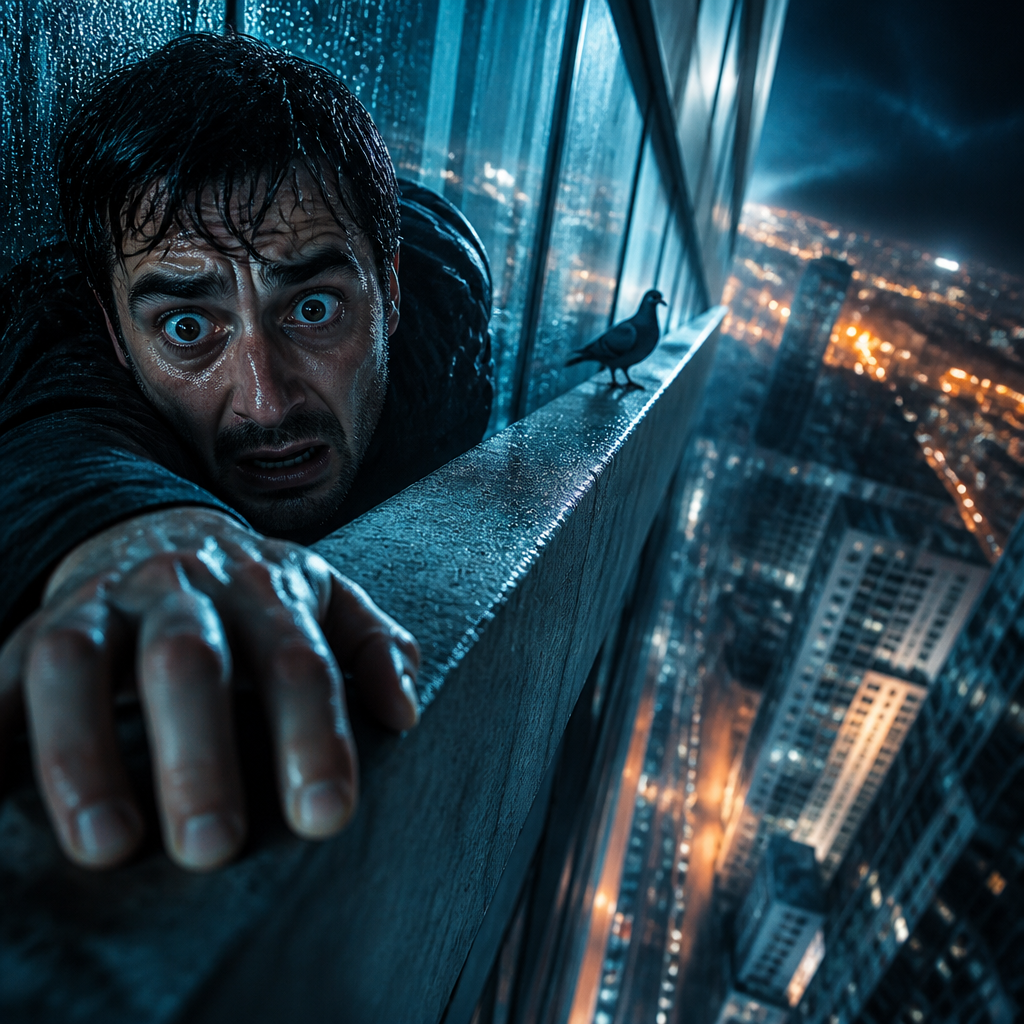
Five Inches
The Penthouse Trap
The Wager
Cressner’s Game
Onto the Wind
Pressure by Inches
The Mind Outside
The Return Inside
The Open Edge
How Fear Works

Transcript
SPEAKER_1: So Cressner has Stan in the room. He knows about the affair. He has bodyguards at the door and the full weight of his wealth and criminal reach behind him. And what he does next is the move that turns this from a confrontation into a trap with no clean walls. SPEAKER_2: He offers Stan a choice. SPEAKER_1: He offers Stan a choice. Walk the ledge — the five-inch strip running around the exterior of the penthouse, forty-three stories above the street — and if Stan completes the circuit, he walks away with Marcia and twenty thousand dollars. Refuse, and Cressner will have him framed for heroin possession. SPEAKER_2: And here's where I'd push back on calling that a choice at all. Because a real choice requires at least one option that isn't already poisoned. Suppose you're told: take door A, which might kill you, or take door B, which definitely destroys your life. That's not a fork in the road. That's a corridor with two bad ends. SPEAKER_1: Exactly. Cressner has pre-loaded both exits. The ledge is physically lethal. The heroin frame is legally and socially lethal. Stan's consent to the wager isn't really consent — it's the last move available on a board that was set before he arrived. SPEAKER_2: Which is what makes it coercion dressed up as a gentleman's bet. Cressner uses the language of gambling — a wager, a prize, a fair contest — but the structure underneath is pure domination. He's not offering Stan a sporting chance. He's offering him the illusion of agency so that the cruelty has a polished surface. SPEAKER_1: And that surface matters to Cressner. He's done this before. The story makes clear that this isn't the first time he's run this particular game. He claims he doesn't lose. Which means the wager isn't improvised revenge — it's a practiced ritual. Stan isn't a wronged husband's target. He's the latest entry in a pattern. SPEAKER_2: That detail changes the moral weight of the whole thing, doesn't it. If this were a crime of passion — a jealous husband losing control — there'd be something almost comprehensible about it. But Cressner is calm. He's organized. He's done this enough times to have refined it. SPEAKER_1: Which means the five-inch strip outside that glass isn't just a ledge anymore. It's a printed rule. A contract line drawn in concrete. Cressner has converted the building's architecture into his personal legal code, and Stan is now subject to it whether he agreed to the terms or not. SPEAKER_2: And the story is honest about Stan's position in a way that makes the moral pressure more complicated. He's not an innocent bystander. He was having an affair with another man's wife. He walked into this penthouse knowing there was risk. So there's a version of this where you could say — well, he made choices that led here. SPEAKER_1: Sure. But that's exactly the trap the story sets for the reader, too. Because the moment you start doing that moral math — weighing Stan's guilt against Cressner's response — Cressner wins the framing. He wants you to feel like the wager is proportionate. Like this is justice with a theatrical flair. SPEAKER_2: [short pause] And it isn't. An affair is a betrayal. Forcing a man onto a forty-three-story ledge in the cold is something else entirely. The gap between those two things is where the story's real horror lives. SPEAKER_1: That gap is what hollows out Stan's consent. He says yes to the wager, technically. But yes under those conditions isn't agreement — it's the only move left. And the listener feels that, even if Stan never quite names it. You're not watching a man accept a bet. You're watching a man realize the room was never going to let him leave any other way. SPEAKER_2: Which is a very specific kind of dread. Not the shock of sudden violence. Not the slow creep of the supernatural. It's the feeling of watching someone's options close off one by one, quietly, in a well-lit room, while the person doing it stays perfectly composed. SPEAKER_1: And Cressner is composed. That's the detail King keeps returning to in the setup. He's not raging. He's not threatening in the way a frightened man threatens. He's deliberate. He presents the wager the way you'd present a business arrangement — here are the terms, here is the prize, here is the penalty for refusal. Take your time. SPEAKER_2: The calm is the menace. Because it tells you that Cressner has already accounted for every response Stan might have. Anger, negotiation, refusal, pleading — he's seen all of it before. None of it changes the terms. SPEAKER_1: So Stan says yes. And the five-inch strip of concrete outside the glass stops being an architectural detail and becomes something closer to a sentence handed down by a man who has appointed himself judge, jury, and audience. SPEAKER_2: Which brings us to the man himself. Because understanding why the wager works as a fear machine means understanding who built it — and why Cressner finds the whole thing so satisfying to watch.