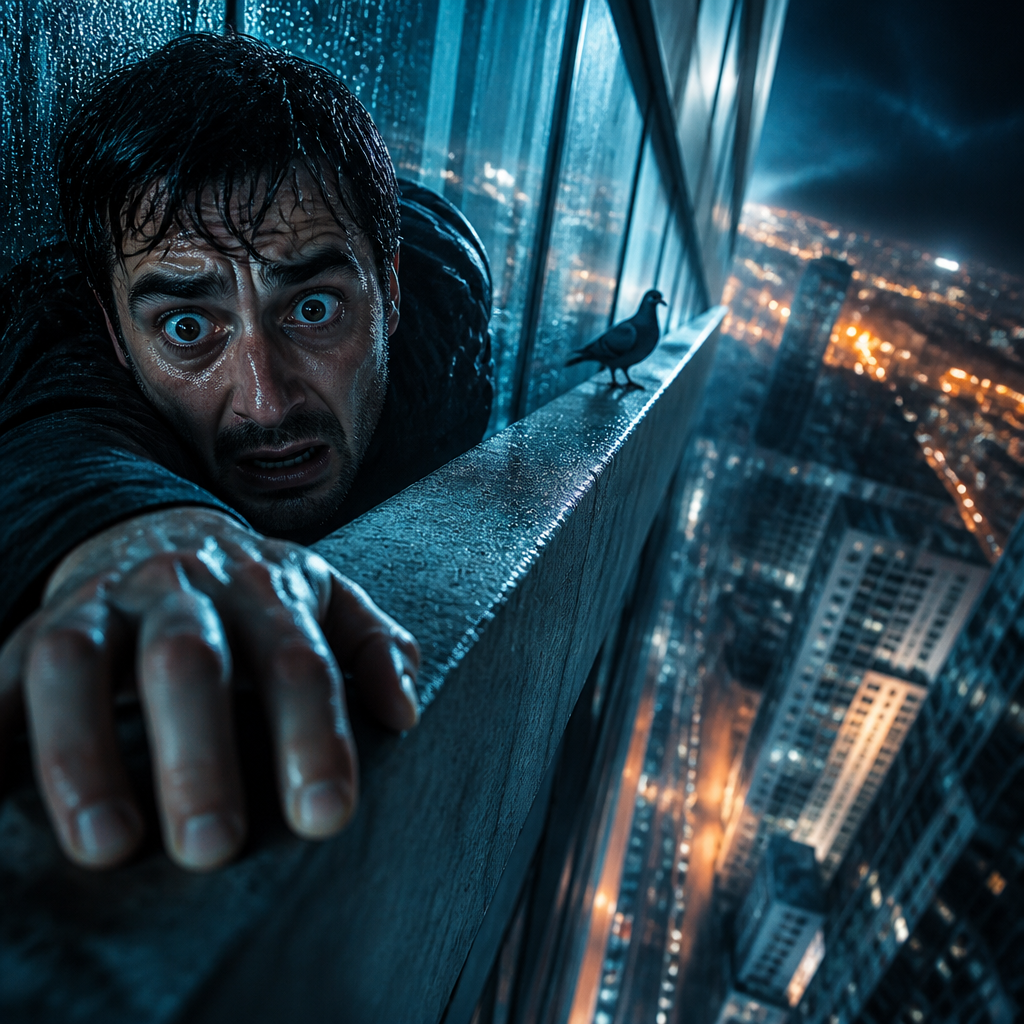
Five Inches
The Penthouse Trap
The Wager
Cressner’s Game
Onto the Wind
Pressure by Inches
The Mind Outside
The Return Inside
The Open Edge
How Fear Works

Transcript
SPEAKER_2: The man who enjoys the rule. That's the phrase that keeps pulling at me, because it points to something specific about Cressner that goes beyond jealousy or revenge. SPEAKER_1: Right. And I want to slow down here, because I think there's a version of Cressner that's easy to misread. You could look at the setup — wealthy husband, cheating wife, rival he wants to punish — and file him under 'jealous crime boss.' But that framing undersells what King is actually doing with him. SPEAKER_2: Because Cressner isn't jealous. Not really. He's not wounded. He's not even particularly angry in the way a man who's been betrayed is angry. He's calm. He's organized. He's done this before. SPEAKER_1: That last detail is the one that changes everything. This isn't a crime of passion. It's a practiced ritual. Cressner has run this wager — or something very close to it — on other people before Stan. He claims he doesn't lose. Which means Stan isn't a wronged husband's target. He's the latest entry in a pattern. SPEAKER_2: And that reframes the whole encounter. If this were improvised rage, there'd be something almost human about it. But Cressner has refined this. He's iterated on it. The wager isn't a punishment — it's a production. SPEAKER_1: A production. That's exactly the word. Because what Cressner actually wants isn't Stan dead. He could arrange that quietly, with his resources, without any of this. What he wants is to watch. He wants fear made visible. SPEAKER_2: I'd push on that slightly. I think it's more than watching. It's about the architecture of the situation. Cressner is warm inside, behind glass, in control of every variable — the height, the cold, the terms, the bodyguards at the door. The ledge is his theater, yes, but he's also the director, the set designer, and the only one who knows how the show ends. SPEAKER_1: That's a sharper way to put it. He's not just a spectator. He's the one who built the stage. And the five-inch strip outside that glass — that narrow concrete line we've been circling since the beginning of this episode — that's his display case. He puts fear in it and watches it perform. SPEAKER_2: Which is why the gambling language matters so much. Think of how a casino works — the house frames every transaction as a game, as entertainment, as something you chose to participate in. The structure of risk and reward gives the whole thing a civilized surface. Cressner does the same thing. He wraps coercion in the vocabulary of a sporting wager. SPEAKER_1: And that vocabulary does real work. It lets him feel like a connoisseur rather than a predator. He's not forcing a man onto a ledge — he's offering a contest. The cruelty gets a polished surface, and the polish is part of what makes him so unsettling. SPEAKER_2: Although — and I want to complicate this a little — I'm not sure Cressner actually needs the polish for his own benefit. I don't think he's deceiving himself. He knows exactly what this is. SPEAKER_1: Go on. SPEAKER_2: The gambling language isn't self-justification. It's aesthetic preference. Cressner finds domination more satisfying when it's dressed as a game because the game requires the other person to participate, to try, to hope. A simple execution gives him nothing to watch. The wager gives him a performance. Stan's effort, Stan's fear, Stan's will to survive — those are the entertainment. And the ledge is where all of that becomes visible. SPEAKER_1: So the five-inch strip isn't just a physical threat. It's a stage that converts a man's interior life — his terror, his concentration, his desperation — into something Cressner can observe from a comfortable chair. SPEAKER_2: Exactly. And that's a very specific kind of sadism. It's not impulsive. It's curatorial. SPEAKER_1: Now set that against Stan. Because the contrast between these two men is doing a lot of quiet work in the story. Stan is a former professional tennis player. His whole career was built on physical discipline — reading conditions, managing pressure, trusting his body under competitive stress. He has something Cressner will never have, which is a trained relationship with his own physical limits. SPEAKER_2: [short pause] But Cressner has something Stan will never have either. He owns the room. He owns the height. He owns the consequences. Stan's discipline is real, but it operates inside a space that Cressner has already defined. SPEAKER_1: Right — and that asymmetry is the story's central tension before Stan ever steps outside. One man has a body that knows how to endure. The other man controls every condition that body will have to endure. Suppose you're a skilled climber, and someone else gets to choose the mountain, the weather, and whether there are handholds. Your skill is real. But the game is still theirs. SPEAKER_2: And Cressner knows that. He's not threatened by Stan's athleticism. If anything, it makes the spectacle better. A man with no physical ability would just fall. A man with Stan's background will fight for every inch, and that fight is what Cressner came to see. SPEAKER_1: Which is a genuinely dark inversion. Stan's greatest asset — the thing that might keep him alive — is also the thing that makes him more valuable to Cressner as a subject. His competence is part of the entertainment. SPEAKER_2: And Cressner has arranged everything so that competence is the only card Stan holds. No negotiation. No exit. No appeal to reason or mercy. Just the ledge, the cold, and whatever Stan's body and mind can manage out there. SPEAKER_1: So when Stan finally steps through that window — when the warm, controlled air of the penthouse gives way to the open city — he's not just crossing a physical threshold. He's entering a space that Cressner has designed specifically to make fear legible. Every gust, every inch of progress, every moment of hesitation — all of it visible from inside, where Cressner is already watching, already warm, already certain he knows how this ends. SPEAKER_2: And Stan has no idea yet just how certain Cressner is. That gap — between what Stan believes is possible and what Cressner has already arranged — is where the story's next layer of dread is waiting.