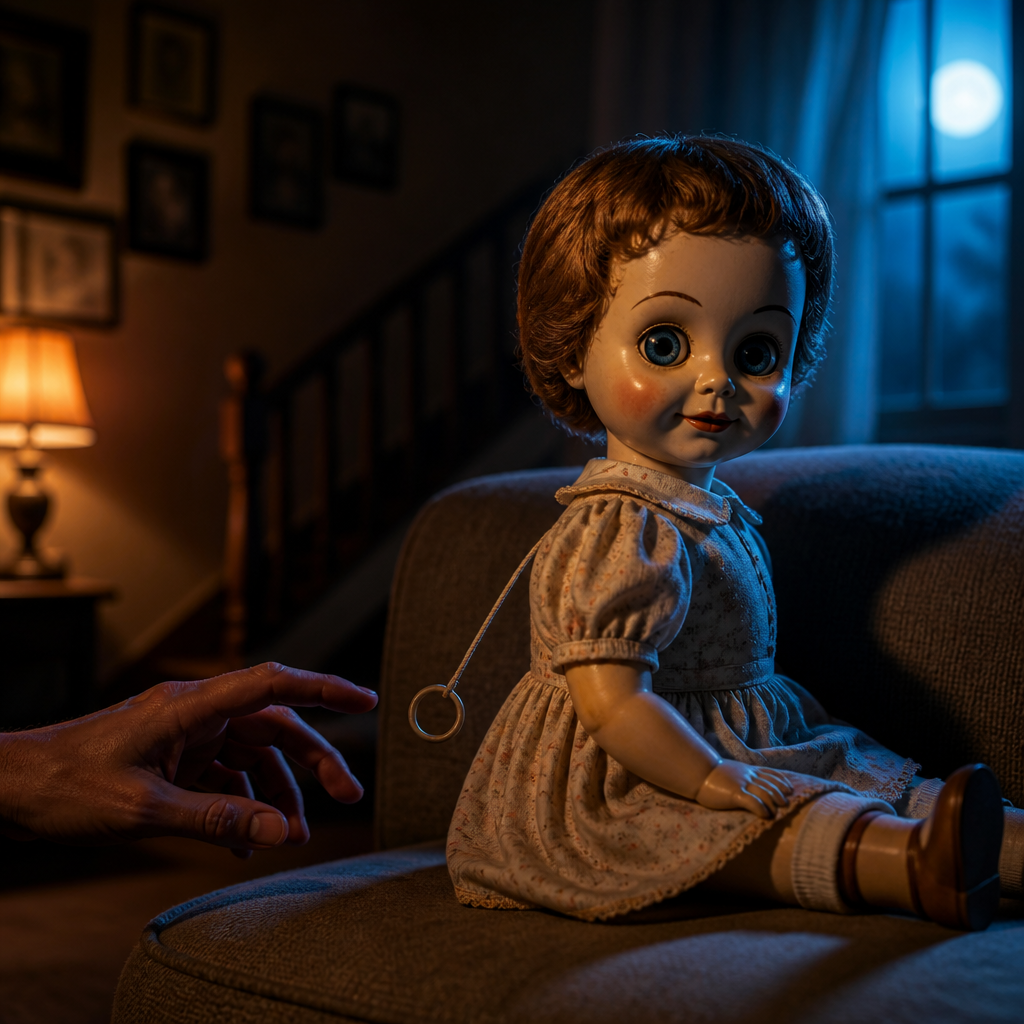
The Doll That Judges
Why a Doll? The Uncanny Toy
The Pressure Chamber Plot
Erich at the Center of the Trap
Suburbia in Shadow
The Voice That Repeats
Monster, Protector, or Symptom?
Before Chucky: Tina's Horror Lineage
The System Turns Back
How Fear Hides in Plain Sight

Transcript
One house. One family. One doll. That's the entire architecture of the trap. Erich Streator is effectively trapped there. The suburban home — orderly, middle-class, normal — becomes the mechanism of his destruction. The space that was supposed to signal safety is the thing that seals him in. Last time, we established why a doll carries such symbolic weight — innocent, familiar, and suddenly judgmental. Now the key idea is how the plot weaponizes that weight. Think of the split at the center of the episode: Christie loves Tina. Erich fears her. The same object is comfort for a child and a lethal threat for an adult. That split is where the pressure begins. The episode compresses its build-up fast. Tina greets Christie warmly. Then Erich handles her — and the voice shifts. Calm, childlike, direct: she hates him. Then a death threat. No slow burn. Erich's first move is denial — he assumes his wife is running a prank. That rationalization is the trap closing. Denial keeps him inside the system longer, exposed to every escalation that follows. Instead of focusing on Erich's repeated attempts to destroy Tina, consider how the house's layout and design amplify his sense of entrapment. Each room becomes a stage for his growing paranoia, with every failed attempt echoing through the halls, reinforcing his isolation. He has now proven — to himself — that the doll cannot be controlled. His authority is the thing being dismantled, not the plastic. The episode's core mechanic is simple: the house itself becomes a character, its walls closing in as Erich's desperation grows, creating a claustrophobic atmosphere that heightens the unpredictability of Tina's behavior. The plot of Living Doll is a pressure chamber, Mike. Each move Erich makes to dominate Tina further exposes how fragile his control is. [short pause] He doesn't lose power at the end. He reveals how little of it he really had. Tina's final line — delivered after his death — seals the structure completely. The house has been fully colonized. But suspense matters because of the person under pressure. Next, we turn to Erich.