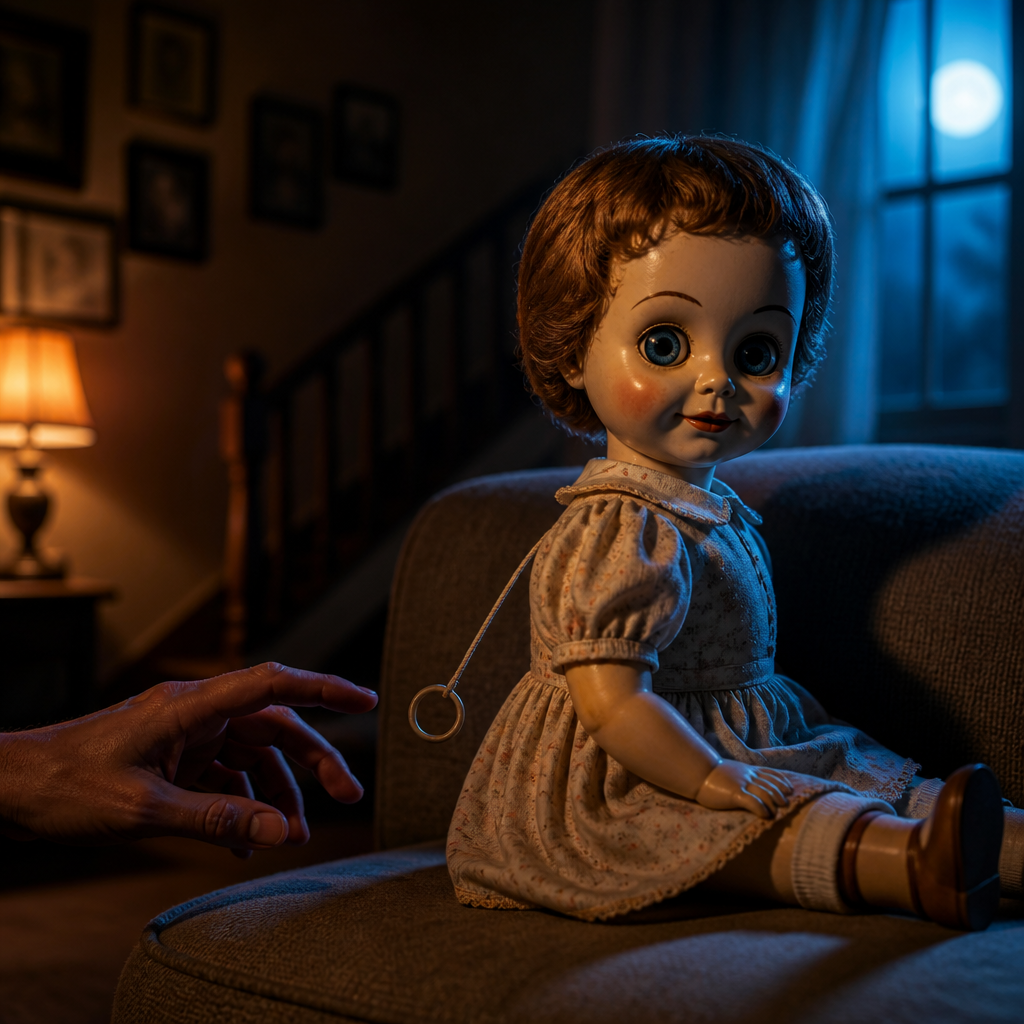
The Doll That Judges
Why a Doll? The Uncanny Toy
The Pressure Chamber Plot
Erich at the Center of the Trap
Suburbia in Shadow
The Voice That Repeats
Monster, Protector, or Symptom?
Before Chucky: Tina's Horror Lineage
The System Turns Back
How Fear Hides in Plain Sight

Transcript
SPEAKER_1: Here, suspense comes from a simple, legible system — minimal action, maximum dread. The deeper question: what is the episode actually saying about control? SPEAKER_2: The key idea is that Erich meticulously builds a system of control, which ultimately becomes his own undoing. This is a moral feedback loop, where his actions create the very trap he falls into. SPEAKER_1: So what does his system of control actually look like inside that house? SPEAKER_2: He manipulates information, space, and emotional access, transforming the environment into a trap. This architecture of control becomes his own prison. SPEAKER_1: And Tina enters that architecture and reflects it back. SPEAKER_2: Yes, operationally. Each attempt by Erich to dominate Tina reveals his limitations. He tries to eliminate her — she returns. He attempts to control the narrative — yet remains unconvincing. [short pause] The system he built to isolate others now isolates him. SPEAKER_1: Wait — so the reversal isn't rhetorical. It's structural. SPEAKER_2: Exactly. The episode doesn't preach to Erich; it uses his logic against him. He turned the household into a surveillance zone for the powerless. Now, he is the one under scrutiny — by something seemingly insignificant. SPEAKER_1: This follows the Twilight Zone pattern — where a character's cruelty shapes their own punishment. SPEAKER_2: Precisely. And what makes it land is that Tina functions as moral feedback, not supernatural attack. For example — the pressure returns to the person who set the cruel system in motion. The controller. The audience reads her as consequence, not monster. SPEAKER_1: Mm. So his confidence — that was actually his vulnerability. SPEAKER_2: His confidence assumed he could always control the board. Once that breaks, the containment he imposed on others becomes his own. Fewer options. Narrowing space. That's how fear spreads when power inverts. SPEAKER_1: For everyone tracking the suspense mechanics across this course — the takeaway is that abuse often contains the blueprint for its own undoing. SPEAKER_2: That's it. The system turns back because it was always a system — and systems don't care who's standing inside them. Which sets up the final question: why does this small, quiet episode still teach us something essential about how fear works.