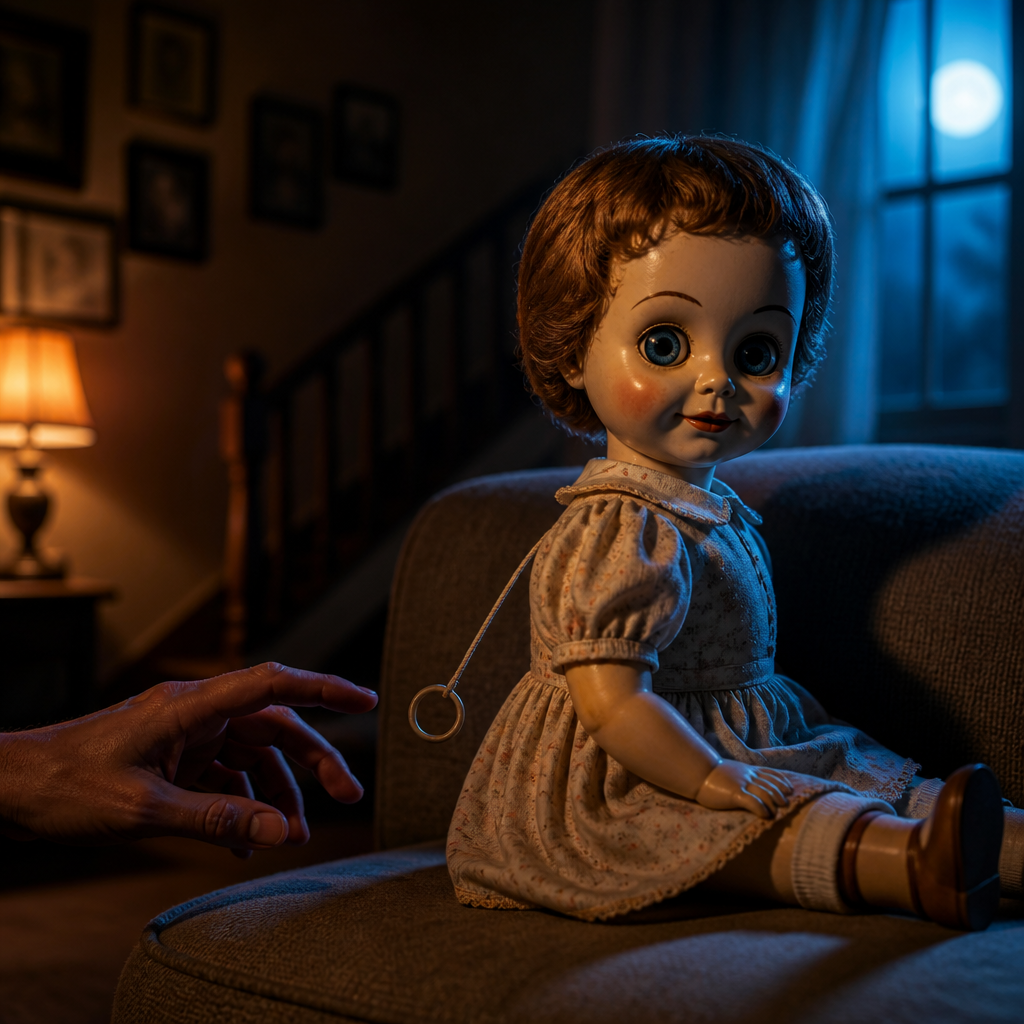
The Doll That Judges
Why a Doll? The Uncanny Toy
The Pressure Chamber Plot
Erich at the Center of the Trap
Suburbia in Shadow
The Voice That Repeats
Monster, Protector, or Symptom?
Before Chucky: Tina's Horror Lineage
The System Turns Back
How Fear Hides in Plain Sight

Transcript
SPEAKER_1: Tina's voice doesn't change — the moral weight behind it does. So what actually is she? SPEAKER_2: The episode's refusal to provide a clear answer is intentional, serving as the ethical engine driving the narrative. We can track three serious readings, and each one changes how the ending lands. SPEAKER_1: Walk me through them. SPEAKER_2: First, the evil-doll interpretation: a toy comes alive and kills a man, fitting the killer-doll subgenre Tina helped establish. Here, the horror lies in corrupted innocence and a domestic space turned threatening. SPEAKER_1: But that feels incomplete. Tina doesn't threaten randomly. SPEAKER_2: Right — and that's the second reading. She responds specifically to Erich's hostility. She tells Christie she loves her. She tells Erich she'll kill him. Some see her as a force of good, defending the household from an abusive man. SPEAKER_1: So not monster — avenger. SPEAKER_2: Avenger, or moral instrument. Think of the structure: Erich is emotionally cruel before Tina ever speaks. Her hostility arrives proportional to his. The household is already a site of latent violence. SPEAKER_1: And the third reading? SPEAKER_2: Psychoanalytic: Tina as the externalized voice of Christie's silenced fear. Children that age don't experience the uncanny valley like adults, allowing Christie to bond with Tina naturally. [short pause] What if the doll is carrying what the child cannot safely say? SPEAKER_1: So the doll speaks the anger Christie has no permission to express. SPEAKER_2: Exactly. Academic analysis frames this through childism — prejudice against children, the structural dismissal of their inner lives. Erich refuses parental responsibility. Tina becomes resistance to that refusal. SPEAKER_1: But why doesn't the episode just confirm one? SPEAKER_2: Confirming one interpretation flattens the others. Research shows that uncertainty about agency enhances the feeling of threat. Is she supernatural? A projection? The episode holds all three open simultaneously. SPEAKER_1: Mm. And that shifts the moral stakes depending on which reading someone brings. SPEAKER_2: Completely. If she's evil, Erich is a victim. If she's an avenger, he earned it. If she's a symptom, the horror is already human. Refusing to explain Tina makes the episode more ethically powerful — not less. And it points somewhere larger: horror often lets objects carry what people cannot say.