The Doll That Judges
Why a Doll? The Uncanny Toy
The Pressure Chamber Plot
Erich at the Center of the Trap
Suburbia in Shadow
The Voice That Repeats
Monster, Protector, or Symptom?
Before Chucky: Tina's Horror Lineage
The System Turns Back
How Fear Hides in Plain Sight

Transcript
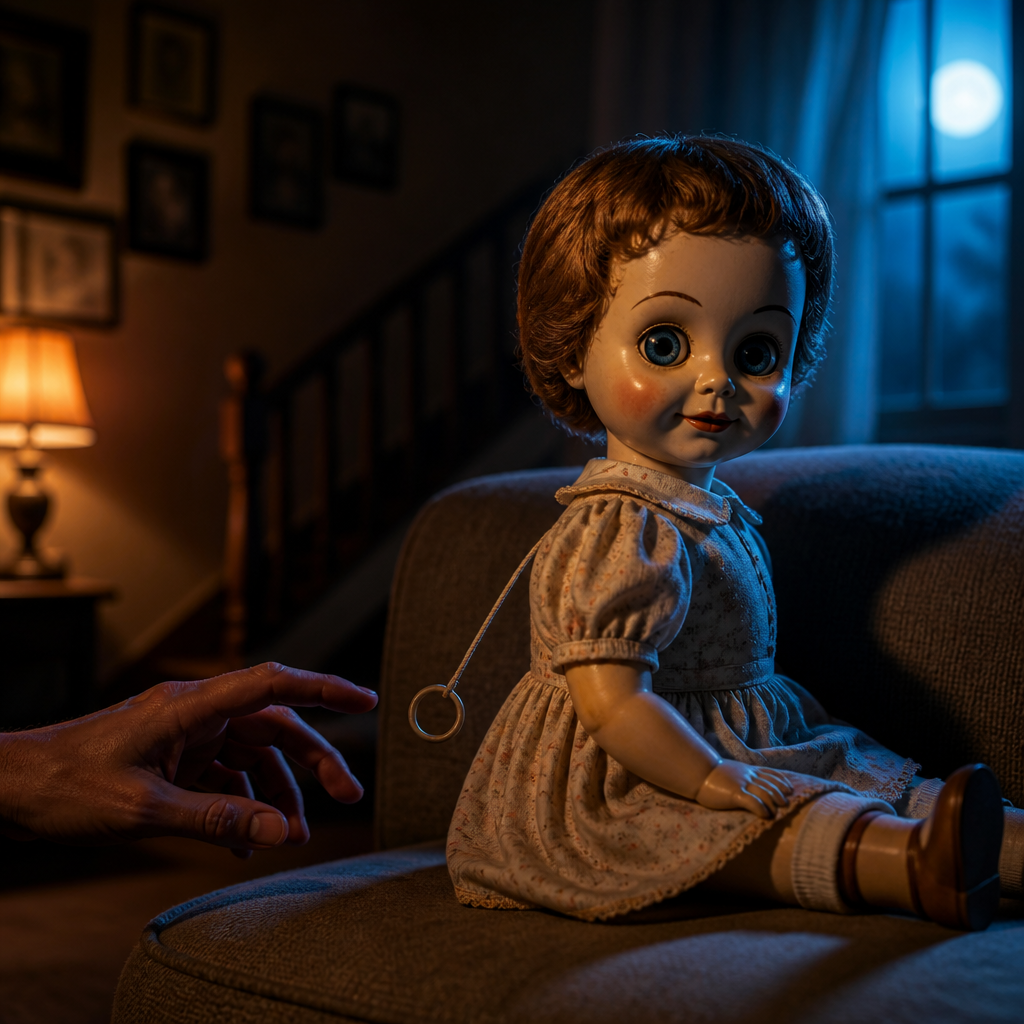
Lower the music. The doll is on the floor. The menace is standing upright. Erich Streator enters the scene with simmering resentment, not just towards the doll, but towards Annabelle's decision to buy it without his input and Christie's growing attachment to it. That resentment tells you everything before Tina says a single threatening word. Last time, Mike, we mapped the plot as a pressure chamber. Now the key idea is what fuels that trap. It isn't supernatural mechanics. It's Erich himself. He is emotionally cruel and controlling. His criticism and anger create a wedge between him and his family, fostering an environment of emotional isolation and control. Think of it like a moral machine: his own traits become the gears that eventually destroy him. The moment Tina first shifts is precise. Alone with Erich, her greeting changes — she tells him she doesn't like him. His immediate response? He accuses Annabelle of running a prank with a hidden device. That rationalization keeps him inside the system longer. And it makes him look unstable to everyone else, because Tina stays silent in front of witnesses. That means Erich is caught in an epistemic bind. His private experience is real. Unverifiable. Tina escalates. Dislike becomes a direct death threat, aimed specifically at Erich. He tries to destroy her — a box, a vise, a blowtorch. Those attempts fail. Annabelle and Christie emotionally bond with Tina, further isolating Erich within his own family, creating a social dynamic that traps him. [short pause] By the final act, he is staying up through the night, guarding against a child's toy. The trap has moved from physical threat to total psychological occupation. The key takeaway, Mike, is how Tina becomes a symbol of protection and retribution, reflecting the family's emotional alignment against Erich's moral failings. Scholars reading the episode as postwar social criticism point to exactly this structure: the supernatural arrives not randomly, but as judgment proportional to the cruelty already present. Erich is both victim and source. He didn't stumble into a trap. He built it himself. Once his psychology is clear, the setting becomes more than background. The house itself starts to speak.