The Doll That Judges
Why a Doll? The Uncanny Toy
The Pressure Chamber Plot
Erich at the Center of the Trap
Suburbia in Shadow
The Voice That Repeats
Monster, Protector, or Symptom?
Before Chucky: Tina's Horror Lineage
The System Turns Back
How Fear Hides in Plain Sight

Transcript
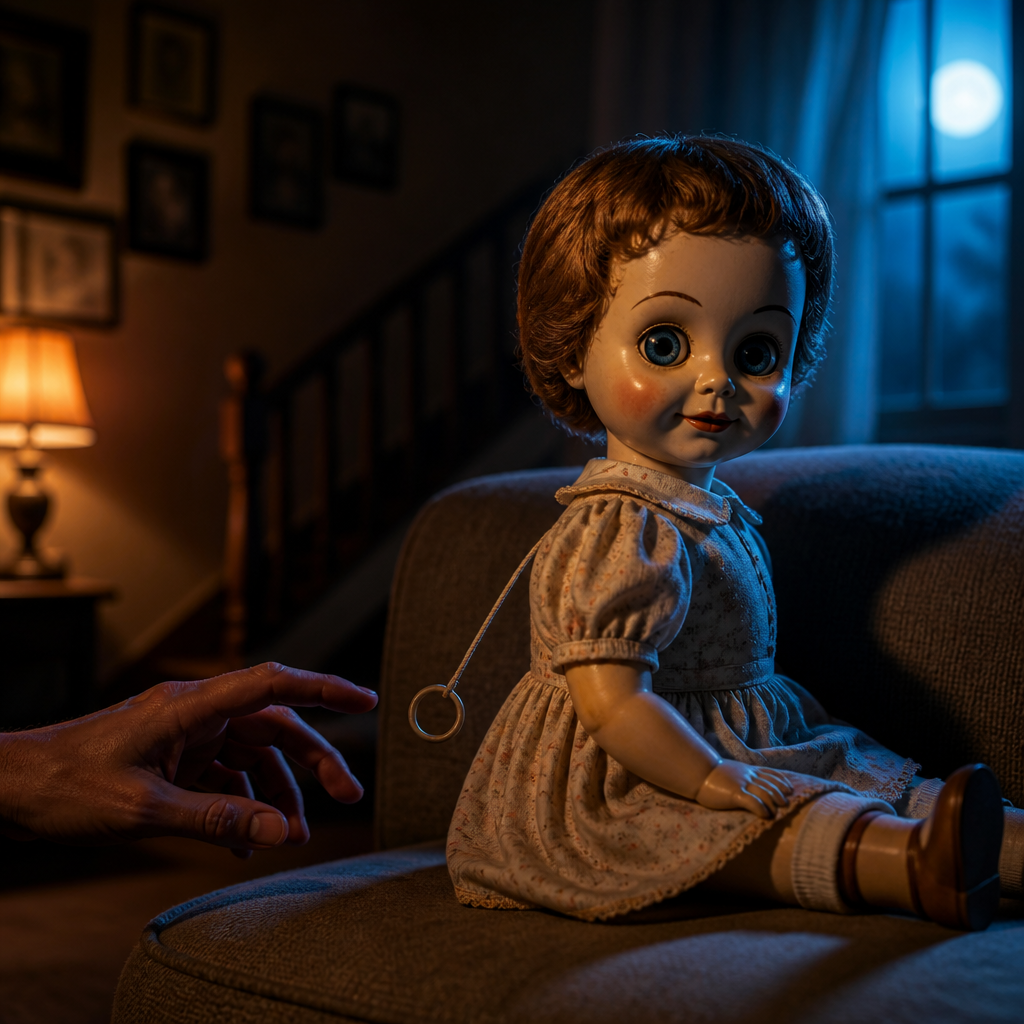
A pull-string toy in a quiet room. No one reaches for it. The string moves anyway. Talky Tina was marketed as a mass-market toy — a lifelike creation of plastic and springs. To Christie, her opening line is warm: my name is Talky Tina, and I love you. Then Erich picks her up. [short pause] Same cadence. Different words. My name is Talky Tina, and I'm going to kill you. Last time, we established the house as a concealed horror space — architecture that promises order and delivers collapse. Now the key idea is what fills that space with dread. Not elaborate action. A voice. The script's minimalism in repetition — love, hate, kill — serves as a psychological trigger, intensifying Erich's paranoia and fear. Think of how a fire alarm works. It startles. The fifth time, your body responds before your mind does. Repetitive verbal cues act as psychological triggers, creating a sense of inevitability and entrapment for Erich, exacerbating his paranoia. That means by the third time Tina speaks, you aren't waiting for new information. You're bracing. The episode reinforces this structurally: Erich repeatedly believes he has disposed of the doll, then encounters her again. False resolution. Renewed fear. A loop. Critics highlight Tina's repetition as the core psychological trigger, overshadowing architectural elements like the staircase. Time magazine noted how her simple repeated line culminates in the literal fulfillment of her threat, making the voice itself the engine of the story. Modern retrospectives confirm it: Tina's enduring cultural power comes less from plot mechanics than from the simplicity of one repeated phrase. Less new information, Mike. More fear. Rod Serling's closing narration frames Tina not as a monster but as a guardian — a defender whose voice arises from a child's need for safety. That reframing is everything. The phrase my name is Talky Tina begins as a toy slogan. It ends as a ritual of accusation. The same words mean comfort to Christie. To Erich, they mean judgment. The voice doesn't change. The moral weight behind it does. Heard as accusation rather than advertisement, the next question becomes unavoidable: is Tina evil, protective, or something stranger still?