From Irrelevance to Dominance
The Birth of Shared Myths
Extending the Tree of Knowledge
Everyday Life of the First Humans
The Flood Narrative
History’s Biggest Fraud
Monuments of Power
The Brain’s Burden of Information
Outsourcing Human Memory
Injustice in the Past
The Arrow of History
The Scent of Money
Imperial Visions
Foundations of the Law of Religion
The Institutionalization of Faith
The Secret of Success
The Discovery of Ignorance
Science Meets Empire
The Capitalist Creed
The Wheels of Industry
A Permanent Revolution
Utopian Dreams and Dark Realities
The End of Homo Sapiens

Transcript
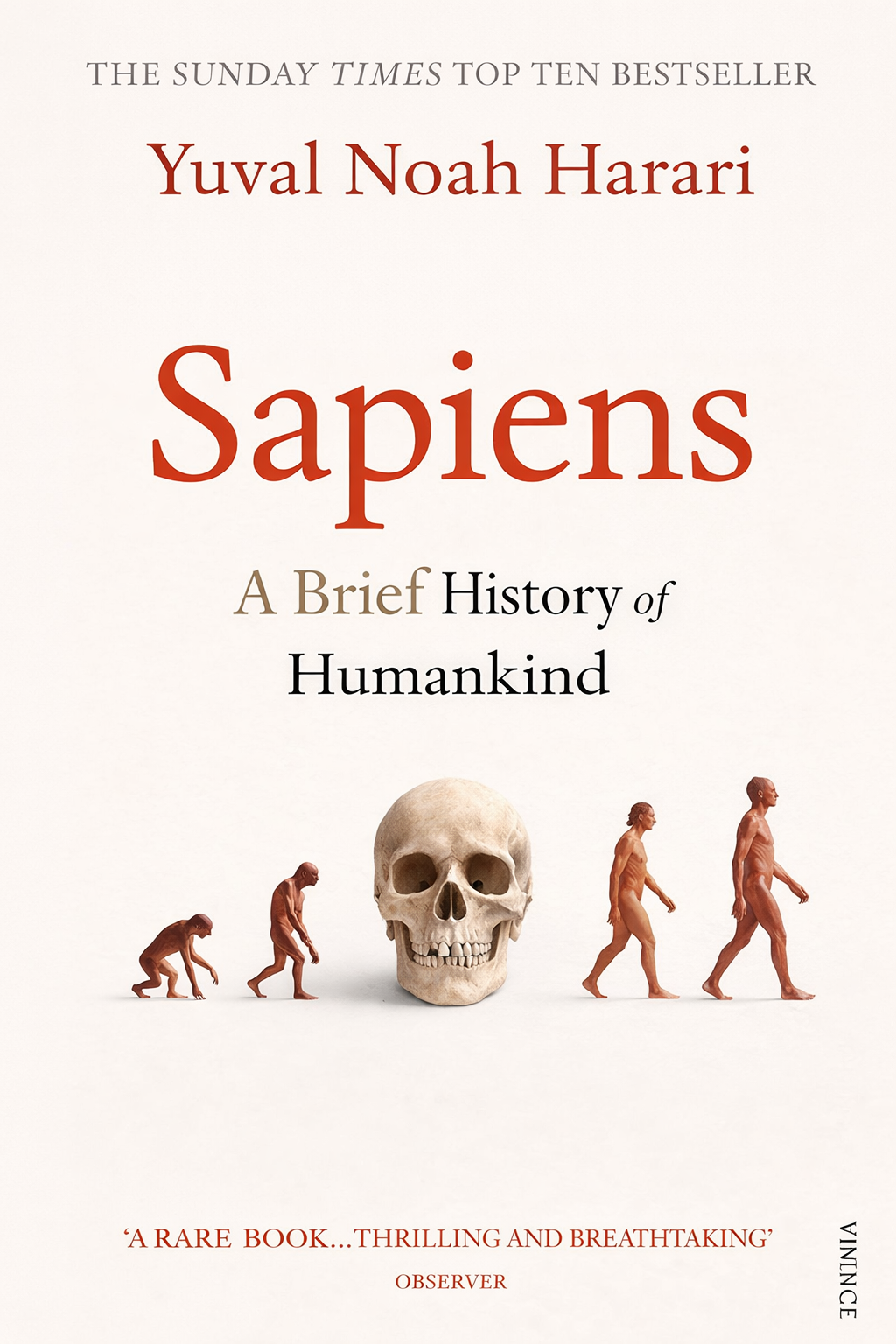
Last time we explored how the state and market replaced traditional family structures, offering services in exchange for loyalty while leaving individuals isolated despite unprecedented connectivity. Now we confront history's most fundamental question: has millennia of accumulated wealth, knowledge, and technological advancement actually made humans happier, or have we merely been running on a biochemical treadmill that keeps baseline satisfaction unchanged regardless of external progress? The author introduces the biochemical hypothesis, which suggests happiness is determined not by external conditions like wealth, health, or relationships but by internal neurotransmitter balance—serotonin, dopamine, and oxytocin levels in our brains. According to this perspective, a medieval peasant could theoretically be just as happy as a modern billionaire if their biochemical systems produced similar levels of pleasant sensations, meaning all our revolutions and conquests may have accomplished nothing for human well-being. Evolution shaped these systems not to make us happy but to ensure survival and reproduction through fleeting rewards for beneficial behaviors, creating what the author calls a hedonic treadmill where achievements provide only temporary satisfaction before we return to baseline levels. Natural selection favored individuals who experienced brief pleasure that quickly faded, driving them to seek more achievements rather than remaining perpetually content, which explains why lottery winners return to previous happiness levels within months and why rising expectations negate material gains as societies grow wealthier. This evolutionary mechanism suggests that hunter-gatherer ancestors may have been no less happy than modern humans despite lacking technology, medicine, and material abundance, challenging the fundamental assumption that progress equals increased well-being. The Agricultural Revolution may have actually decreased happiness by requiring harder work and creating social hierarchies, while modern emphasis on individual achievement has created unrealistic expectations and chronic dissatisfaction that offset any material improvements. Beyond biochemistry, the author examines how meaning, family, and community affect happiness, noting that some researchers argue well-being depends on whether people feel their lives have purpose rather than just pleasant sensations. The breakdown of traditional communities in modern societies may have reduced happiness despite material improvements, as medieval peasants lived in close-knit groups with mutual support whereas modern individuals often experience isolation despite being surrounded by millions. Social comparison plays a crucial role since people measure well-being relative to others rather than in absolute terms, making definitive conclusions about historical happiness nearly impossible due to lack of reliable data about subjective experiences in past eras. The author concludes by examining how Homo sapiens may be approaching the end of its existence not through extinction but through deliberate self-transformation using biological engineering through genetic modification, cyborg engineering through integration with non-organic devices, and engineering of completely inorganic life through artificial intelligence. Modern genetic engineering represents a qualitative leap from traditional breeding, allowing precise rapid changes that bypass natural selection entirely, with scientists already discussing enhanced humans with superior cognitive abilities or extended lifespans. All three approaches share a common feature: they replace natural selection with intelligent design as the primary force shaping life, representing perhaps the most significant revolution in biology since life's emergence and potentially occurring within the next century or two, meaning we may be among the last generations of purely organic humans shaped by natural evolution.