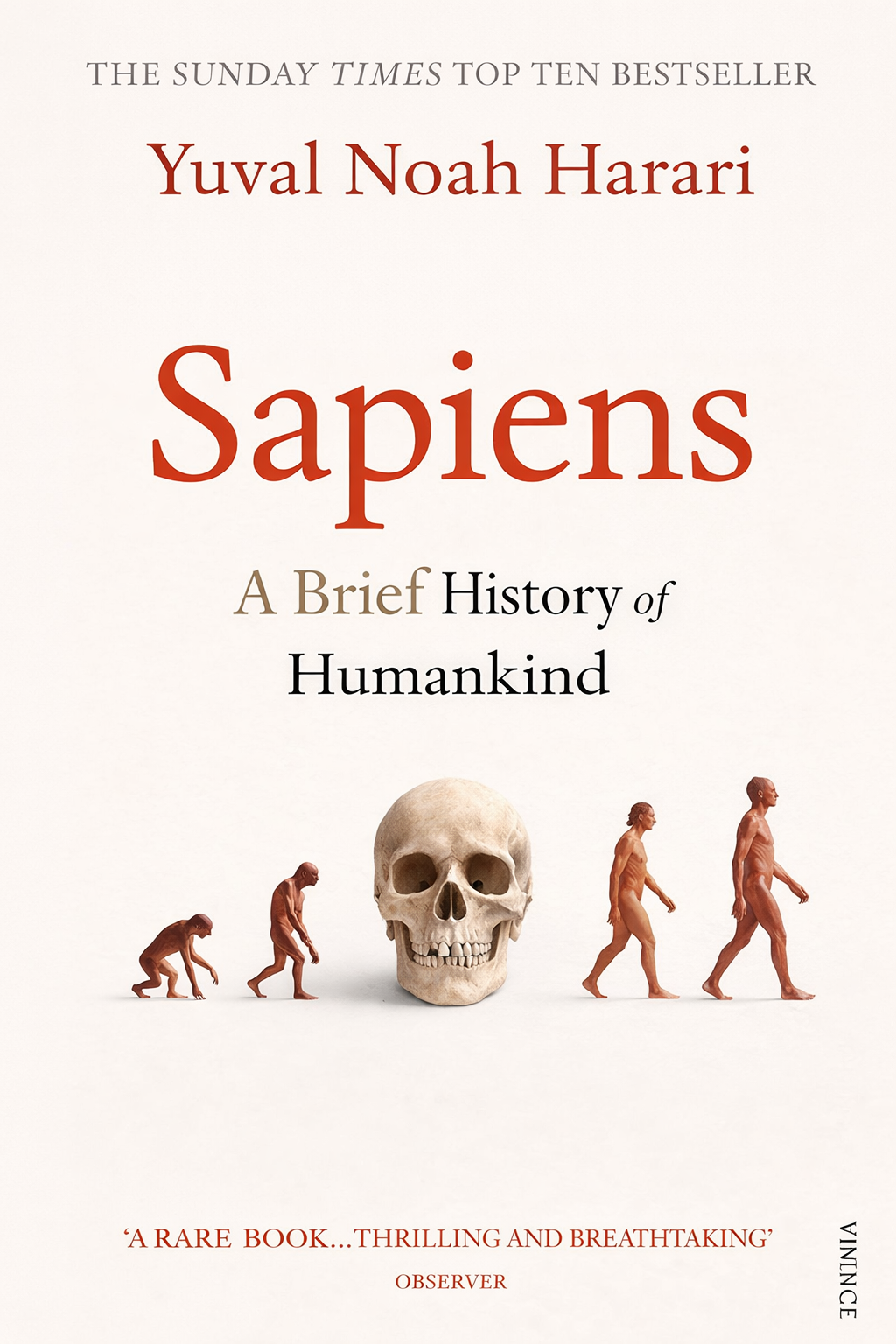
From Irrelevance to Dominance
The Birth of Shared Myths
Extending the Tree of Knowledge
Everyday Life of the First Humans
The Flood Narrative
History’s Biggest Fraud
Monuments of Power
The Brain’s Burden of Information
Outsourcing Human Memory
Injustice in the Past
The Arrow of History
The Scent of Money
Imperial Visions
Foundations of the Law of Religion
The Institutionalization of Faith
The Secret of Success
The Discovery of Ignorance
Science Meets Empire
The Capitalist Creed
The Wheels of Industry
A Permanent Revolution
Utopian Dreams and Dark Realities
The End of Homo Sapiens

Transcript
Last time we examined how humans may be approaching self-transformation through genetic engineering, cyborg technology, and artificial intelligence, acquiring godlike powers without corresponding wisdom. Now we explore how imperial ideologies shaped modern consciousness by creating universalist visions that transcended ethnic boundaries while simultaneously justifying conquest and domination through claims of civilizing missions and superior culture. The author argues that empires developed genuinely universalist frameworks distinguishing them from tribal kingdoms, with Roman citizenship eventually extending to all free inhabitants regardless of origin and creating shared identity persisting beyond the empire's collapse. These imperial visions operated through sophisticated ideological mechanisms: they claimed to represent universal principles rather than narrow ethnic interests, promised benefits of superior culture to conquered peoples, and created hybrid identities blending conqueror and conquered traditions into new civilizations. The paradox remains striking because while empires were built through violence and maintained through oppression, they also generated cosmopolitan cultures and laid groundwork for modern concepts of human rights, international law, and global governance that contemporary societies still rely upon. Imperial ideologies required constant reinforcement through education systems teaching imperial languages and values, monumental architecture demonstrating power and permanence, and religious institutions legitimizing political hierarchies through divine sanction. The British Empire exemplified this through English-language education creating local elites who internalized imperial values, massive infrastructure projects like railways binding territories together, and missionary activities spreading Christianity alongside commercial interests. The author shows how these mechanisms created self-perpetuating systems where colonized peoples often became the most fervent defenders of imperial culture, internalizing narratives of backwardness requiring European guidance and adopting metropolitan standards as measures of civilization and progress. The legacy of imperial visions persists in contemporary global structures despite formal decolonization, with international institutions like the United Nations embodying universalist principles first articulated by empires, English functioning as the global lingua franca due to British and American imperial dominance, and legal systems in former colonies retaining frameworks imposed during colonial rule. The author emphasizes that modern nationalism paradoxically emerged from imperial contexts, with anti-colonial movements adopting European concepts of nation-states and self-determination while rejecting foreign domination, creating independent nations that reproduced imperial structures internally by imposing dominant ethnic group's language and culture on minorities within their borders. The most profound impact of imperial visions lies in how they normalized the idea of universal human civilization transcending local traditions, making contemporary globalization conceivable by establishing precedents for cross-cultural exchange, creating infrastructure enabling global commerce, and spreading ideologies claiming validity for all humanity regardless of origin. The author concludes that understanding imperial visions remains essential because they shaped fundamental assumptions about progress, civilization, and human unity that continue organizing global politics, economics, and culture, revealing how contemporary universalist ideologies from human rights to free-market capitalism carry forward imperial legacies in transformed but recognizable forms that still privilege certain cultural frameworks as objectively superior while marginalizing alternatives as backward or parochial.