From Irrelevance to Dominance
The Birth of Shared Myths
Extending the Tree of Knowledge
Everyday Life of the First Humans
The Flood Narrative
History’s Biggest Fraud
Monuments of Power
The Brain’s Burden of Information
Outsourcing Human Memory
Injustice in the Past
The Arrow of History
The Scent of Money
Imperial Visions
Foundations of the Law of Religion
The Institutionalization of Faith
The Secret of Success
The Discovery of Ignorance
Science Meets Empire
The Capitalist Creed
The Wheels of Industry
A Permanent Revolution
Utopian Dreams and Dark Realities
The End of Homo Sapiens

Transcript
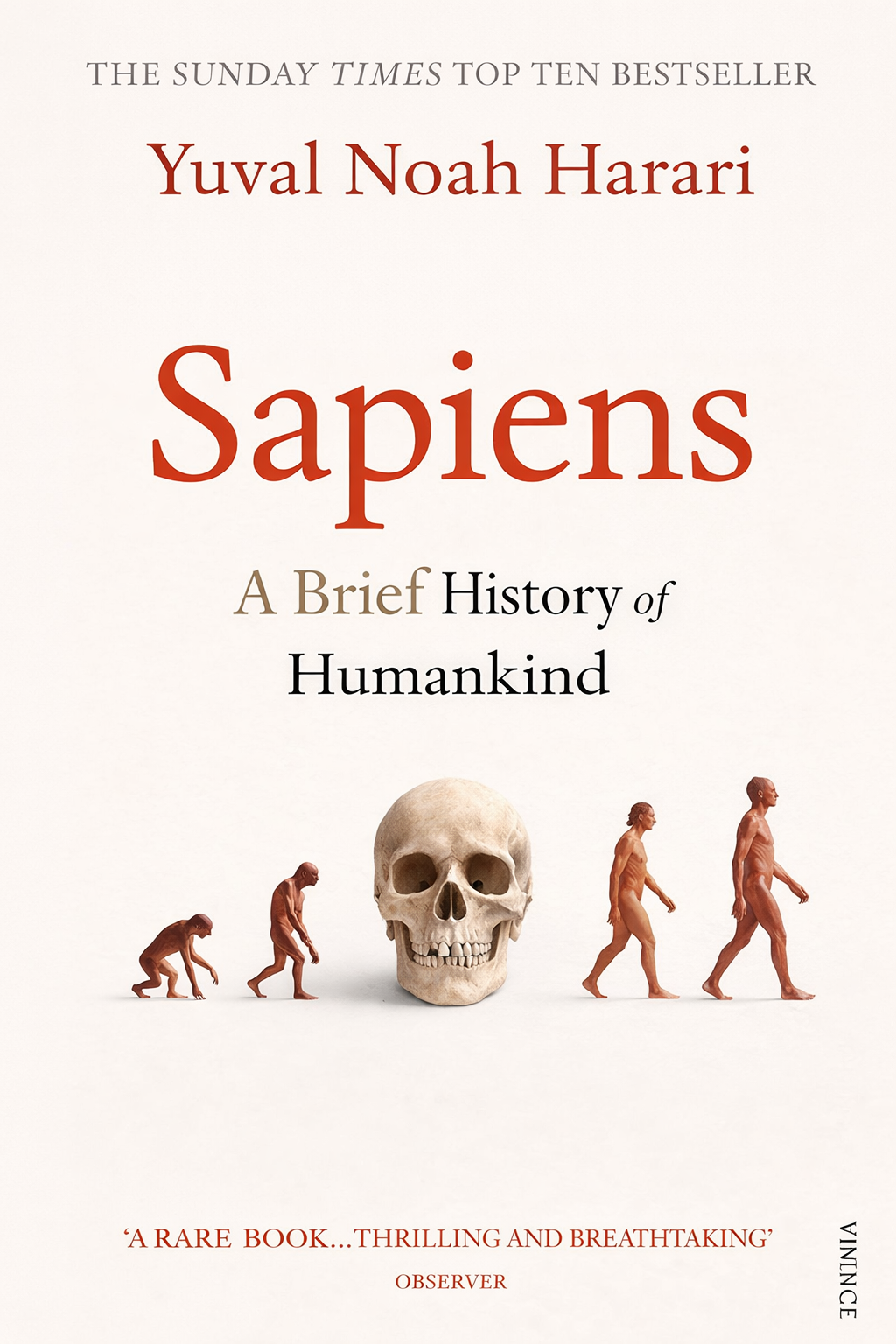
Last time we examined how utopian visions consistently produce dark realities because they ignore unintended consequences, with technological utopianism posing unprecedented dangers through irreversible alterations to human biology and artificial intelligence. Now we confront the author's most provocative thesis: Homo sapiens as we know it may be approaching its end not through extinction but through deliberate self-transformation into something fundamentally different. The species that conquered Earth through shared fictions and cognitive flexibility now stands on the threshold of rewriting its own biological code, potentially creating successor beings as different from us as we are from Neanderthals. Three pathways converge toward this transformation, each representing a qualitative leap beyond natural selection's constraints: biological engineering through direct DNA manipulation, cyborg engineering through integration with non-organic devices, and the creation of entirely inorganic life through artificial intelligence. Genetic engineering already enables precise modifications that bypass evolutionary timescales entirely, with scientists discussing enhanced humans possessing superior cognitive abilities, extended lifespans, and immunity to hereditary diseases within decades rather than millennia. The author argues this represents humanity's transition from products of natural selection to architects of intelligent design, fundamentally altering what it means to be human. Cyborg engineering has already begun with cochlear implants, retinal prosthetics, and pacemakers, but future developments promise to transcend medical necessity and move toward enhancement of normal capabilities through brain-computer interfaces enabling direct mental access to information networks. Military research advances particularly rapidly in exoskeletons granting superhuman strength and sensory augmentation exceeding biological limits, blurring the boundary between healing and upgrading until the distinction becomes arbitrary. The author shows how once technology exists to restore lost function, the same mechanisms can enhance normal function, making enhancement inevitable rather than optional. The most radical pathway involves engineering completely inorganic life possessing consciousness, emotions, and intelligence far exceeding human capabilities, representing not an upgrade to Homo sapiens but a complete replacement by entities as superior to us as we are to insects. The author acknowledges uncertainty about whether silicon-based systems can achieve genuine consciousness, but argues that if consciousness emerges from information processing rather than organic chemistry, there's no theoretical barrier to artificial minds. This transformation could occur within a century or two, making current generations among the last purely organic humans shaped by natural evolution. The author concludes with a sobering warning: humans are acquiring godlike powers to reshape life itself without corresponding wisdom about what we should become or what future we wish to create. We rush forward with genetic engineering, artificial intelligence, and cyborg technologies driven by military competition, commercial profit, and scientific curiosity rather than careful ethical deliberation about humanity's ultimate trajectory. The end of Homo sapiens may arrive not through catastrophe but through our own deliberate choices, transforming ourselves into beings whose values, desires, and consciousness differ so fundamentally from ours that continuity becomes meaningless, leaving us responsible for creating successors we cannot predict or control.