Foundations of the Law of Religion
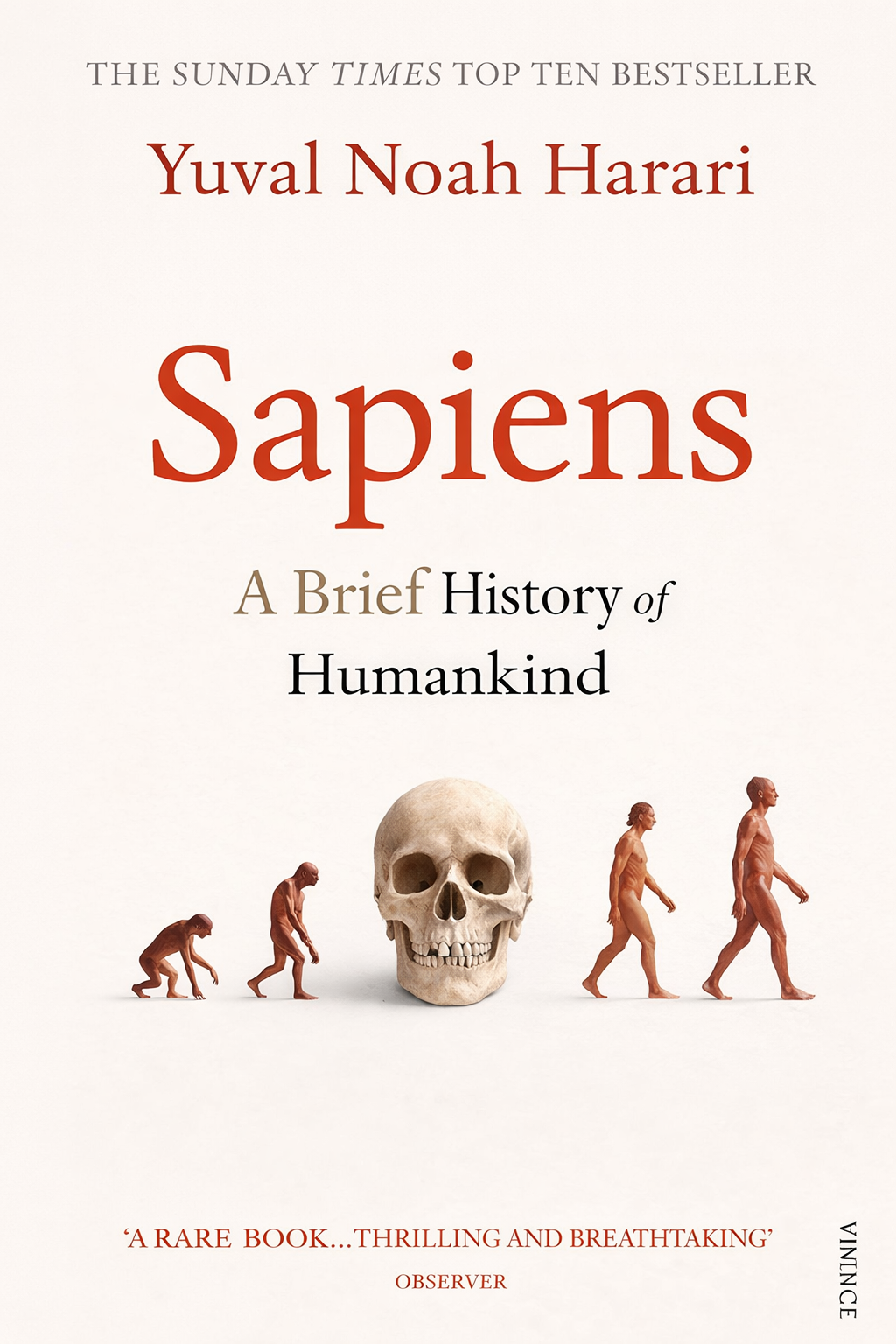
Sapiens: A Brief History of Humankind by Yuval Noah Harari
From Irrelevance to Dominance
The Birth of Shared Myths
Extending the Tree of Knowledge
Everyday Life of the First Humans
The Flood Narrative
History’s Biggest Fraud
Monuments of Power
The Brain’s Burden of Information
Outsourcing Human Memory
Injustice in the Past
The Arrow of History
The Scent of Money
Imperial Visions
Foundations of the Law of Religion
The Institutionalization of Faith
The Secret of Success
The Discovery of Ignorance
Science Meets Empire
The Capitalist Creed
The Wheels of Industry
A Permanent Revolution
Utopian Dreams and Dark Realities
The End of Homo Sapiens

Transcript
SPEAKER_1: Alright, last time we explored how imperial visions created universalist frameworks that still shape global politics. Now the author's tackling the law of religion. That sounds like a niche legal topic, but I'm guessing there's a bigger claim here? SPEAKER_2: Absolutely. The author argues that religious law represents one of humanity's most enduring attempts to create stable social orders by grounding human rules in superhuman authority. It's not just about theology—it's about how societies legitimize power and coordinate behavior across generations. SPEAKER_1: But wait, isn't that just another version of the imagined orders we've been discussing? What makes religious law distinct from, say, secular legal codes? SPEAKER_2: The crucial difference is the claim to divine origin. Secular laws are explicitly human creations that can be revised through political processes. Religious laws claim to reflect eternal, unchangeable truths revealed by gods or cosmic principles, making them far more resistant to modification. SPEAKER_1: So the rigidity is the point? That seems like a weakness, not a strength. SPEAKER_2: The author shows it's both. That rigidity provided stability in pre-modern societies where rapid change could be catastrophic. When everyone believes the same divine law governs behavior, you get predictable cooperation without constant renegotiation. But yes, it becomes problematic when circumstances change faster than religious authorities can adapt. SPEAKER_1: Give me a concrete example of how this actually worked in practice. SPEAKER_2: Islamic Sharia law is a prime example. It governed everything from commercial contracts to family relations to criminal justice, creating a unified legal framework across vast territories with diverse populations. Merchants from Morocco to Indonesia could conduct business knowing the same principles applied everywhere. SPEAKER_1: But didn't that create conflicts when religious law clashed with local customs or practical needs? SPEAKER_2: Exactly the tension the author identifies. Religious legal systems developed sophisticated interpretive traditions—Islamic jurisprudence, Jewish Talmudic reasoning, Catholic canon law—precisely to navigate between unchanging divine principles and changing human circumstances. These weren't rigid codes but living traditions of interpretation. SPEAKER_1: Alright, but the book must address the modern separation of church and state. How does religious law fit into secular societies? SPEAKER_2: The author argues that separation is actually quite recent and incomplete. Even in secular democracies, religious values shape legislation on marriage, abortion, education, and public morality. The difference is that these values must now be translated into secular justifications rather than simply citing divine command. SPEAKER_1: So religious law hasn't disappeared—it's just gone underground? SPEAKER_2: More accurately, it's been transformed. The author shows how concepts like human dignity, equality, and rights emerged from religious traditions but are now presented as self-evident secular truths. The religious foundations remain influential even when no longer explicitly acknowledged. SPEAKER_1: That's a provocative claim. But doesn't it ignore genuine secular philosophy that developed these concepts independently? SPEAKER_2: The author acknowledges secular philosophy's contributions but argues the historical record shows deep entanglement. Enlightenment thinkers who championed reason and individual rights were still operating within cultural frameworks shaped by centuries of Christian theology. The concepts evolved but retained their religious DNA. SPEAKER_1: Alright, what about the darker side? Religious law has justified some horrific practices throughout history. SPEAKER_2: The author doesn't shy away from that. Religious legal systems have sanctioned slavery, gender inequality, persecution of heretics, and brutal punishments. The claim to divine authority made these injustices particularly resistant to reform because questioning them meant questioning God's will itself. SPEAKER_1: So how did societies ever move beyond those practices if the law was supposedly eternal? SPEAKER_2: Through reinterpretation and selective emphasis. The author shows how religious reformers highlighted different scriptural passages, developed new interpretive methods, or argued that changing circumstances required different applications of eternal principles. The flexibility came from interpretation, not from changing the foundational texts. SPEAKER_1: That sounds like intellectual gymnastics to avoid admitting the original laws were flawed. SPEAKER_2: Fair critique. But the author argues this interpretive flexibility was actually crucial for religious legal systems' longevity. Completely rigid systems would have shattered under changing conditions. The ability to reinterpret while maintaining claims of continuity allowed gradual evolution without revolutionary rupture. SPEAKER_1: So for our listener, the takeaway is that religious law shaped modern legal systems more than most people realize? SPEAKER_2: Exactly. The author's argument is that understanding religious law's foundations helps explain why certain values feel self-evident even in secular societies, why legal systems claim authority beyond mere human agreement, and why debates over law and morality remain so emotionally charged. The religious foundations persist even when the explicit theology has faded.